(VOVWORLD) - As Vietnam moves rapidly toward a cleaner and more resilient energy system, the expansion of offshore wind, onshore wind, and solar power is placing unprecedented demands on the national grid. With nearly 1,000 employees in Vietnam and three decades of experience in high-voltage power technologies, Swedish company Hitachi Energy says it is ready to join these efforts. In a recent interview with VOV, Mr. Chandan Singh, Country Managing Director of Hitachi Energy Vietnam, talked about his company’s technical solutions and long-term commitment to building a smart, future-ready grid.
 Mr. Chandan Singh, Country Managing Director of Hitachi Energy Vietnam (Photo: Photo: Hitachi Energy Vietnam) Mr. Chandan Singh, Country Managing Director of Hitachi Energy Vietnam (Photo: Photo: Hitachi Energy Vietnam) |
Bao Tram: Thank you for granting VOV24/7 this interview. Vietnam is boosting offshore wind and distributed renewable resources. What transmission technologies does Hitachi Energy recommend in handling large volumes of intermittent power?
Chandan Singh: Thank you for the question. Vietnam leads South Asia and ASEAN countries in integrating renewables. And the plan that has been envisioned for 2030 in PDP-8 is even more ambitious. Now, with more renewables like solar and wind comes more variability and intermittency in the sources.
This needs to be handled by various technologies like digital substations, STATCOM, and, in the future, HVDC, as well. This is important because, unlike conventional power generation sources, the new energy sources can fluctuate quite a lot. And the variability needs to be handled by grid-forming STATCOM functionalities. Only with this kind of functionality, will the power quality be reliable and usable for industrial companies.
Bao Tram: What are the technical challenges in integrating renewables?
Chandan Singh: The biggest technical challenge in integrating more renewables is the variability of voltage, frequency, and other electrical parameters. All these things can be handled by current technologies that are being used, not only in the European nations, but also in Thailand, Malaysia, and Australia. STATCOM is a solution that can be installed in two to three years with the current HVAC network. However, with more and more offshore and onshore wind coming into the picture, Vietnam will need a large HVDC backbone kind of transmission line from south to north. Otherwise, there will be more congestion in the south of Vietnam, and possibly more power cuts in the north of Vietnam with the growing demand for electricity, with the growing economy that we are facing.
So, Hitachi Energy, being a market leader in HVDC, where we have supplied more than half of the world’s HVDC, can definitely facilitate such solutions.
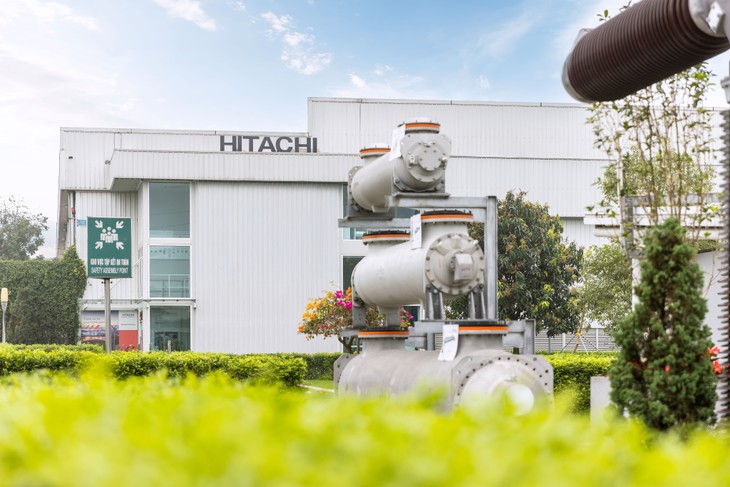 Hitachi Energy’s high-voltage power products factory in Bac Ninh (Photo: Hitachi Energy Vietnam) Hitachi Energy’s high-voltage power products factory in Bac Ninh (Photo: Hitachi Energy Vietnam) |
Bao Tram: What AI-based innovations is Hitachi Energy applying to HVDC and grid automation that could benefit Vietnam?
Chandan Singh: AI is in fact coming in almost all sectors. We are using AI in various software to have predictive maintenance capabilities, and digital substations can in fact enable AI to predict when a particular asset needs to be maintained. So that kind of evolution and innovation is already happening, and we’re getting ready to enhance the life of each and every asset in the utility network.
Bao Tram: These technologies require strong connectivity and expertise. Does Hitachi Energy have plans for training in Vietnam?
Chandan Singh: We employ almost 1,000 employees in Vietnam and, except for me, all of them are Vietnamese who have been trained in various global centers of expertise. We have quite competent resources in developing and manufacturing world-class EconiQ switchgears. Similarly, we have service engineers who can repair, maintain, and generate a circuit breaker.
When future technologies like STATCOM and HVDC come into the picture, we will definitely develop and train more resources, and be ready to serve customers in Vietnam.
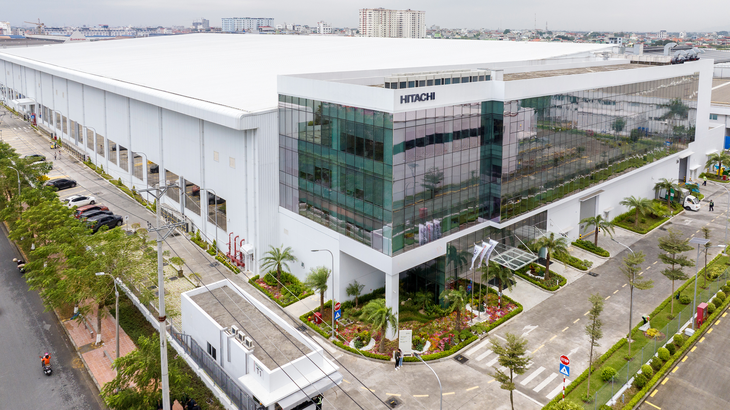 Hitachi Energy’s transformer factory in Hanoi (Photo: Hitachi Energy Vietnam) Hitachi Energy’s transformer factory in Hanoi (Photo: Hitachi Energy Vietnam) |
Bao Tram: What opportunities does Hitachi Energy see in Vietnam’s energy transition?
Chandan Singh: As the old generation technologies were quite stable, the grid necessarily did not need to be so strong. What I'm trying to say that the grid could be very basic minimum to handle the power sources of coal, gas, and hydro. The same grid is not ready to handle the intermittency of offshore, solar, and onshore wind. New technologies like battery storage system need to be added. More arbitrage needs to be done. More ancillary services need to be added. All these things will ensure that the grid is functioning and end users, households, and industries are getting same reliable power as in the past when we were getting it from coal.
So with all these new renewables being added, companies like Hitachi Energy will play a critical role in reinforcing the grid of the future. Without STATCOMS, without FACTS, without BESS, without HVDC, the grid will not be able to handle these new technologies of power generation.
Bao Tram: Thank you for your insights. That was Chandan Singh, Country Managing Director of Hitachi Energy Vietnam.
- HVDC (High-Voltage Direct Current): An electric power transmission system that uses high-voltage direct current to transmit large amounts of power more efficiently over long distances than traditional alternating current.
- FACTS (Flexible AC Transmission Systems): Systems using power electronics to control and manage AC power flow in transmission grids, thereby boosting capacity, stability, and reliability without requiring new lines.
- STATCOM (Static Synchronous Compensator): A FACTS device utilizing power electronics (VSCs) to rapidly inject or absorb reactive power in AC grids, primarily to stabilize voltage and enhance system stability.
- BESS (Battery Energy Storage Systems): Large-scale systems that use rechargeable batteries (e.g., lithium-ion) to store electricity (especially from intermittent renewables) and release it on demand, crucial for grid stability and peak management.