(VOVWORLD) - Vietnam’s multidimensional poverty rate has fallen by an average of 1.03% per year over the past five years of implementing National Target Programs.
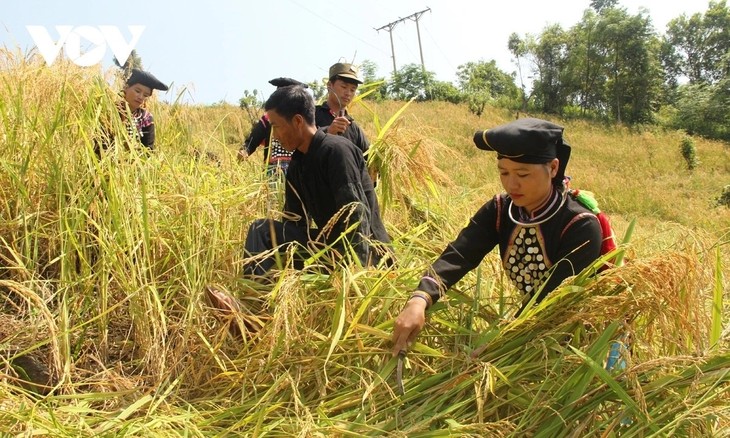 Ethnic minority people enjoy a bumper rice crop. Ethnic minority people enjoy a bumper rice crop. |
Notably, the poverty rate among ethnic minority households declined by an average of 3.4% annually, exceeding the target of 3.2%.
During the 2021-2025 period, more than 10,500 poverty-reduction models and projects were implemented, attracting the participation of over 205,000 households.
In addition, support policies in vocational training, credit access, healthcare, housing, clean water, and environmental sanitation have helped improve living standards and strengthen social security for disadvantaged groups.
“These efforts have helped narrow development gaps between regions. The National Target Program for ethnic minorities alone has brought comprehensive improvements in infrastructure, from transport and electricity to education, healthcare, and especially cultural institutions,” said Nguyen Lam Thanh, Vice Chairman of the National Assembly’s Council for Ethnic Affairs.
 A rural road in Soc Trang (now Can Tho city) A rural road in Soc Trang (now Can Tho city) |
To further enhance effectiveness, the National Assembly has agreed to merge the three National Target Programs for the 2026-2035 period.
The unified National Target Program will include two components: a general component with 10 groups of activities to be implemented nationwide, and a targeted component comprising five key tasks for ethnic minority and mountainous areas.
“The second phase will focus on completing essential infrastructure in ethnic minority and mountainous regions, with priority given to areas facing particularly difficult socio-economic conditions, as well as border and island localities,” said Deputy Minister of Ethnic and Religious Affairs Y Vinh Tor.