







A: Hello! Welcome to Food Delight on VOV24/7, where we share delicious recipes, useful cooking tips, and interesting stories behind the food we love.
B: If Singapore is on your travel bucket list, there's one dish you simply shouldn't miss – frog porridge. Served piping hot in clay pots, with tender frog meat simmered in a rich, savory sauce, it's one of Singapore’s most iconic culinary delights.
A: But you don't have to travel all the way to Singapore to enjoy it. This famous dish has found its way to Vietnam, and right in the heart of Hanoi it's been winning over local food lovers for years.
B: Today, we’re at the Singapore Claypot Frog Porridge Restaurant at 111 Lang Ha street, a restaurant that’s been serving authentic Singaporean dishes for a decade.
A: We're with owner Do Chung to hear how he brought this specialty to Hanoi. He will also share some of his cooking tips so you can recreate this dish in your own kitchen.
“When I worked with Singaporeans, I often heard about frog porridge, a famous dish in Geylang that many Vietnamese visitors wanted to try. I was curious because we eat frogs and porridge in Vietnam, too,” said Chung.
“So what made this dish so special? I learned that Singapore's cuisine blends Chinese, Malay, and Indian influences. When Chinese immigrants settled in Singapore, they brought their cooking traditions with them and began preparing local frogs with soy sauce, oyster sauce, and other familiar seasonings. Frogs are particularly good during the rainy season, when their meat becomes plumper and firmer. Over time, this dish became one of Singapore's most popular street foods,” he elaborated.
A: Chung decided to open a small restaurant on Lang Ha Street, specializing in Singaporean claypot frog porridge. Ten years later, it continues to attract loyal customers.
B: That's quite an achievement in a city with a great many delicious food options. What makes his frog porridge special enough to keep people coming back?
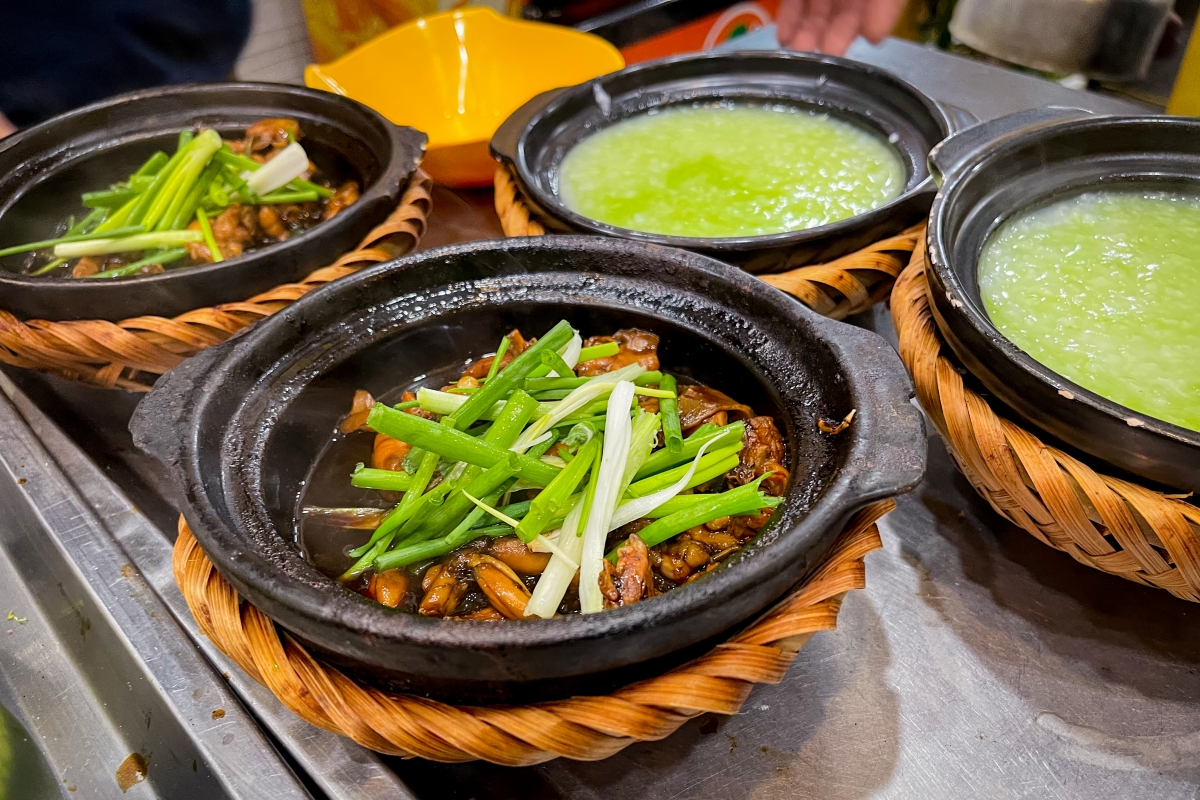
“Singaporean frog porridge is served in two separate clay pots, which keep the food hot throughout the meal. One contains plain rice porridge, seasoned with just a little salt, while the other holds tender frog meat cooked in a rich sauce made with more than twelve different ingredients and seasonings. To me, it's like the Eastern philosophy of yin and yang. One side is simple and delicate, the other is rich and full of flavor. And when you combine them, they create a wonderful balance,” Chung said.
A: Making a dish that good must take some skill, right? Well, let's head into the kitchen and find out.
B: The first step is choosing the right ingredients. Frog meat isn't something everyone cooks at home, so how do you know which frogs to choose?
“Many people find preparing frogs a little intimidating, but it's actually quite simple. You can buy cleaned frogs at a supermarket or ask your local market vendor to prepare them for you. For the best flavor, I recommend buying frogs during the rainy season, when their meat tends to be plumper and firmer. Ideally, each frog should weigh around 200 grams, or about five frogs per kilogram. We normally use two frogs per serving. I wouldn't recommend larger ones because they take longer to cook and may not absorb the sauce as evenly,” Chung said.
A: So, choosing the right size really makes a difference. Now that we've got our frog meat ready, what's next?
B: Well, before we start cooking, there's one important step we shouldn't skip – marinating. According to chef Chung, that’s one of the biggest secrets to making the frog meat tender, fragrant, and full of flavor.
“First, we use ginger-infused rice liquor and blended spring onion roots to help remove the unpleasant smell. Let the meat sit for about five minutes. Then we prepare the sauce with oyster sauce, light soy sauce, dark soy sauce, and a little rice liquor. I also recommend adding some dried chilies for extra fragrance. Mix everything with the frog meat and leave it to marinate for another ten minutes,” said Chung.
A: Once the frog has absorbed all those wonderful flavors, it's time to get cooking. And here's another tip from chef Chung – use a clay pot.
“A clay pot is ideal because it keeps the food hot longer. For two frogs, I use around 200 milliliters of sauce. Put the frog meat and sauce into the pot and cook for about eight to ten minutes, gently turning the pieces. As the sauce boils, the meat first swells and then gradually shrinks. When the sauce becomes thick and glossy brown, and the frog is fully cooked, it's ready to serve,” said Chung.

B: I can just smell the wonderful aroma coming from that bubbling clay pot. Now that the frog is ready, let's move on to the other half of the dish – the porridge.
A: Making porridge is pretty simple. Just rice and water, right?
B: You'd think so. But according to chef Chung, getting a smooth, creamy texture takes a little effort.
“For the porridge, we use three types of rice: ordinary rice, glutinous rice, and lightly crushed broken rice, all in equal amounts. First, rinse and soak the rice for about fifteen minutes, then cook it for around forty minutes until it becomes thick and soft. When serving, add a little boiling water and heat it again in a clay pot. The porridge should be smooth and thick enough to cling to the frog meat,” he said.
A: For the finishing touch, add a little ground pepper and plenty of fresh spring onions. And there you have Singaporean frog porridge, ready to enjoy.
B: Using chef Chung's cooking tips, you can now treat your family to this delicious dish at home. Or, if you'd rather leave the cooking to the experts, head to the Singapore Claypot Frog Porridge Restaurant at 111 Lang Ha Street in Hanoi for an authentic taste of Singapore.


