







B: During the past week, VOVWORLD received more than 370 letters, emails, and phone calls from listeners in 35 countries and territories. Thank you all for your continued support.
A: We'd like to welcome to VOV Martin Ellis of the UK, who wrote to us for the first time this week after listening to our English broadcast on June 3.
B: Ellis noted: "The signal was strong with an SNR around 60dB and even peaked to around 68dB at times. There were a few interfering whistles and slight fading, although the signal remained strong." Martin also reported that he received our broadcast on the frequency of 9835khz.
A: You’re right, Ellis. As from June 1, our broadcasts beamed to Europe shifted from the frequency of 9730 to 9835 khz. Thank you for bringing that to our attention. We hope to receive more regular feedback from you.
B: Ellis also mentioned that he was happy to hear Nha Trang mentioned in our program because his wife is from Nha Trang.
A: That's a wonderful connection to Vietnam. We hope to see you one day here.
B: This week, our longtime friend Bidhan Chandra Sanyal sent us multiple reports on VOVWORD’s English service on 9730 kHz from West Bengal and reported a SINPO rating of 43434.
B: Meanwhile, Archana Pai of India kindly sent a reception report and requested a QSL card and station souvenirs. Thank you both for your continued support over the years.
A: Another familiar voice came from Pakistan. Amir Jameel, President of the VOV Online Visitors Club, sent reception reports on June 4 and June 7, describing strong and steady signals.
B: From Bangladesh, Omar Faruk wrote: "I am a regular listener of your radio program. It is really good that I always get updated information in each program."
A: One of the most heartfelt letters this week came from Spain. Juan Carlos Pérez Montero shared a detailed account of his recent experiences and his personal story.
B: Juan mentioned the unusually early summer heat in Spain and how he enjoys meeting friends on outdoor terraces to escape the stress of daily life.
A: It's remarkable how listeners often share not only reception reports but also snapshots of their everyday lives. Through these letters, we learn about weather conditions in Spain, festivals in India, family traditions in Pakistan, and community life in Bangladesh.
B: In their correspondence to VOVWORLD this week, many listeners shared their interest and ask about summer tourism in Vietnam.
A: Coastal destinations, particularly Phu Quoc in An Giang province and Da Nang city, are leading Vietnam's summer tourism boom, according to online travel platform Traveloka.
B: Traveloka data showed strong growth in domestic travel demand during June and July, driven by beach holidays, urban getaways and event-based tourism. Vietnamese travellers are also planning trips earlier and making use of promotional campaigns to optimize costs and experiences.
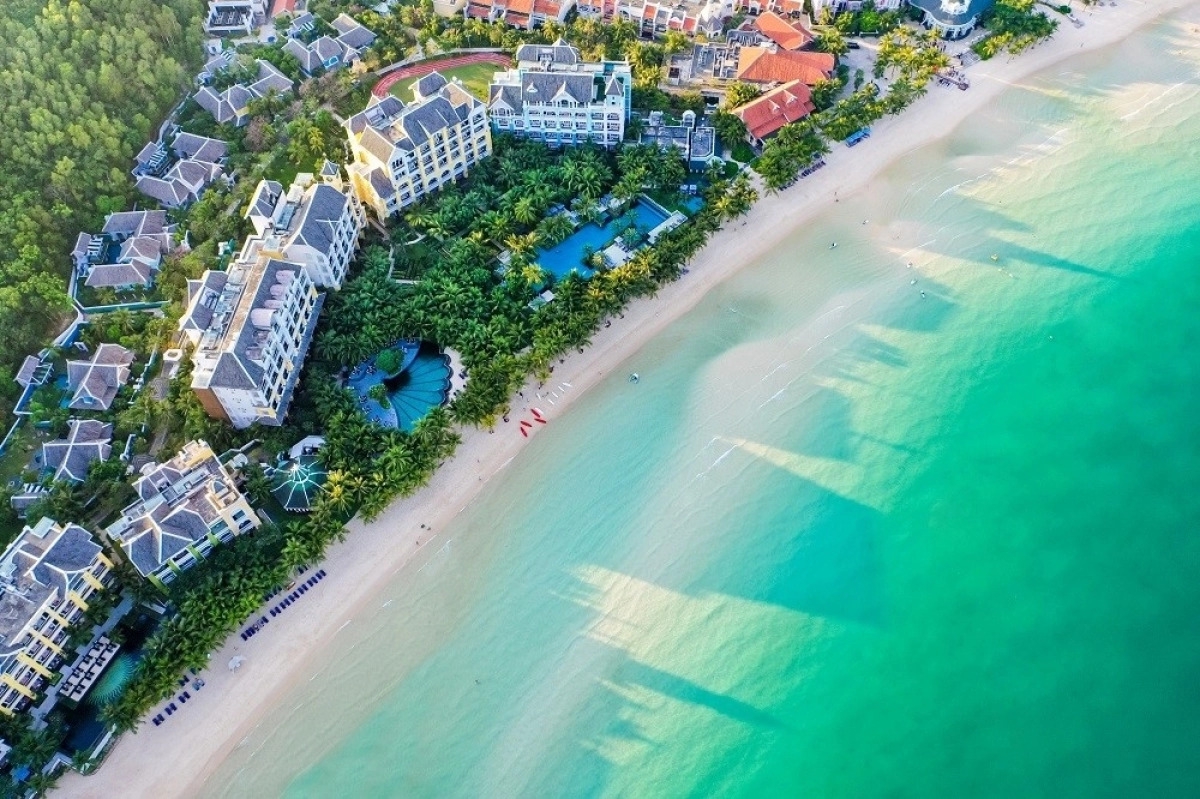
A: Phu Quoc island in An Giang province recorded Vietnam’s highest increase in flight searches, up 56%, followed by Con Dao island in HCM City with 42%, highlighting the growing appeal of premium island vacations.
B: Meanwhile, Da Nang ranked as the most popular accommodation destination and saw strong growth in domestic flight bookings. The central city was recently named among Asia's top summer destinations by Lonely Planet while the Da Nang International Fireworks Festival 2026 was listed among the world's must-experience summer festivals by Travel + Leisure.
A: Vung Tau, another coastal attraction, is also emerging as a "hot spot" for accommodation thanks to the trend of self-driving tours to nearby places. Familiar coastal destinations such as Nha Trang, Quy Nhon, and Mui Ne sustain their stable appeal as they are about to enter the peak tourist season in August.
B: Major cities including Hanoi and Ho Chi Minh City also remain among the most searched domestic destinations, reflecting continued demand for short urban breaks.
A: Commending Vietnam's growing popularity as a tourist destination, Juan Diez of Spain wrote: "Vietnam is establishing itself as one of ASEAN's most attractive destinations, with fascinating journeys, reasonable costs and unforgettable scenery."
B: We couldn't agree more. From the mountains of Ha Giang to the beaches of Phu Quoc and from the ancient town of Hoi An to the vibrant streets of Ho Chi Minh City, Vietnam offers extraordinary diversity for travelers. Seeing is believing. We look forward to welcoming you!
A: You’re listening to the weekly Letter Box of the Voice of Vietnam. This week, we received valuable feedback from Seiji Hattori in Japan. Hattori noted that our redesigned website is more user-friendly but suggested including clearer information about broadcast schedules and program details.
B: Thank you for that constructive suggestion. We’re upgrading our website to make it more friendly for readers, especially our foreign readers. As we move to integrate our multi-media content, audio, images, video clips and new media content on the website, it might take sometimes to complete the job. During that period, some details are missing. We really appreciate your feedback which helps us improve both our radio broadcasts and digital platforms.
B: Hattori also said he enjoys Vietnamese pop and folk music and would like to hear more songs during our programs.
A: On the website at vovworld.vn, we also have a corner for streaming our English 24/7 FM programs which include around 30 minutes of music programs featuring Vietnamese traditional and contemporary music as well as foreign content. You can also listen to our program via the VOV Media app. Enjoy listening.
A: Chris Malboeuf from Canada asks: "Does Vietnam have a sugar industry?"
B: The answer is yes. Vietnam has a well-established sugar industry that plays an important role in the agricultural economy. Sugarcane is cultivated primarily in provinces such as Thanh Hoa, Nghe An, Phu Yen, Gia Lai, Tay Ninh, and Soc Trang. The industry supports hundreds of thousands of farming households and workers.
B: In recent years, the sector has faced challenges from imported sugar and changing market conditions. However, many Vietnamese producers are modernizing their operations, improving productivity, and developing value-added products.
B: Another interesting question comes from Hirano Seichi in Japan, who asks whether earthquakes occur in Vietnam and whether people are prepared for them.
A: Although Vietnam is not located in one of the world's most active seismic zones, earthquakes do occur from time to time. Most are relatively small and cause little damage, but certain regions, particularly the northwest and central parts of the country, are more prone to seismic activity.
A: In recent years, authorities have strengthened monitoring systems and disaster preparedness programs. Schools, local governments, and emergency agencies increasingly provide information on disaster response and safety measures.
B: Before we close, we'd like to thank all our listeners who sent reception reports, comments, questions, and personal stories this week.
A: Whether you're listening from the United Kingdom, Spain, Pakistan, India, Bangladesh, Indonesia, Canada, Germany, Japan, or anywhere else in the world, your messages remind us that radio continues to connect people across borders and cultures.
B: Keep on sending us your reception reports, questions, and ideas. We love hearing from you.
A: Until next time, thank you for tuning in to the Voice of Vietnam.
B: Goodbye, and happy listening!


