







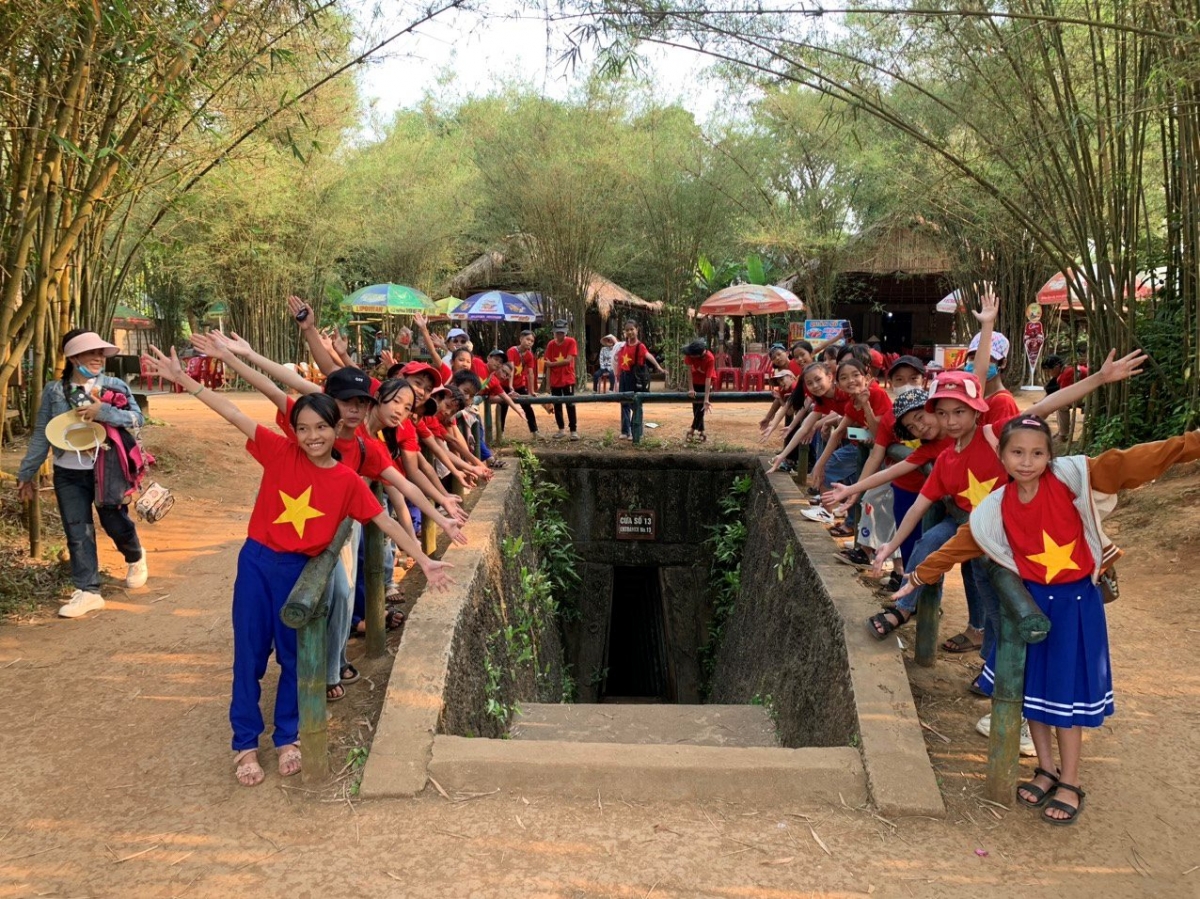
In an article titled “The underground tunnel village where Vietnamese people lived for years to hide from war” published by CNN on June 12, Fedykovych wrote that on the outskirts of Vinh Moc, bamboo trees sway in the wind above a line of streetfood shacks. Red plastic chairs on the sidewalk serve as the dining hall, while patrons prepare to eat grilled rice and noodle dishes.
Things have clearly changed — since six decades ago this village in central Vietnam was heavily bombed by American forces, who dropped an estimated 9,000 tons of explosives over eight years. Beside the streetfood stalls lies an entrance to a second Vinh Moc: an underground complex of tunnels constructed to protect the residents during the war.
Fedykovych wrote that a visit to Vinh Moc offers a brief glimpse of the claustrophobic conditions. The fact that people spent more than half a decade in these conditions under frequent bombardment makes it even more unnerving. The complex is laid out in three levels, from 50 feet (15 meters) below ground to 75 feet (23 meters), with narrow and low tunnels widening out into larger communal rooms.
Traveling through tranquil Quang Tri province today, it’s hard to believe it was once one of the most bombarded places on the planet, the author said.
The tunnel system is among the most popular day trips from Hue. Vinh Moc can also be visited as part of a tour, which includes stops at the Khe Sanh Combat Base, the ruins of Long Hung church, and Hien Luong Bridge at the 17th parallel that divided North and South Vietnam.


