



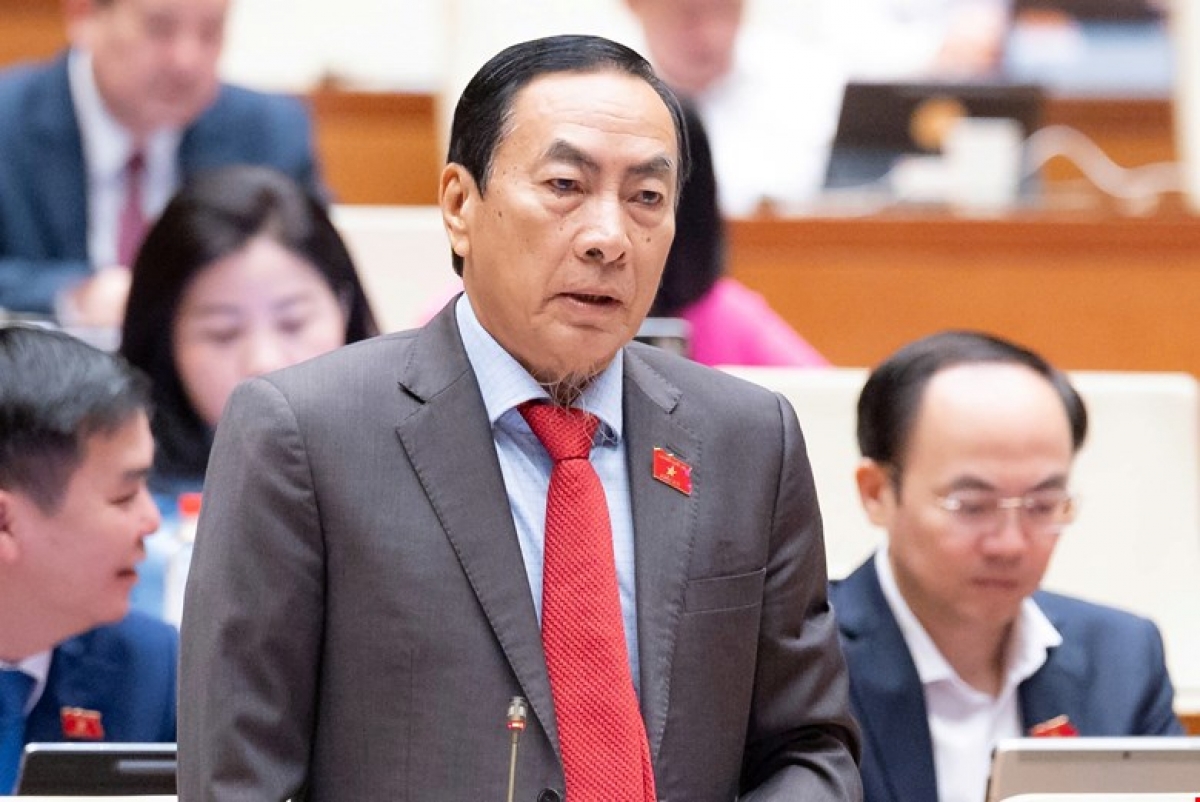
A primary focus was setting a revenue threshold eligible for tax exemption. Phan Van Hoa, a deputy for Dong Thap province, said that the Prime Minister is expected to raise the personal income tax exemption threshold for individual businesses and households to 1 billion VND in annual revenue, doubling the current threshold.
“I believe this is a humane policy. While the State may get less tax revenue in the short term, it will encourage more households and businesses to engage in production and business activities, an approach tax payers strongly support,” said Hoa.
While the scope of these amendments is small, their impact is extensive, directly affecting businesses, household enterprises, consumers, and the State budget collection. Nguyen Duy Thanh, a deputy for Ca Mau province, proposed a more robust exemption.
“The National Assembly’s Economic and Financial Committee has proposed a 2 billion VND threshold, but I suggest raising it to 3 billion VND. This averages to a monthly revenue of 250 million VND. After costs like rent, interest, and labor, a household might only net 20 million VND. For a family of four, this income is modest. I propose setting a fixed framework in the law—such as minimum and maximum revenue thresholds—to ensure stability.”
“Expanding exemptions for small enterprises may cut short-term revenue, but it creates room for the sector to grow, generate jobs, and ensure sustainable income in the long run,” Thanh added.

On Thursday morning the National Assembly reviewed the proposed oversight program for 2027. In the afternoon lawmakers voted on several draft laws and resolutions, including revised laws on Access to Information, the Capital, Civil Status, and Belief and Religion.
Lawmakers also evaluated the results of overseeing the response to voter petitions submitted to the 10th session of the 15th National Assembly.