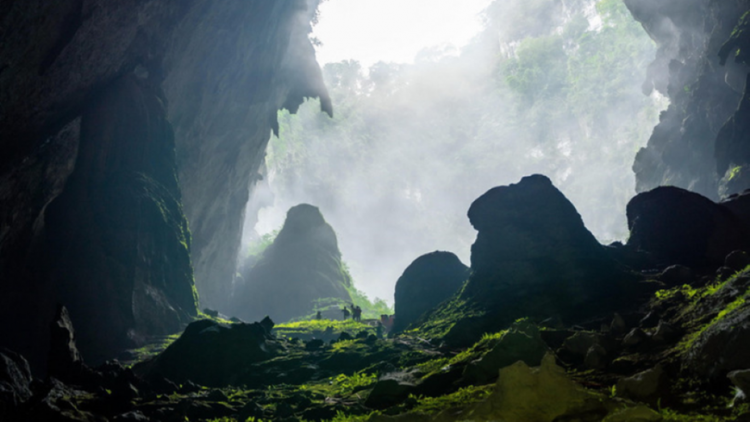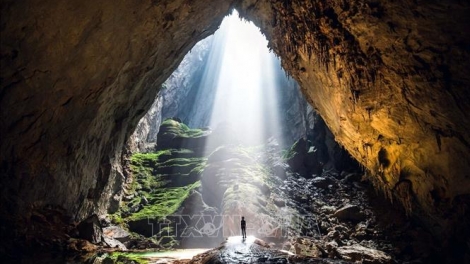
The park management board said the cave was identified by a joint Vietnamese–British expedition team during a recent survey. Initial findings show the cave is structured as a vertical sinkhole, measuring approximately 583 metres in length, 45 metres in depth and located at an elevation of around 751 metres in Kim Dien commune. The vertical shaft leads down to an underground stream.
One of its most striking features is a waterfall cascading from above into the cave, a phenomenon experts describe as relatively rare within cave systems. Despite initial access, large sections of the cave remain unexplored, and further studies will be needed to fully assess its scale, geological structure and scientific value.
The discovery is part of a broader survey effort conducted over the past month, during which expedition teams identified 24 new caves and added data on three previously known ones, significantly expanding knowledge of the region’s cave network.
Phong Nha–Ke Bang National Park, often referred to as the “Kingdom of Caves”, is home to more than 425 recorded caves, around 50 of which are open to tourism. It also hosts Son Doong Cave, along with other notable caves such as Hang En and Hang Pygmy.