







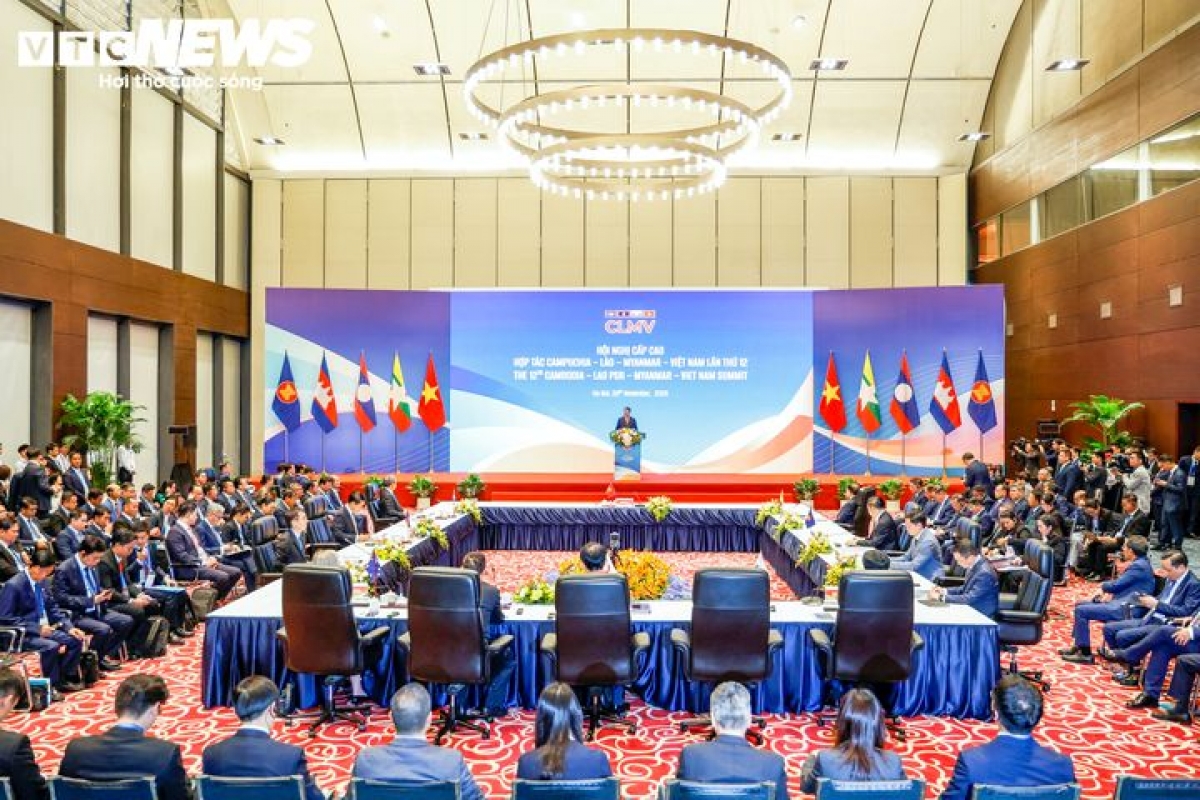
Addressing the 12th Cambodia-Laos-Myanmar-Vietnam (CLMV) Summit in Hanoi on Saturday, PM Hung called on the four countries to leverage their geoeconomic advantages to strengthen connectivity between ASEAN and partners in Northeast and South Asia, as well as between the Pacific and Indian Oceans.
“It is necessary to turn the strengths of each country into shared strength, ensure a harmonious balance of interests among all member countries, and create favourable conditions for people and businesses, from urban and rural areas to remote and disadvantaged regions, to participate in and benefit from the outcomes of our cooperation,” he said.
The Vietnamese leader stressed the need to make connectivity the central and overarching focus of cooperation among the four countries. This should encompass transport, logistics, technology infrastructure, seamless operational mechanisms, markets and businesses, as well as people, cultures and tourism.
He called for building strategic connectivity with a long-term vision, ensuring sustainable development in all aspects and making practical contributions to the development of each country and the building of the ASEAN Community.
Leaders emphasised the need to strengthen transport infrastructure connectivity and simplify and harmonise customs procedures to facilitate trade and investment. They also called for making the most of resources from development partners in areas where the four countries have strengths, including agriculture, downstream processing, energy, tourism and climate change response.
At the conclusion of the meeting, the leaders adopted the joint statement of the 12th CLMV Summit, along with two important annexes: the Four-Country Smart Inland Port Corridor Initiative and the Four-Country Cultural Heritage Journey Initiative.
In his closing remarks, PM Hung highlighted three priorities for effectively implementing the summit’s outcomes: renewing approaches to cooperation alongside the development of common production chains; focusing on comprehensive connectivity encompassing hard and soft infrastructure and people-to-people links; and reforming resource mobilisation, with tangible cooperation results serving as the benchmark.


