







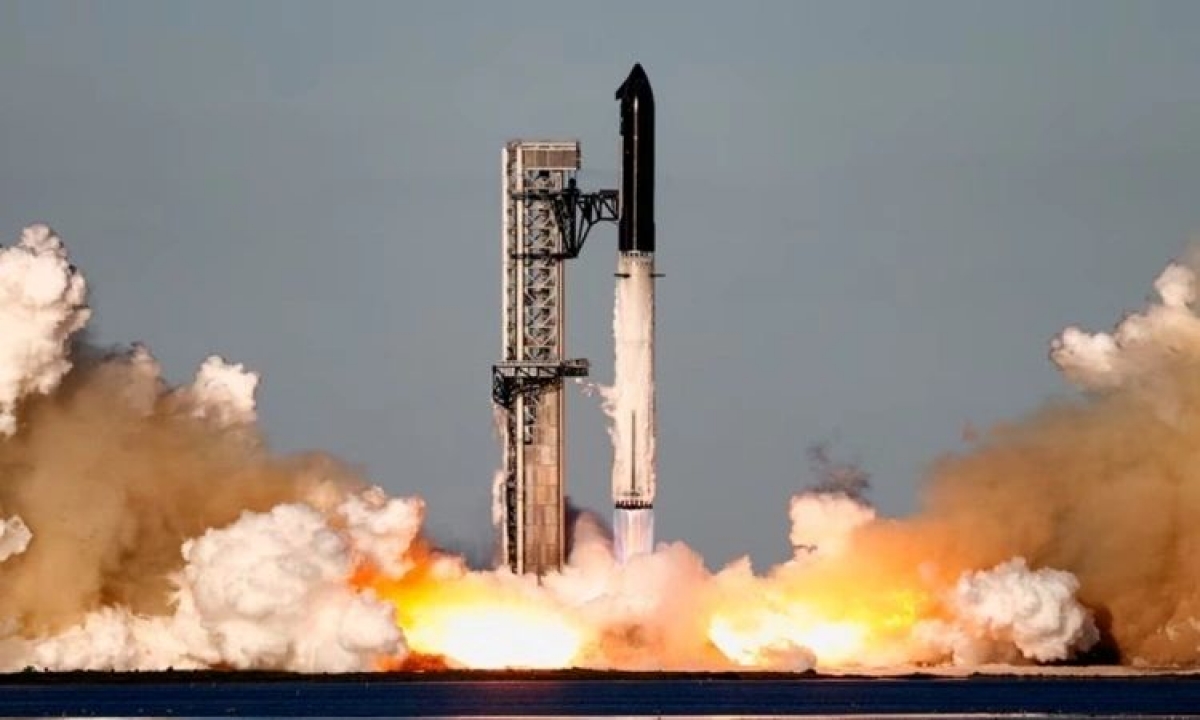
This is a step forward in the company's plan to expand its Starlink internet network in order to give users greater connectivity capacity and faster internet speeds.
“V3 satellites will greatly expand Starlink's network capacity and user speeds. Each V3 satellite will add one terabit per second of capacity to the constellation. And, you guessed it, since we have 26 satellites on board today, this mission will contribute 26 terabits per second of capacity. That's something like 700 DVDs worth of data in one second,” said Kate Tice, SpaceX's Director of Quality Management and Training.
SpaceX confirmed that it had successfully established communication with all 26 satellites. They are now beginning to join the Starlink network. The greater data transmission capacity of the V3 satellites will enhance broadband internet services and meet growing connectivity demand.
The flight was launched from SpaceX's Starbase facility in Texas. After approximately 22 hours and 30 minutes in orbit, Starship returned to the launch site. For the first time, SpaceX successfully caught the spacecraft using the mechanical arms mounted on the launch tower, but the Super Heavy booster failed to return to the launch pad as planned and instead diverted to a splashdown in the Gulf of Mexico.


