







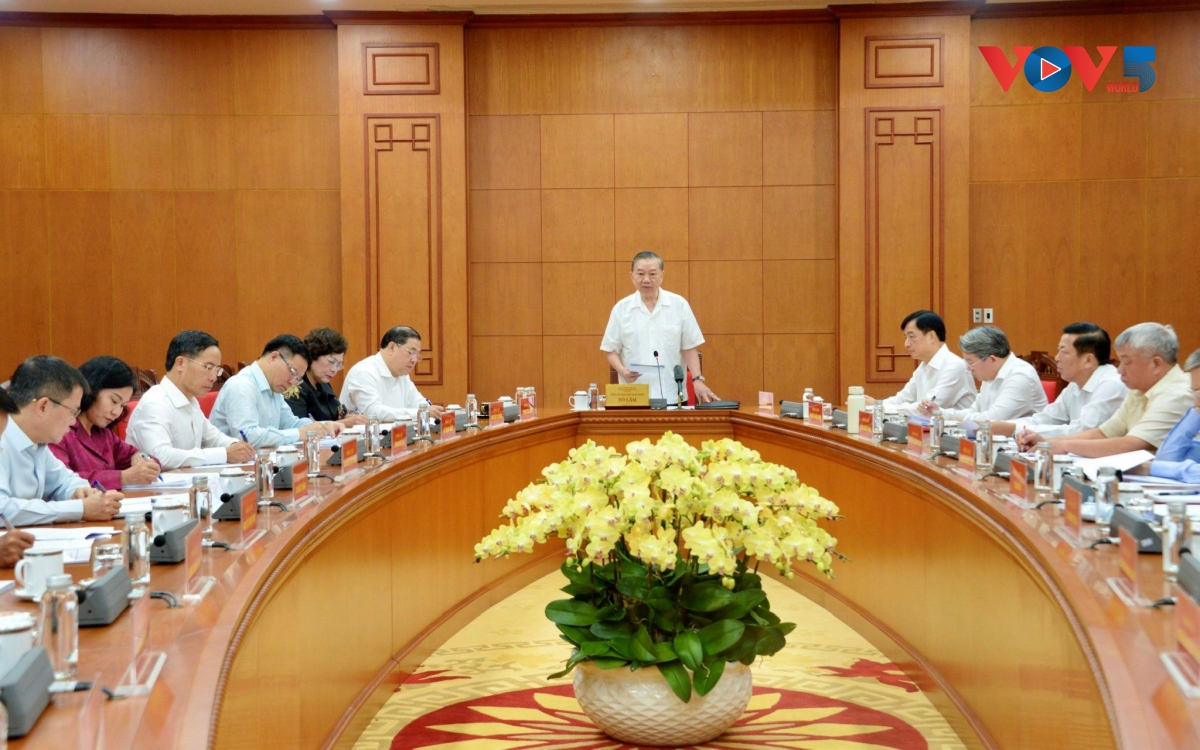
The top leader chaired a working session in Hanoi with the Government's Party Committee and relevant agencies to discuss orientations for developing national logistics and infrastructure.
According to General Secretary and President Lam, as the nation pursues a double-digit growth target, the logistics sector must truly serve as a catalyst for growth—boosting productivity, reducing costs, expanding the scope for development, and unlocking new sources of growth. He emphasized the ambition and determination to transform Vietnam into a key logistics, transshipment, and goods distribution hub.
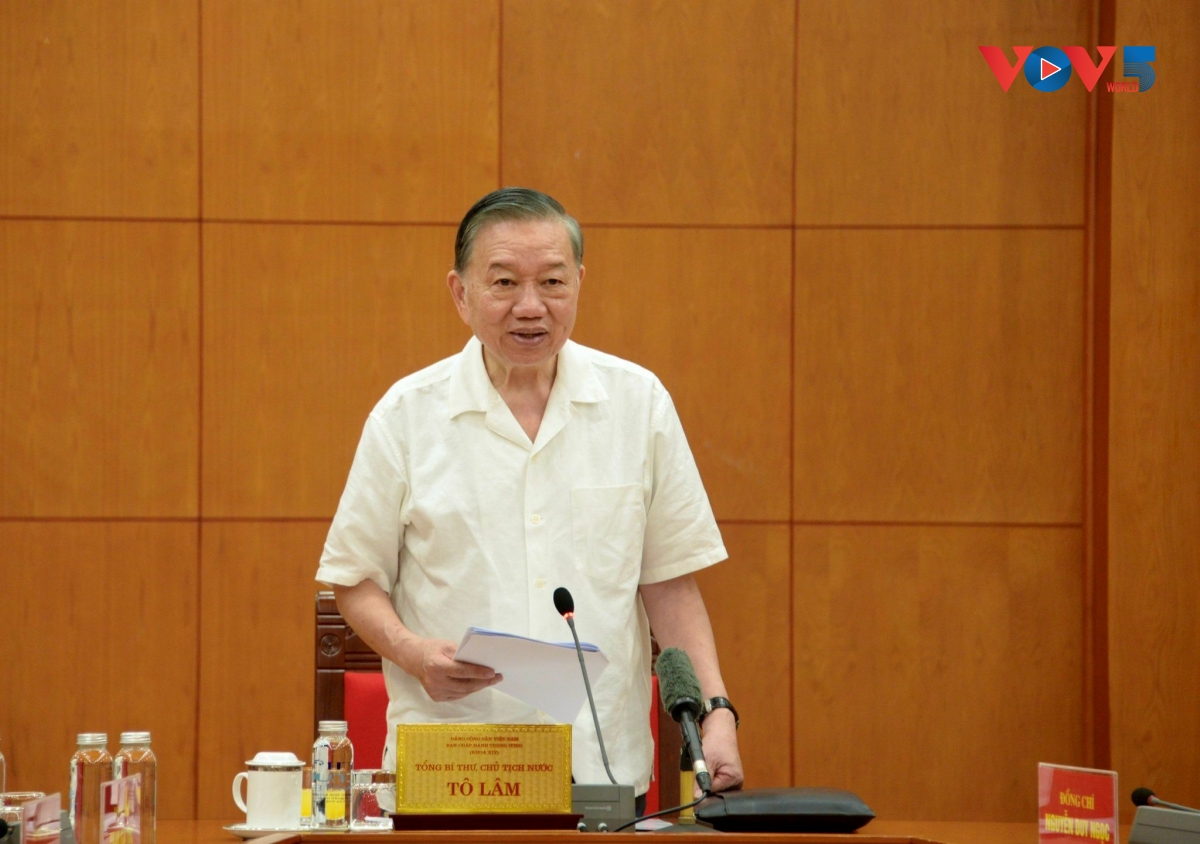
"A unified, coordinated, and modern national logistics network must be developed, integrated with the reorganization of economic space and international connectivity. Logistics should be viewed as a cohesive system in which seaports, airports, railways, roads, waterways, border crossings, logistics centers, industrial zones, and production regions are interconnected and operate in a seamless, and efficient manner," Mr. Lam said.
"Logistics development planning must stay one step ahead, aligned with planning for industry, agriculture, commerce, urban development, and infrastructure. These will contribute to the formation of economic corridors, growth poles, and new development spaces. In particular, the advantages of each region and locality must be leveraged within the overall national logistics network. Science, technology, innovation, digital transformation, and green development must serve as the breakthrough drivers for modernizing Vietnam’s logistics sector."
General Secretary and President Lam emphasized the need to continue refining institutional frameworks and enhancing national coordination efficiency; developing logistics infrastructure and networks along economic corridors; and fostering the growth of domestic logistics enterprises and service markets.
It is essential to promote digital transformation, establish shared logistics data, advance green logistics, and strengthen the resilience of supply chains, he said, adding that adequate human resources, financial capital, and effective oversight mechanisms are also critical.
The ultimate goal is to gradually bring logistics costs closer to regional and global averages, improve service quality, increase domestic value-add, and elevate Vietnam’s role within the regional logistics network, according to the top leader.


