







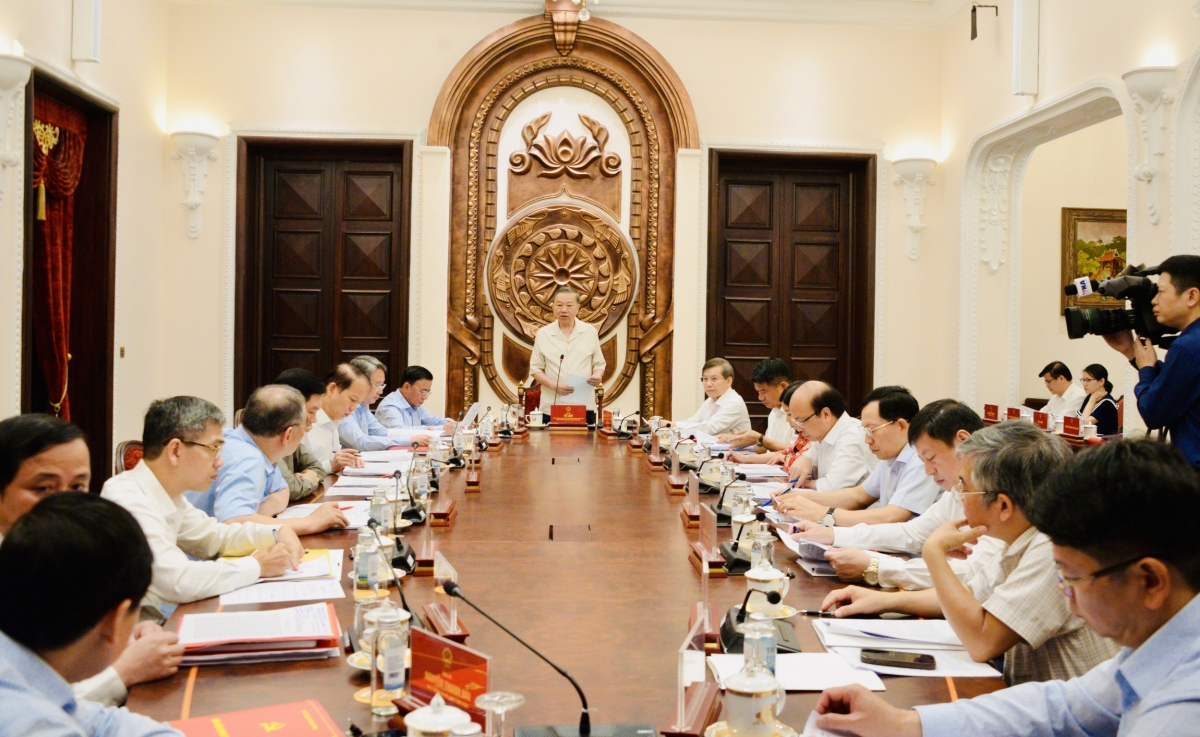
The top leader said institutional and legal improvement and judicial reform are organically related and closely linked. It requires a central leading body to ensure that the stages of lawmaking, law enforcement, and judicial reform constitute a unified, interconnected, and effective whole. Fine-tuning the two Steering Committees is necessary as it will reduce the number of coordinating bodies without diminishing tasks, while clarifying responsibilities, outputs, and results, he added.

"The improvement of legal institutions and the organization of law enforcement must be placed within a unified whole. Law enforcement and judicial reform cannot stand outside of programs to improve legal institutions, neither can they be dissolved within the process of drafting legal documents. Improving legal institutions is not only a legislative technique but also involves organizing the implementation, controlling power, protecting justice, human rights and citizens' rights, and creating a stable, transparent, and safe legal environment for development," Mr. Lam said
According to the top leader, the new Steering Committee must be a strategic-level institution for leadership, direction, coordination, inspection, and oversight. Substantive changes must be achieved via the removal of major legal bottlenecks and the resolution of inter-sectoral obstacles. There must be improved lawmaking and effective law enforcement, judicial activities, prevention of wrongful convictions, protection of justice, reduction of compliance costs, improved investment and business environment, and enhanced access to justice for citizens and businesses.


