







The program was one of a number of activities to mark the 50th anniversary of relations between Vietnam and UNESCO.
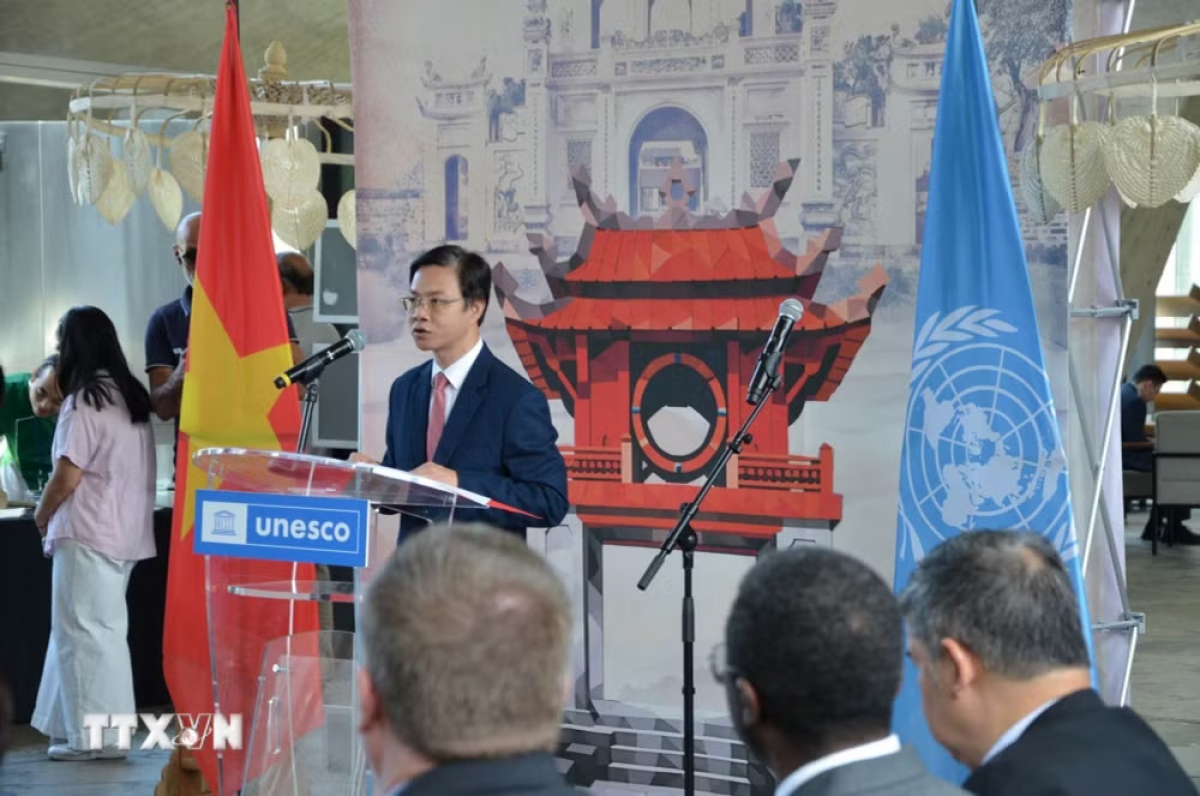
In his opening remarks, Vietnamese Deputy Minister of Foreign Affairs Ngo Le Van, who is Chairman of the Vietnam National Commission for UNESCO, described Van Mieu–Quoc Tu Giam as a defining symbol of Vietnam’s civilization and educational tradition.
With a history spanning nearly a millennium, the site embodies Vietnam’s respect for learning, reverence for teachers, appreciation of talent, and enduring belief that education and knowledge are the foundation of sustainable national development.
He said the 82 doctoral steles preserved at the site have been inscribed on UNESCO’s Memory of the World Register, reinforcing the site’s significance as a symbol of Hanoi and Vietnam’s long-standing commitment to scholarship and intellectual achievement.
Van highlighted the close cooperation between Vietnam and UNESCO in heritage preservation, citing the Imperial Citadel of Thang Long, a UNESCO-recognized world heritage site, as another success. Together, the two heritage sites at the heart of Hanoi demonstrate to the world that culture and education are pillars of peace, sustainable development, and humanity’s future.
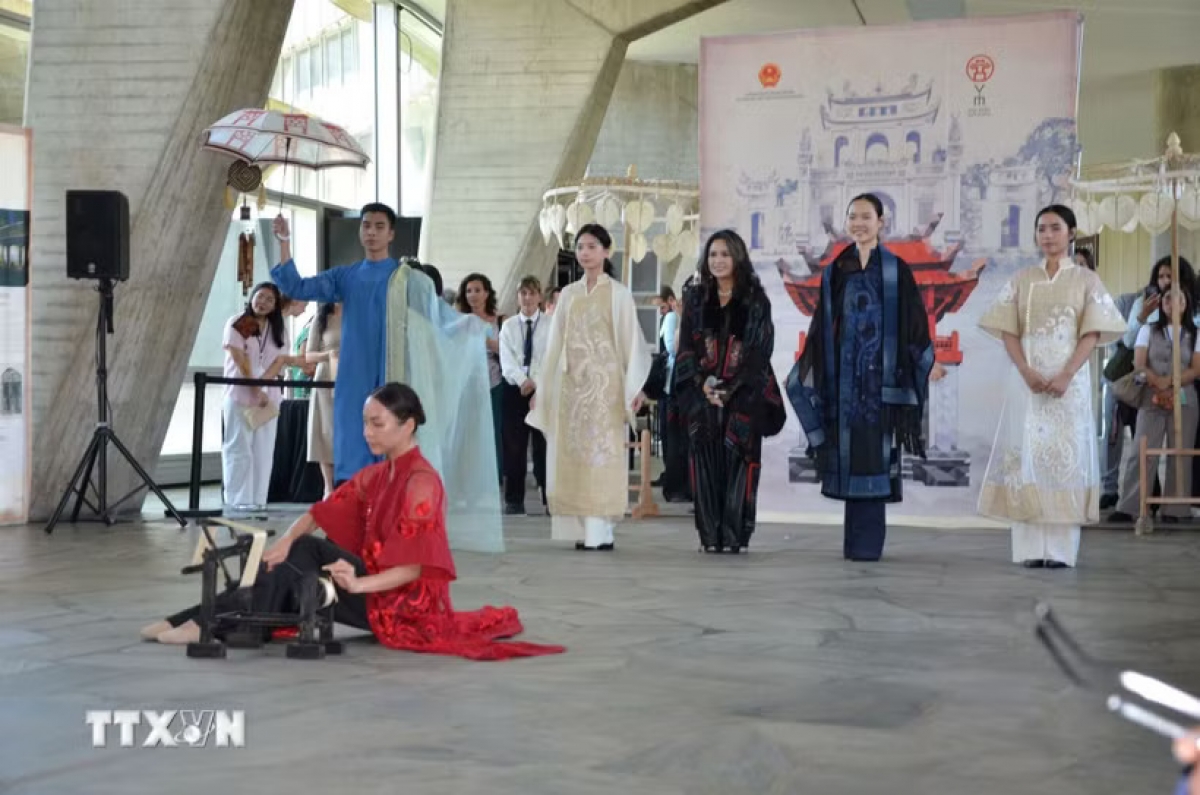
The program was jointly organized by the Vietnam National Commission for UNESCO, the Hanoi People’s Committee, and the Permanent Delegation of Vietnam to UNESCO on the occasion of the 950th founding anniversary of Vietnam's first university.


