







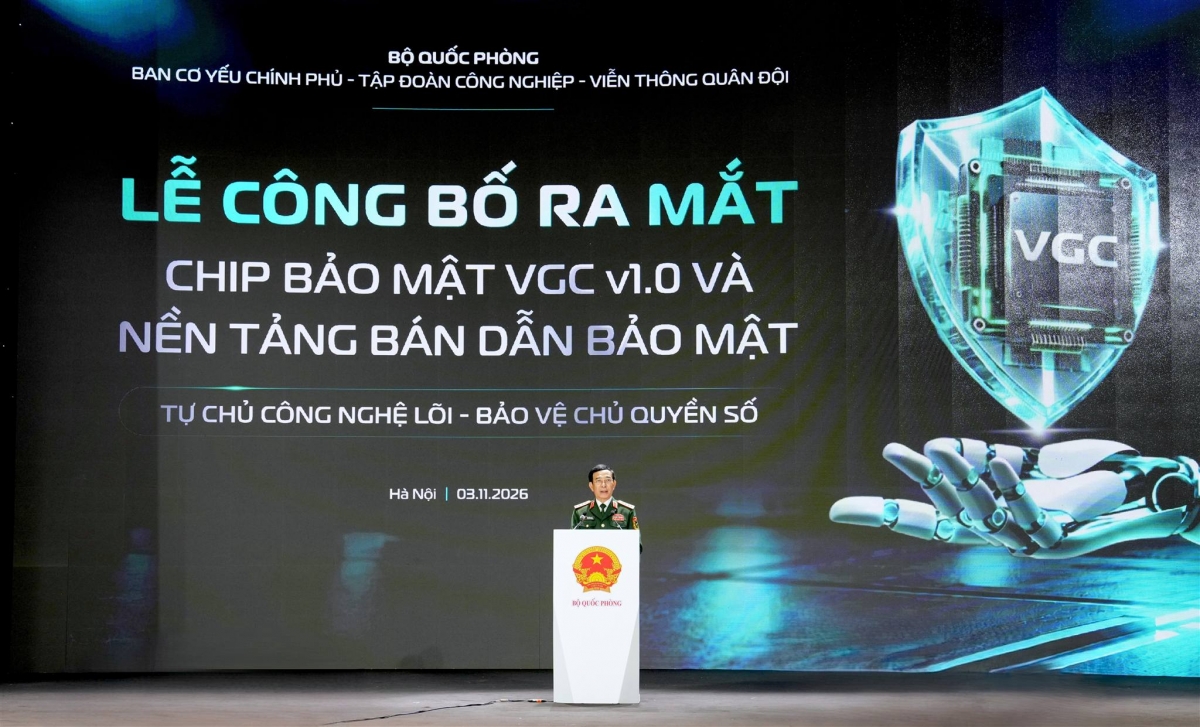
Measuring 10 by 10 millimeters, the VGC v1.0 chip contains approximately 300 million transistors and uses 28-nanometer CMOS technology. Tests show that its encryption and decryption speeds are about 15 times faster than those of software-only solutions performing the same tasks.
The chip also incorporates technical safeguards designed to protect its architecture and reduce the risk of information leaks and reverse engineering.
Lieutenant General Tao Duc Thang, Chairman and CEO of Viettel, said that researching, designing, and developing secure semiconductor chips is an extremely challenging field that requires long-term accumulation of knowledge, technology, and highly skilled human resources.
“However, we believe that starting later does not mean accepting dependence. With the right strategy, focused resources, and persistent efforts, we can gradually narrow the gap and move towards mastering strategic national technologies,” he said.
General Phan Van Giang, Deputy Prime Minister and Minister of National Defense, said semiconductor chips have become a strategic resource and a tool of intense competition among nations.
Chips are the heart of digital devices, while cryptography is the shield that protects information and the key to safeguarding data, he noted.
”Without mastering chip technology, it is difficult to fully master cryptography; without mastering cryptography, it is difficult to firmly safeguard digital sovereignty and protect the nation. Mastering a secure semiconductor platform is not merely a scientific and technological task. It is also a political mission and a practical measure to protect national sovereignty in cyberspace and safeguard the country early and from afar through peaceful means,” said General Giang.


