







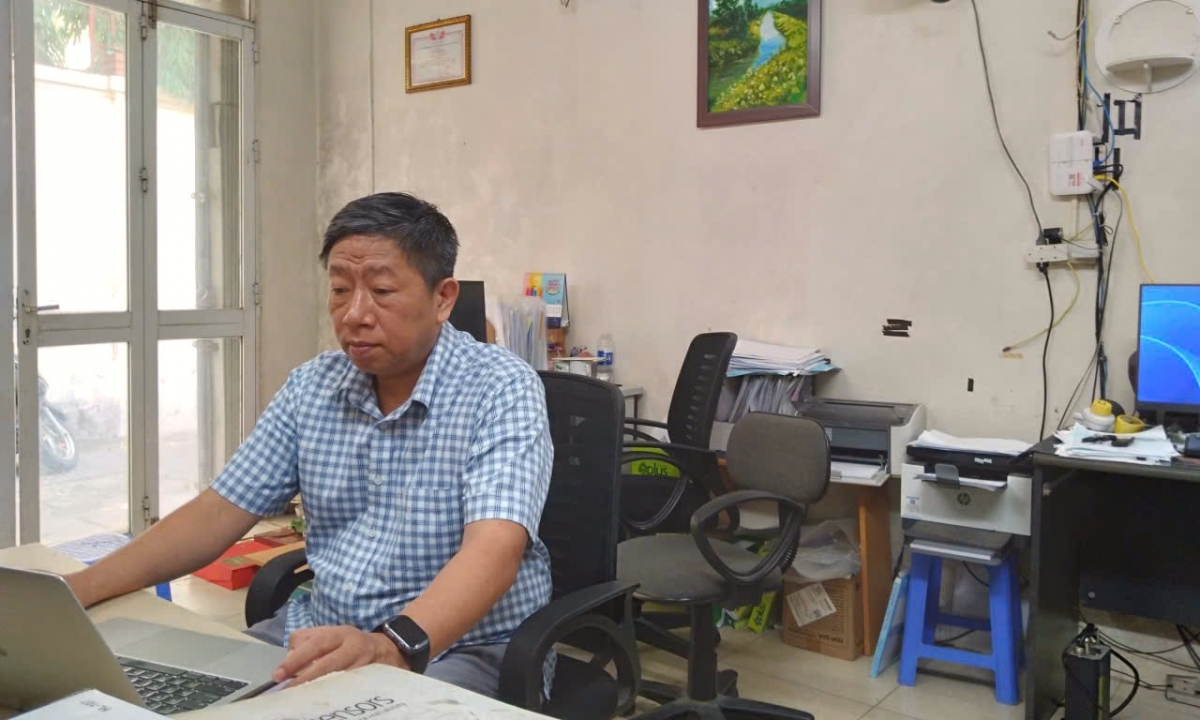
Hidden in a small alley on Tran Khat Chan street in Hanoi stands a unique house where numerous practical inventions and research projects have been developed. For the past 20 years, Dr. Nguyen Phan Kien’s home has served as an “innovation workshop” for students.
"Back in 2003-2004, when the university enrolled its first Biomedical Engineering students, we worked closely with them to develop practical products and supply them to different organizations through the Biomedical Electronics Center, now the Institute of Health Science and Technology. The income from those products allowed us to purchase more equipment and build a better work environment. As the workshop became better equipped, more students were drawn to it, eager to learn, experiment, and turn their ideas into real products," said Dr. Kien.
The ground floor of Dr. Kien’s house has been made into a modern laboratory, where students can assemble, test, and operate their own prototypes. The second floor serves as a meeting room, constantly bustling with students presenting ideas, reporting project progress, and showcasing self-developed scientific models.
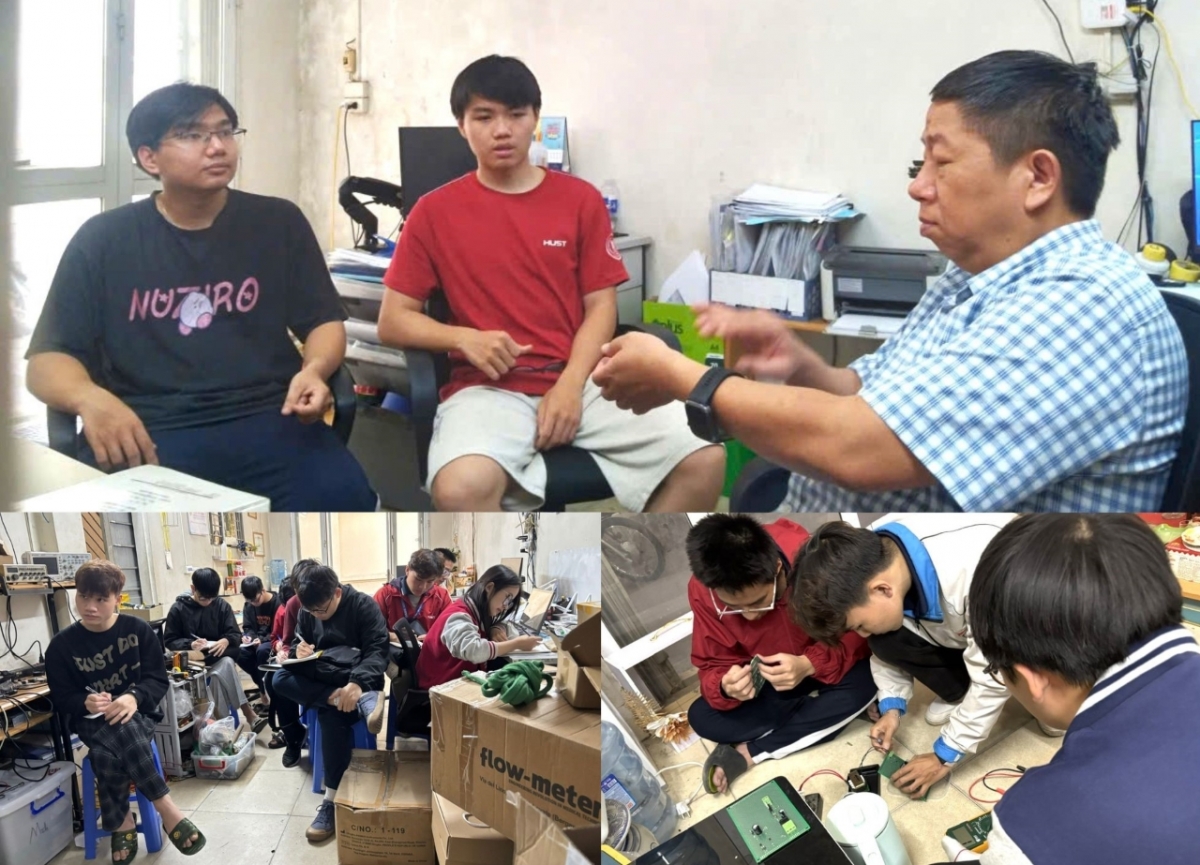
"Students learn a great deal of theory at university, but without practical application, it can be difficult for them to fully grasp the concepts. I ask them to consolidate what they have learned and present a report within a week, then move on to hands-on implementation the following week. This approach helps bridge the gap between theory and practice. As they gain experience, students can pursue their own interests. Some focus on hardware development, while others are more interested in software," Mr. Kien said.
Teams under Dr. Kien’s supervision are organized according to expertise. Bui Phuong Duy, a third-year Biomedical Engineering student at Hanoi University of Science and Technology, said: "The first thing I learned was how to build circuits manually. Later, I learned circuit layout design, wiring techniques, and how to work with different modules and microcontrollers. While Dr. Kien teaches theory in class, practical training takes place at his house because that’s where the necessary tools and equipment are available."
Dr. Kien has recently collaborated with Associate Professor Dr. Tran Thuong Quang to develop a joint treatment gel that stimulates cellular recovery, promotes capillary growth, supports cartilage tissue regeneration, and effectively reduces inflammation. Dr. Kien’s research team is currently focusing on developing new technologies for rehabilitation and functional recovery, tailored to the needs and conditions of patients in Vietnam.
"Many of our products have already reached the market. At present, we’re working on rehabilitation systems. This June, there are 36 research projects related to rehabilitation technology and devices to monitor and support athletes during training. I hope businesses will invest in these products so we can accelerate development and bring them to market as soon as possible," said Dr. Kien.
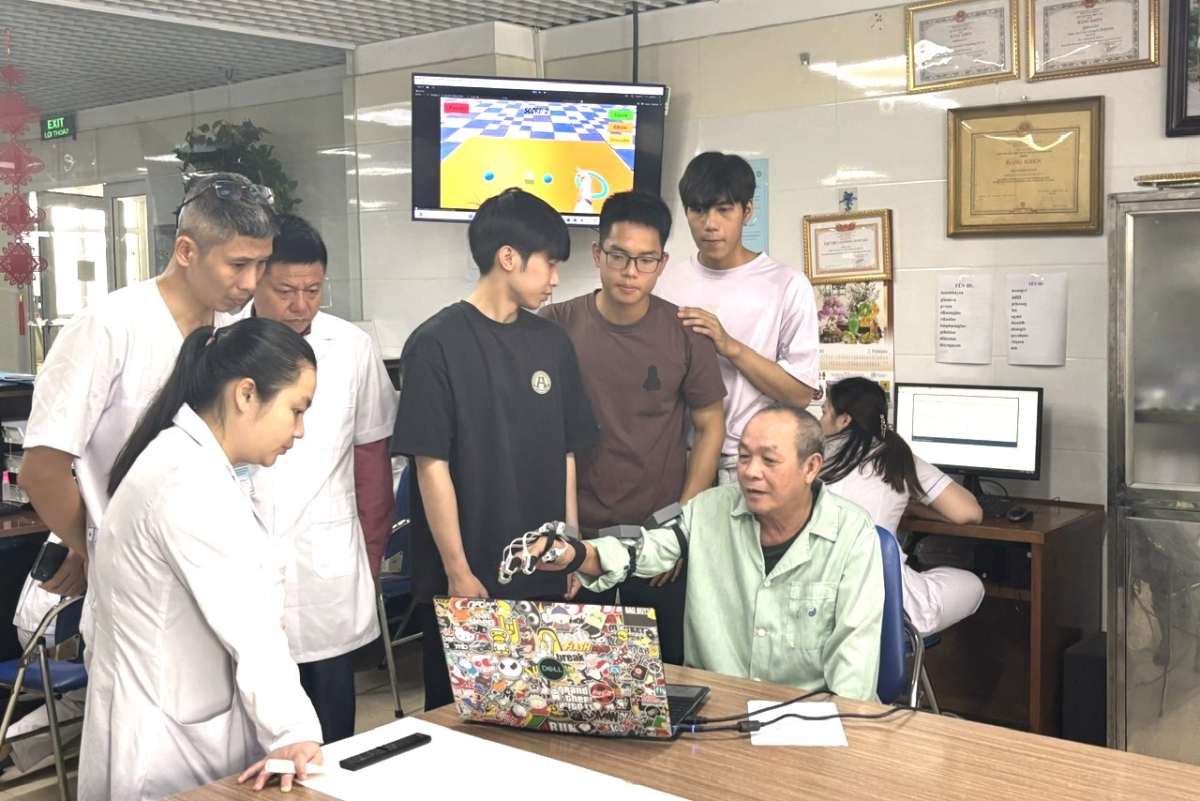
"I’ve worked with Dr. Kien for three years. In his laboratory, I’ve gained valuable professional skills and practical experience that would have been difficult to acquire through study alone. He helps us identify and correct mistakes that we might never have discovered on our own. Right now I’m developing a rehabilitation glove and hope to create a new product that’s not yet accessible to patients on the market," said Tran Viet Bach, a third-year Biomedical Engineering student working on rehabilitation technology projects under Dr. Kien’s guidance, said:
Dr. Kien and his team are also developing rapid food-quality testing systems, electronic diagnostic devices, and technologies that support patient treatment. These innovations have received high praise from scientific organizations, regulatory agencies, and fellow researchers for their quality and practical value.


