







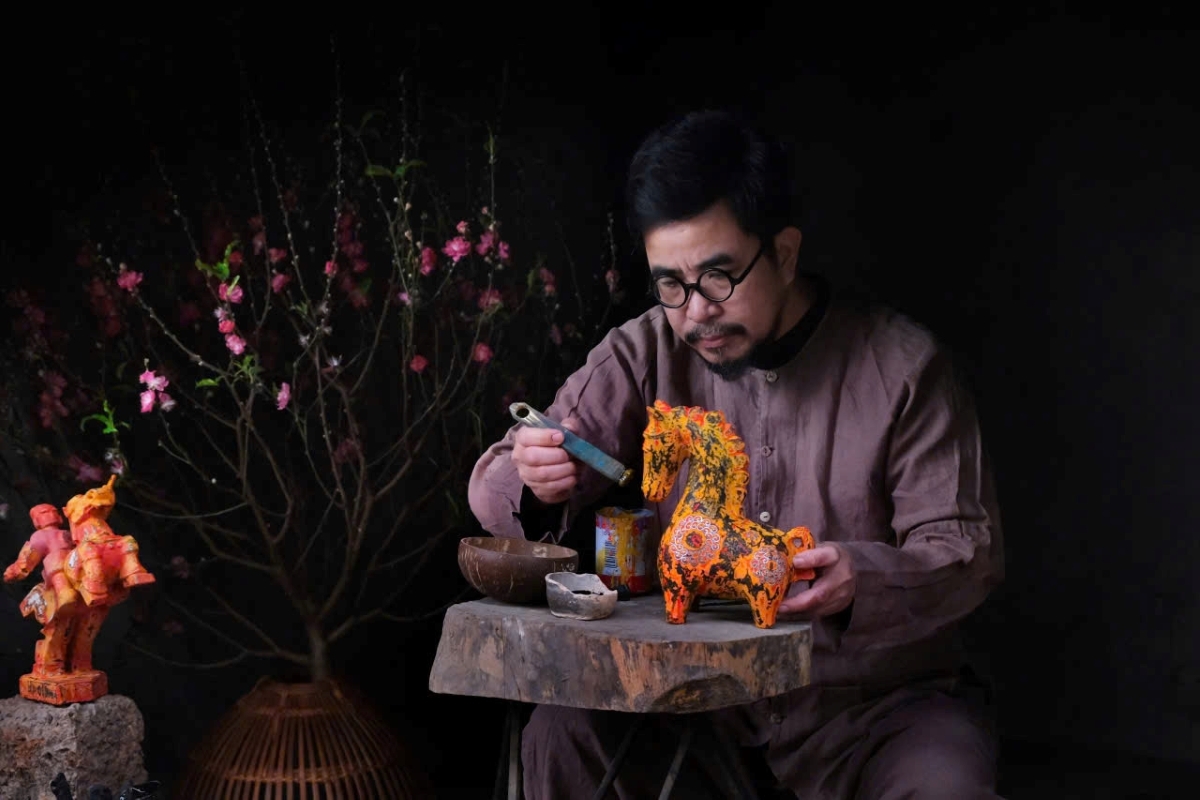
“I came to lacquer art by destiny. I was born and raised in the cultural space of an ancient village where communal houses, pagodas, worship statues, and reliefs were all associated with gilded lacquer. I was exposed to the craft at a very young age,”Nguyen Tan Phat said at the exhibition “Flow of Vietnamese Lacquer Art” held at the ancient Ha Vi communal house on Hang Hom street in Hanoi’s Old Quarter.
“At first, I was simply curious and fascinated watching the adults work. But the more I engaged with it, the more captivated I became. Later, when choosing my major at the University of Industrial Fine Arts, I chose lacquer art, which has become an inseparable part of my life ever since.”
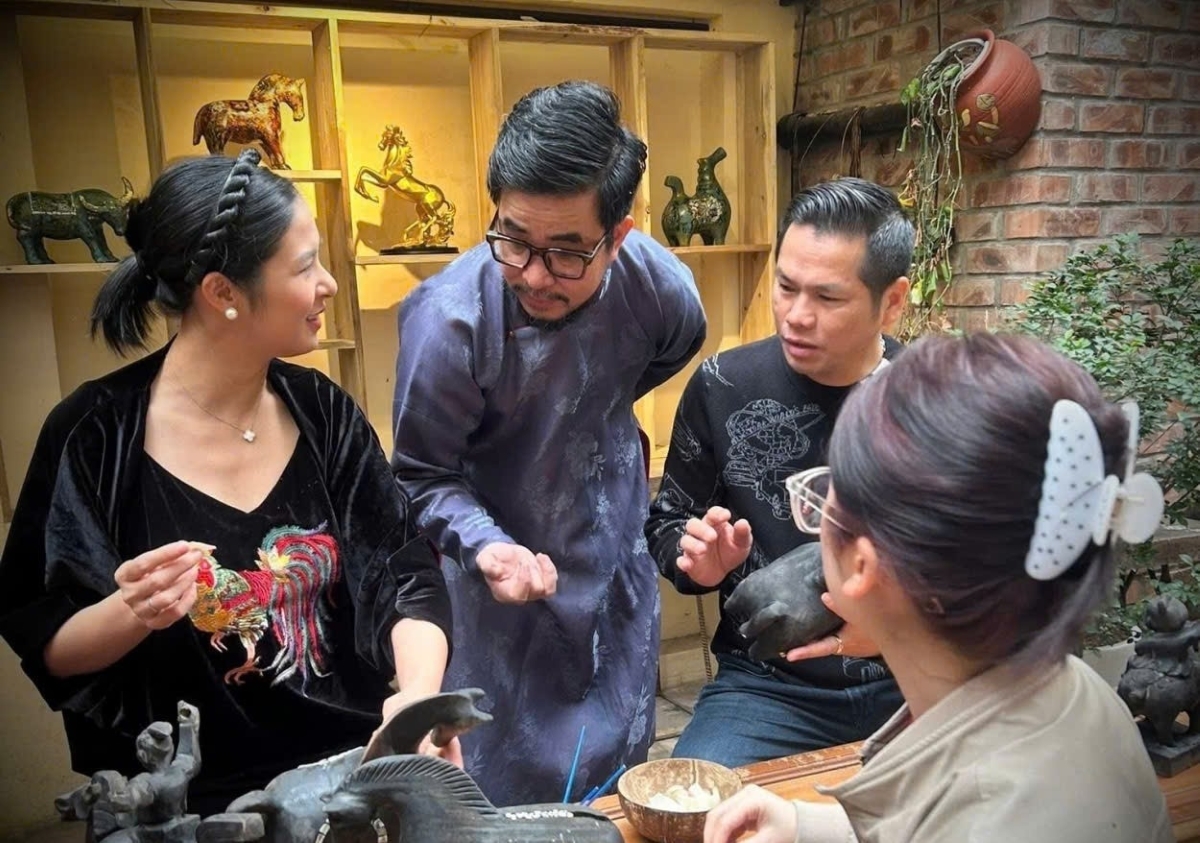
In the small courtyard of Ha Vi communal house, Phat crafted lacquer zodiac animal figures to show visitors the process.
“I always try to preserve the traditional spirit without letting it become outdated. My works aim for simplicity and closeness to everyday life, but with a depth of materials and color. I focus on natural lacquer and traditional techniques, especially a subtle richness of colors and a sense of vitality on the surface. Each work is meant not only to be seen, but also to be felt,” Phat said.
His sculptures are both relatable and deeply symbolic. The buffalo symbolizes the Vietnamese countryside and the spirit of hard work, while the tiger represents strength and traditional folk beliefs. The cat, a familiar zodiac figure, is portrayed with motifs inspired by village gates, bell towers, and other distinctly Vietnamese cultural details.
Inspired by the beauty of traditional Vietnamese elements, Phat skillfully incorporates materials such as eggshells, coconut shells, laterite stone, and jackfruit wood into his handcrafted lacquer works.
“One of the most distinctive materials used in Vietnamese lacquer art is eggshell. The shells are cleaned and dried before being inlaid onto lacquer products, making them a very useful material. If the eggshell is inlaid using the proper technique, it will not crack. This is one of the very special and characteristic techniques of Vietnamese lacquer art. To inlay eggshells, the lacquer used to attach them must be covered with a traditional black lacquer specially made for this purpose and known for its excellent adhesive quality,” said Phat.
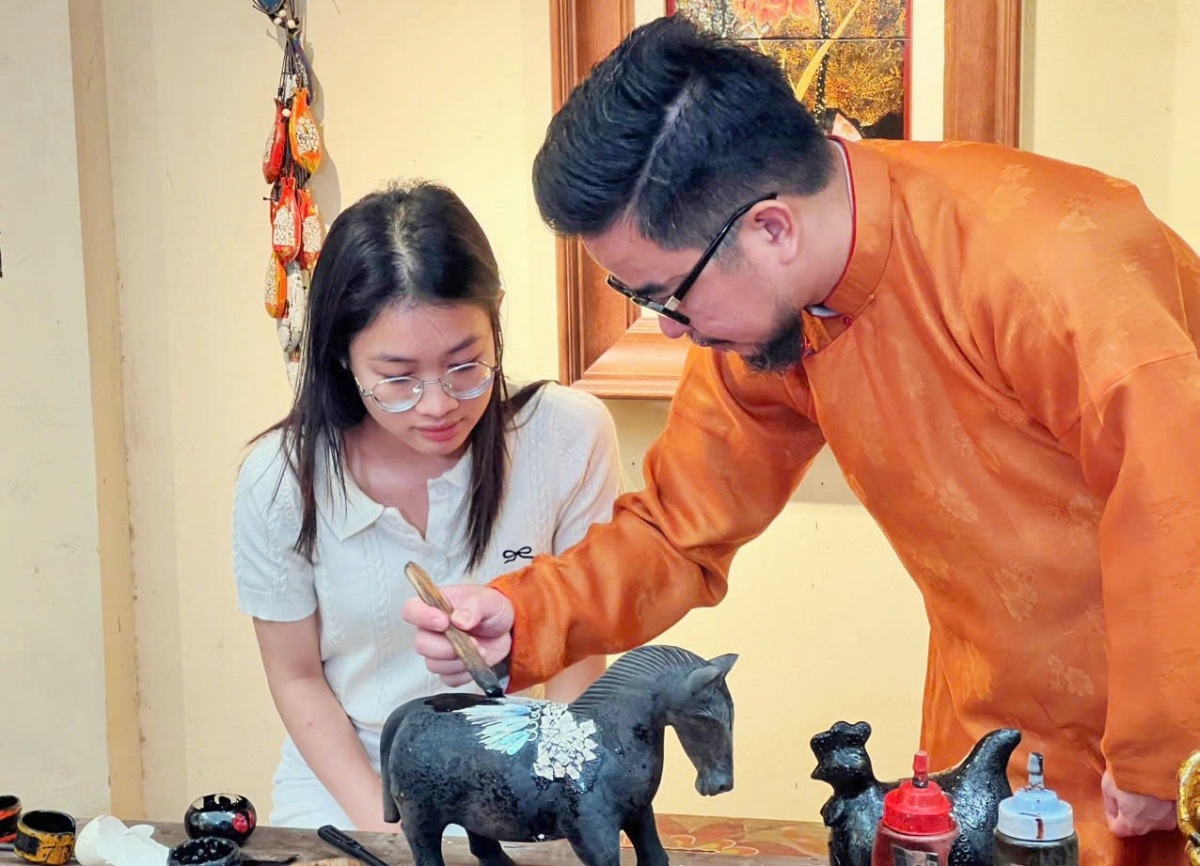
In the process of creating lacquerware products, the coloring stage is one of the most important steps, requiring the artisan’s skill and delicacy. Color plays a key role in creating the beauty and aesthetic value of each artwork.
“After the eggshells are inlaid onto the product, we wait about one and a half days for them to dry before applying layers of color over the surface. These colors are made by mixing lacquer with color pigments, which creates rich colors and helps them adhere firmly. We apply 9 or 10 layers of color onto the product, usually using different colors. Later, when the surface is polished, those colors remain embedded in the cracks of the eggshells, creating unique visual effects,” said Phat.
Phat has brought lacquer art to handicrafts, jewelry, and souvenirs. Painter Pham Thanh Thuy of Hanoi, said that Phat’s works, in both form and material, are never outdated.
“They consistently reflect creativity, vitality, and a contemporary spirit. With formal artistic training combined with the skilled craftsmanship and life experience of a traditional artisan, he represents a new generation dedicated to preserving and promoting Vietnamese cultural identity through modern lacquer art.”
“Phat’s lacquer artworks are close to everyday life. I especially love the small, delicate bracelets inlaid with mother-of-pearl, featuring beautiful patterns and rich amber-brown colors. These small items have made lacquer art more familiar and accessible to more people,” Nguyen My Hanh, a student at Hanoi University of Fine Arts, said.


