







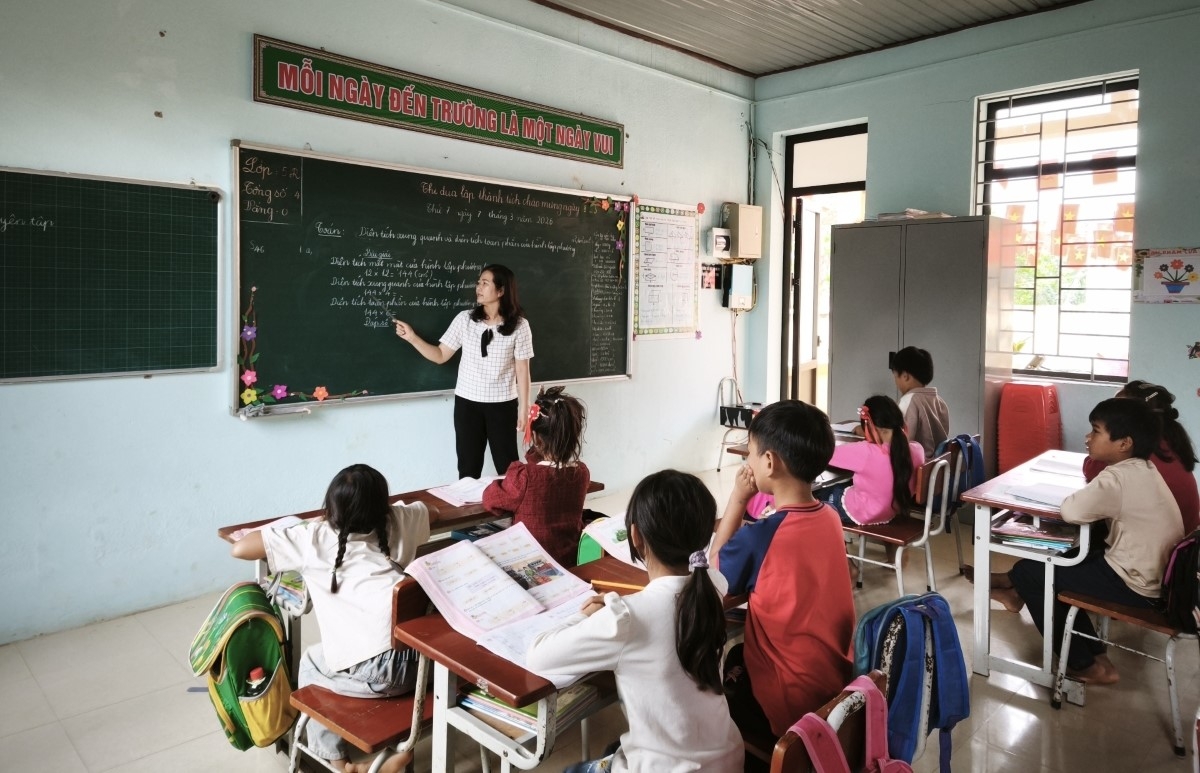
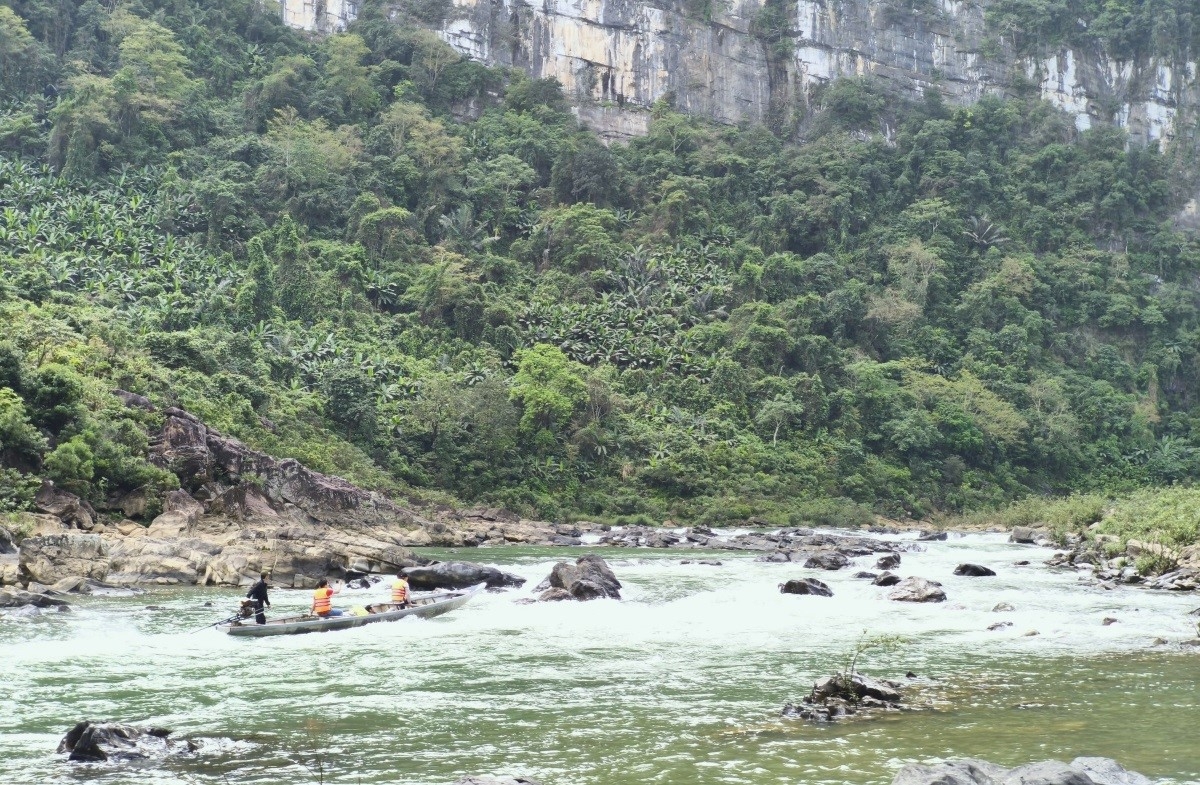
Teacher Ha Thi To, 51, has dedicated 28 years to education, including the past three years volunteering at Hoi Ray satellite school, part of Truong Son Primary Boarding School for Ethnic Minority Students. To get there, she must travel by motorbike before leaving her vehicle behind and boarding a boat to navigate the rapids of the Long Dai river.
From Monday to Friday each week, To stays at the school, bringing food supplies to cook her own meals. On weekends, she makes the long journey home to visit her husband and children. With no electricity or mobile phone reception, living conditions at the satellite school are extremely challenging. Yet she constantly encourages herself, knowing that her students eagerly await her arrival each day.
“When I volunteered to teach here, I was prepared for the challenges ahead, knowing that there would be no electricity or mobile phone connection. Although I sometimes miss my family and children, teaching has always been my top priority,” said To.
To reach the Hoi Ray and Nuoc Dang satellite schools, teachers must navigate the Tam Lu rapids on the Long Dai River. During the rainy season, rising water levels make the journey by small boat particularly dangerous. After crossing the river, they continue along steep, slippery forest trails to reach the villages. Teachers working at other satellite schools, including Rin Rin and Sat, must trek long distances across steep mountain slopes. Heavy rains sometimes cut off access routes, leaving them stranded in the villages, where living conditions are extremely difficult.
Many students in Hoi Ray village also have to walk three to four kilometers to school, crossing streams and navigating forest trails along the way. Despite these hardships, the children attend classes regularly and work hard in their studies, encouraged and guided by their dedicated teachers.
“Every day, I take a boat to school in the morning, return home for lunch, and then go back to school in the afternoon. In the evening, I use a solar-powered light to study,” Ho Van Huynh, a student from Hoi Ray village, said.
Facilities at Hoi Ray school remain severely limited, with no electricity or internet access. With only a small number of students living in scattered villages, classes bring together children from two or three different grade levels, with a total enrollment of just 12 pupils. In a combined Grade 1 and Grade 2 classroom, the teacher divides the blackboard into two sections to teach both curricula. Lessons are conducted alternately between the two groups, requiring close coordination between the teacher and her students.
“I go to school every day. Although our classroom is a little dark, we can still study. I really hope we will have electricity one day so that our classroom will be brighter and we can see more clearly when writing. I am very grateful to our teacher, who has traveled all the way from the lowlands, crossing rivers and streams to teach us. I also dream of becoming a teacher like her, so that I can go to remote mountainous areas and teach other children,” said student Ho Thi Kim Tue.
Apart from teaching, the teachers in Hoi Ray village also make regular visits to students’ homes, working closely with parents to support and encourage their children’s learning. Thanks to their persistent efforts, parents’ attitudes toward education have gradually changed. More families now recognize the importance of schooling, hoping that education will give their children a better future and spare them some of the hardships they themselves have endured.
Ho Thi Hoa, a resident of Hoi Ray village hopes that local children will study hard and gain the knowledge they need for a better life. “Life in this remote mountainous area is extremely difficult. Without proper roads, our children will continue to face many hardships. Every time they travel to school by boat, we worry about their safety. It is also a constant concern for us as parents.”
Despite the harsh conditions and countless challenges of working in these remote mountain villages, the teachers remain deeply committed to their students. For them, the greatest reward lies in seeing the children make progress day by day, gain confidence, and become more independent and eager to learn.


