







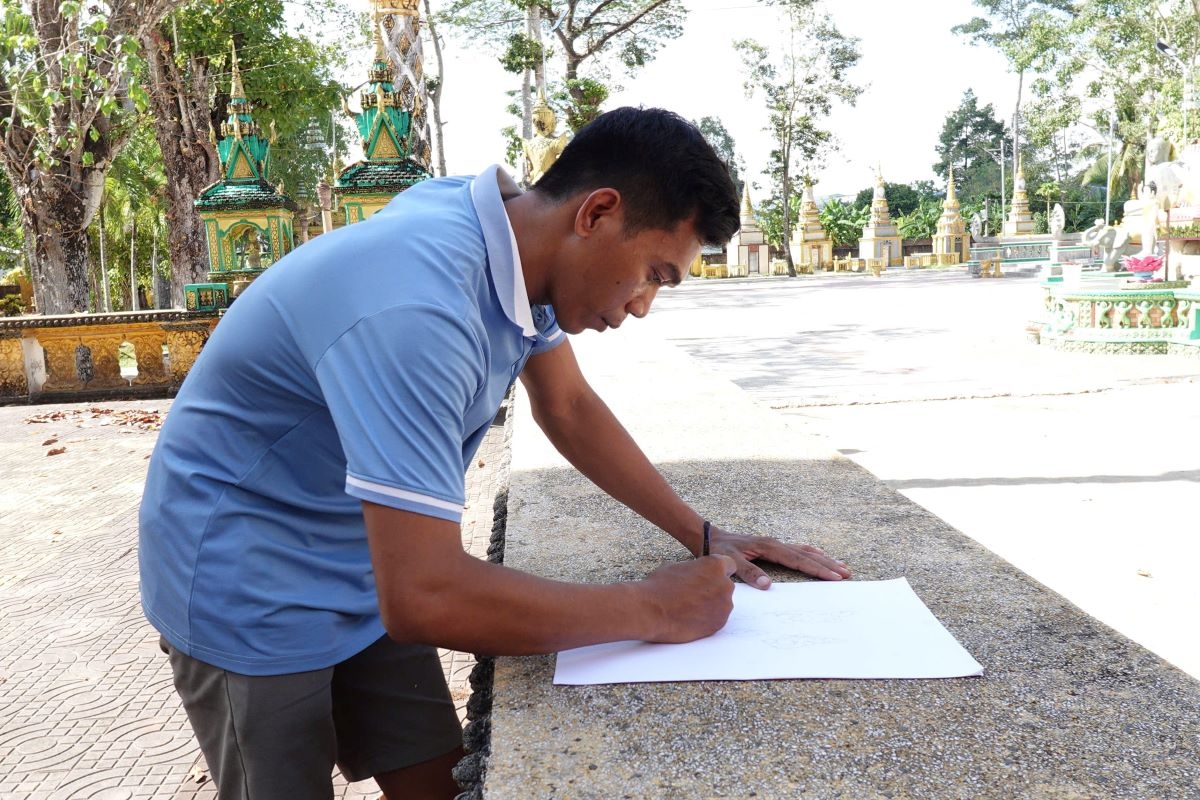
Son Thanh Tuan has a deep passion for traditional Khmer sculpture. During more than 20 years of studying and practicing in Khmer Theravada Buddhist temples, he became familiar with the patterns and decorative motifs commonly found in these structures. Over time, this experience helped him form a clear idea of the profession he wanted to pursue.
To further develop his skills, Tuan sought permission from senior monks to study at other temples in the region. Whenever he heard about a Khmer Theravada Buddhist construction project or a master craftsman known for his expertise, he would travel there to learn and work alongside experienced artisans. After mastering the craft, Tuan left monastic life and began pursuing the career he had chosen for himself.
“I have been passionate about this craft since I was young. I was fascinated by the beautiful decorative patterns and motifs in Khmer temples, which inspired me to learn the art from an early age. Learning Khmer sculpture is more difficult than learning the Khmer language because to remember and create the patterns, you must first learn how to draw and practice drawing every day. It took me three to four years to master the craft,” Tuan said.
Khmer sculpture demands a high level of skill, patience, and craftsmanship. Tuan specializes in creating traditional decorative motifs and figures such as the sacred bird Krud, the giant guardian Yeak, and the celestial Apsara. He works with a variety of materials, including wood, stone, and cement. His perseverance and determination have enabled him to master a wide range of artistic techniques, from wood carving and cement sculpture to mold-making and decorative painting.
“I can do many types of work, including making decorative molds, carving, sculpting statues, and painting. However, decorative carving is still what I do most often. In the future, I will continue striving to improve my craft, making my work better, more beautiful, and innovative,” said Tuan.
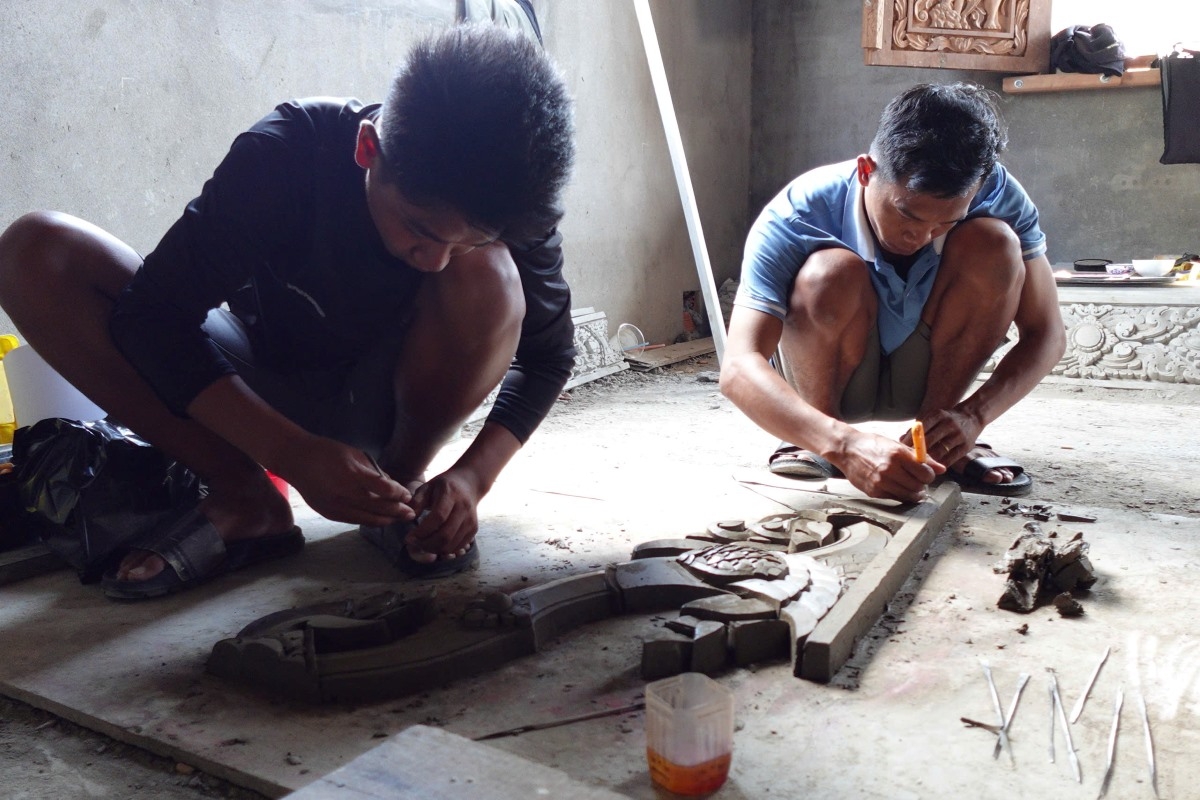
More than just a talented craftsman, Tuan is passionate about preserving the traditional artistic heritage of the Khmer community. He feels fortunate to have learned and practiced the craft himself, but says his greatest reward comes from teaching others and seeing more young artisans join the effort to safeguard their cultural traditions.
“Tuan was highly skilled, so I decided to work alongside him to learn from his experience and improve my own skills. I especially wanted to learn how to preserve the soft, graceful lines of traditional Khmer decorative motifs. Tuan is always willing to share what he knows, and I really appreciate that,” Son Binh Dan of Can Tho city said.
From the struggles of starting out to becoming a respected artisan, Son Thanh Tuan has devoted his life to the art of Khmer sculpture. His work enhances the beauty of traditional Khmer architecture, and his willingness to share his knowledge encourages others to follow the same path.


