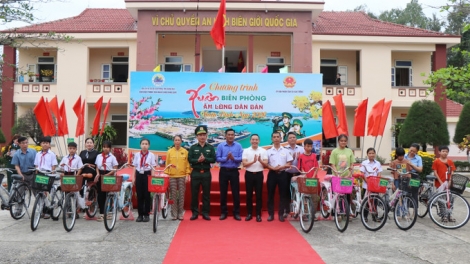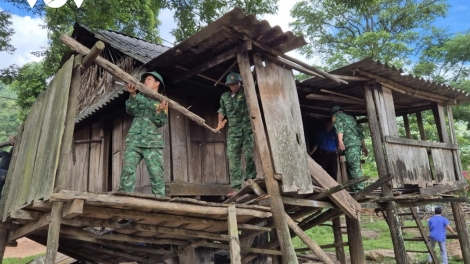





At border guard posts along the Lang Son border with China, learning and using ethnic minority languages has become a regular requirement for officers and soldiers. As a result, communication sessions are no longer rigid but become more accessible, easy to understand, and tailored to each target group.
Officer: "Following the State's policy, what are your expectations after the election?"
A local: "After the election, we here are very excited. We elected talented and virtuous officials to lead the people, and everyone is very happy and enthusiastic."
Exchanges in the local language not just convey information but show respect for the local culture. This helps narrow the gap and make it easier for people to accept information, reaching consensus at the grassroots level, especially on issues like law and border security.

In Chi Ma village, Mau Son commune, home to more than 230 households and nearly 1000 inhabitants, disseminating information in ethnic languages has proved to effective. Villagers' legal awareness has improved, and violations have decreased. Officers and soldiers of the Chi Ma Border Gate Border Guard Post regularly go door-to-door, communicating regulations concerning immigration, crime prevention, and border sovereignty protection.
Vi Van Nhu, Party Secretary and Head of Chi Ma village, said, “Disseminating law in the local language helps people understand the law, raise awareness, and form habits of abiding by the law. Border Guard officers who come to the village speak the Tay language and get along well with the villagers, so the villagers are very fond of them. The elderly consider the Border Guards as their own children or grandchildren, while the youth and children consider them as brothers or friends.”
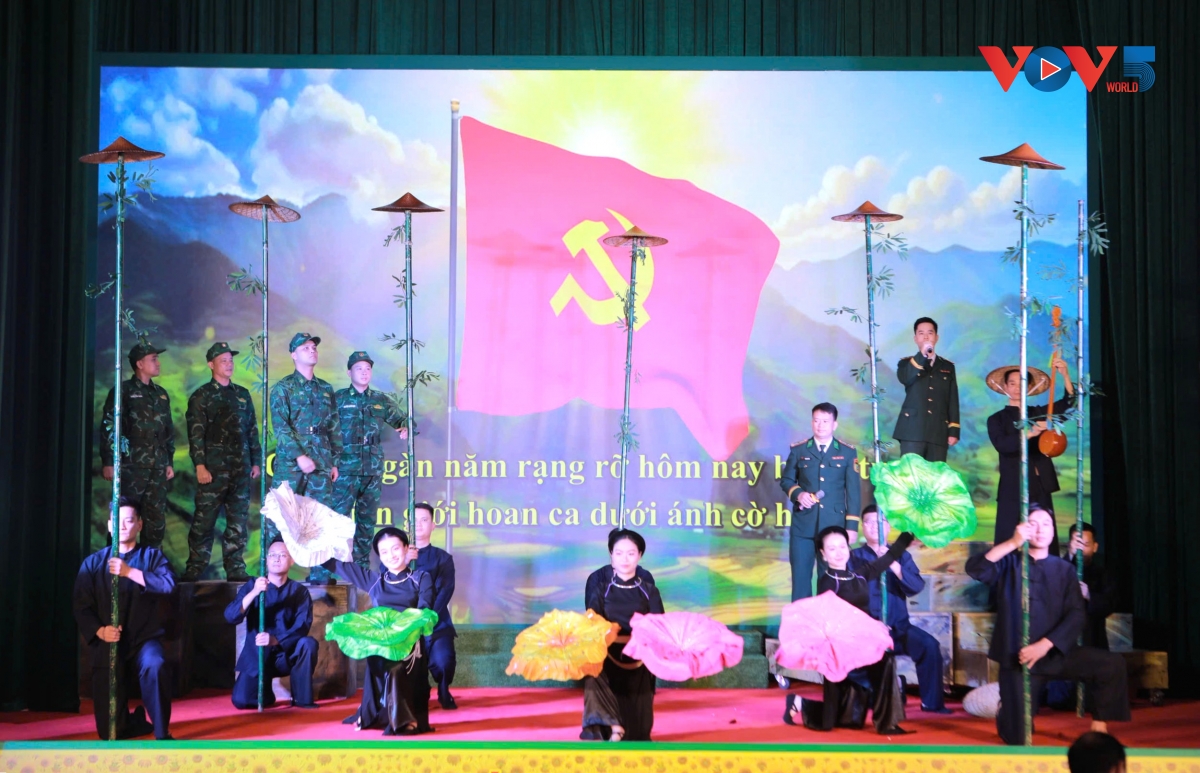
It’s more important that the people have followed the rules, actively participated in maintaining security and order, and protecting the border and boundary markers. Each year, the Chi Ma Border Gate Station organizes 60 to 70 legal awareness sessions for about 3,000 participants. In addition, the Information and Communication Teams disseminated information in both Vietnamese and ethnic languages through the loudspeaker system.
Political Officer of Chi Ma Border Gate Station Lieutenant Colonel Tran Trong Toi told us, “We have been implementing the “togetherness approach” which includes speaking the ethnic language together. Each of us in the unit has understood and become more responsible in self-learning for more effective communications. Information is delivered through lively forms so that the people are willing to join the Border Guard in protecting the border and boundary markers.”
The Tay ethnic language competition in the Border Guard held earlier this year was an opportunity for military personnel to hone their skills and improve the quality of their work. Colonel Le Minh Tien, Deputy Commander of the Border Guard of Lang Son province, said, “Learning ethnic minority languages and the Tay language in particular is a policy and a drastic directive from the Border Guard Command. In recent years, the provincial Border Guard force has strengthened its guidance so that officers and soldiers can listen to, understand, and use ethnic languages well to effectively perform the task of protecting the border.”
In Lang Son’s border villages, as evening falls, the loudspeakers broadcast news and stories in the language that locals have heard, understood, and trusted for generations. Laws and regulations on border sovereignty, or crime prevention and control are easy to remember and follow.
The local languages are spoken in everyday conversation and every time officials and soldiers visit communities. The understanding of and respect for the local culture has bridged the gap between law enforcement forces and the people and consolidated trust in the border regions of the country.