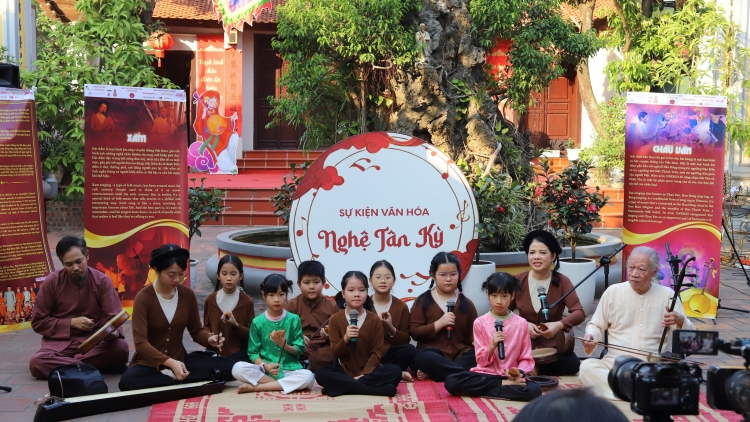




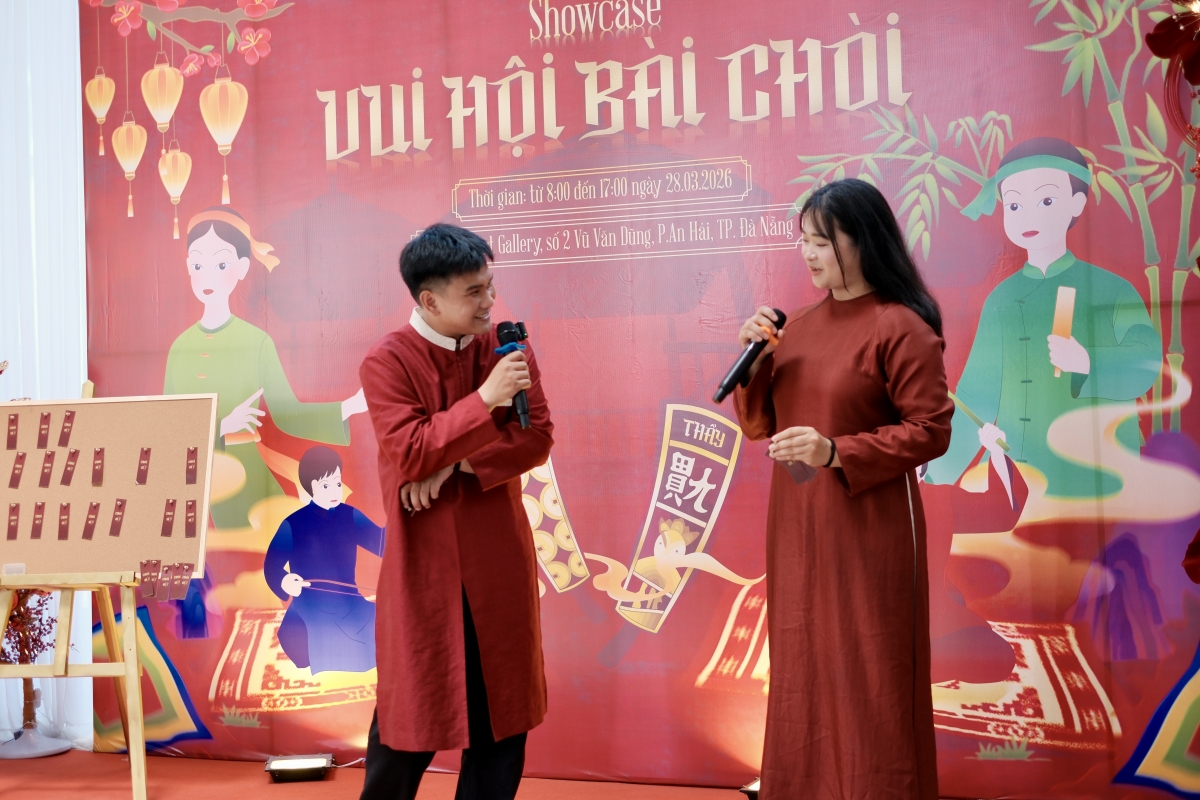
Bai Choi is a unique folk activity that combines music, poetry, acting, painting, and games of chance, traditionally centered around rustic bamboo huts and paper cards in central Vietnamese villages.
Associate Professor Ngo Minh Hien, the project's co-advisor, described its appeal, “What I love most about Bai Choi is its uniqueness. It’s a very rustic, very simple folk game, yet it conveys many values of music, morality, philosophy, and perspectives on life. Bai Choi is a unique cultural phenomenon that needs to be nurtured and promoted.”
The true value of Bai Choi lies in the chants delivered by the game callers (Anh Hieu and Chi Hieu). Folk verses and ancient songs praise love of homeland, fidelity, filial piety, and solidarity, while critiquing societal vices. Behind the joyful game lies a treasury of folk literature that has nurtured the souls of multiple generations.
Awakening love of the culture
Some worry that youth are apathetic about traditional music. But according to Ms. Hien, cultural appreciation is latent in every individual, regardless of their generation. It simply needs a spark.
“They clearly need a push for that cultural love to awake. This enables them to develop the elements already present in their souls using understanding, knowledge, skills, and a sense of respect for traditional culture and morality. That push lies in education. It lies in the way we help young people approach traditional culture so they can practice it,” said Ms. Hien.
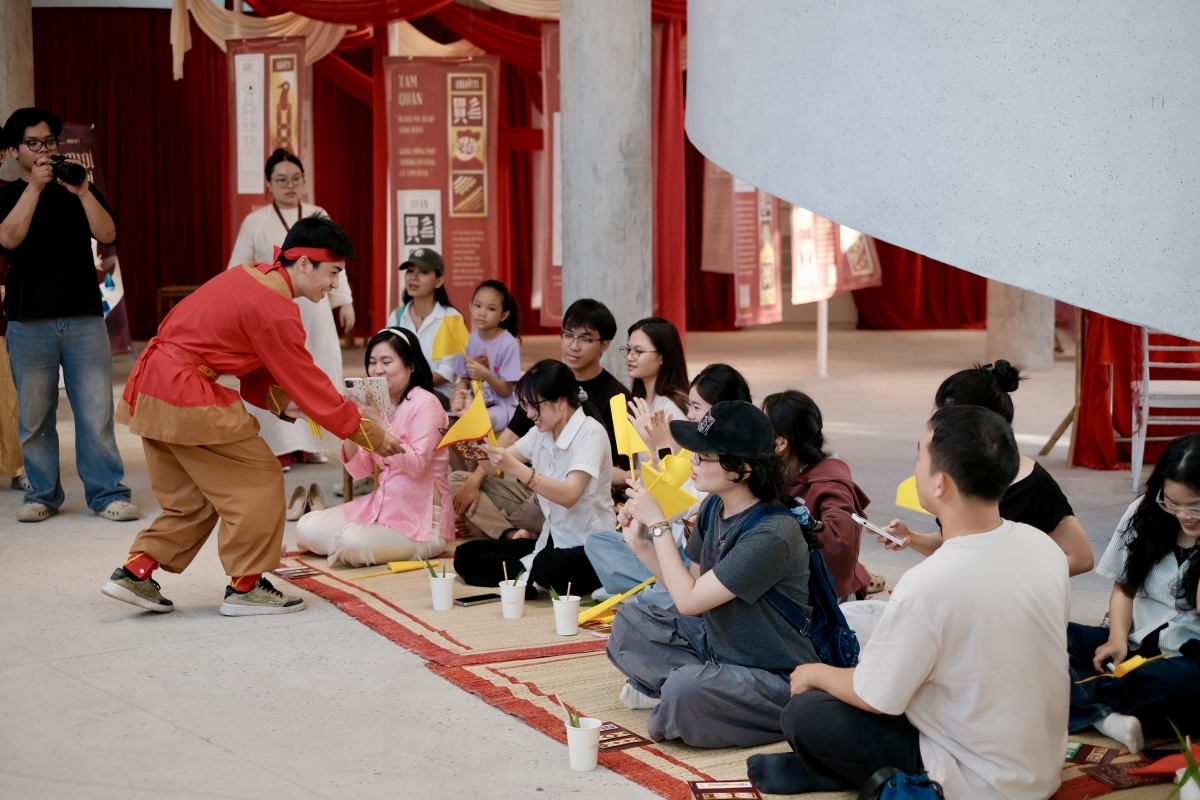
To preserve culture and Bai Choi in particular, people first need to clearly understand the nature of the cultural phenomenon they are pursuing, according to Ms. Hien,
“They must understand Bai Choi thoroughly - its nature, cultural values, and the moral values conveyed within. When they understand it clearly, they will fall deeper in love with it. When they understand and love culture, they will definitely have the consciousness to preserve it.”
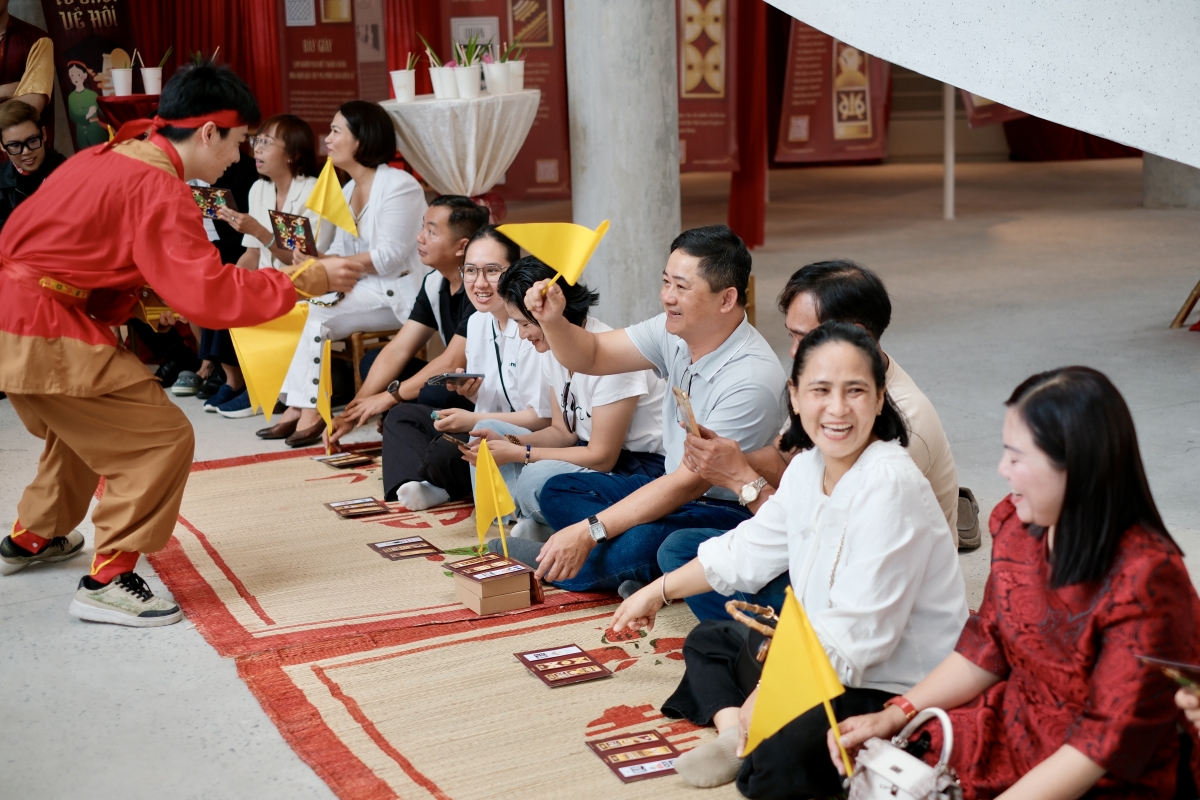
The “Choi oi” project
The FPT University students launched “Choi Oi” to reshape how their peers perceive this heritage.
Project leader Tran Hoai Anh explained their inspiration, “The idea of bringing a fresh perspective to Bai Choi was inspired by what has been happening in other traditional art forms. In the North, young people have been revitalizing Cheo (popular opera), while in the South, many student projects have breathed new life into Don Ca Tai Tu (amateur music). We wanted to do something similar for Bai Choi, so that younger generations could connect with it in a new way.”
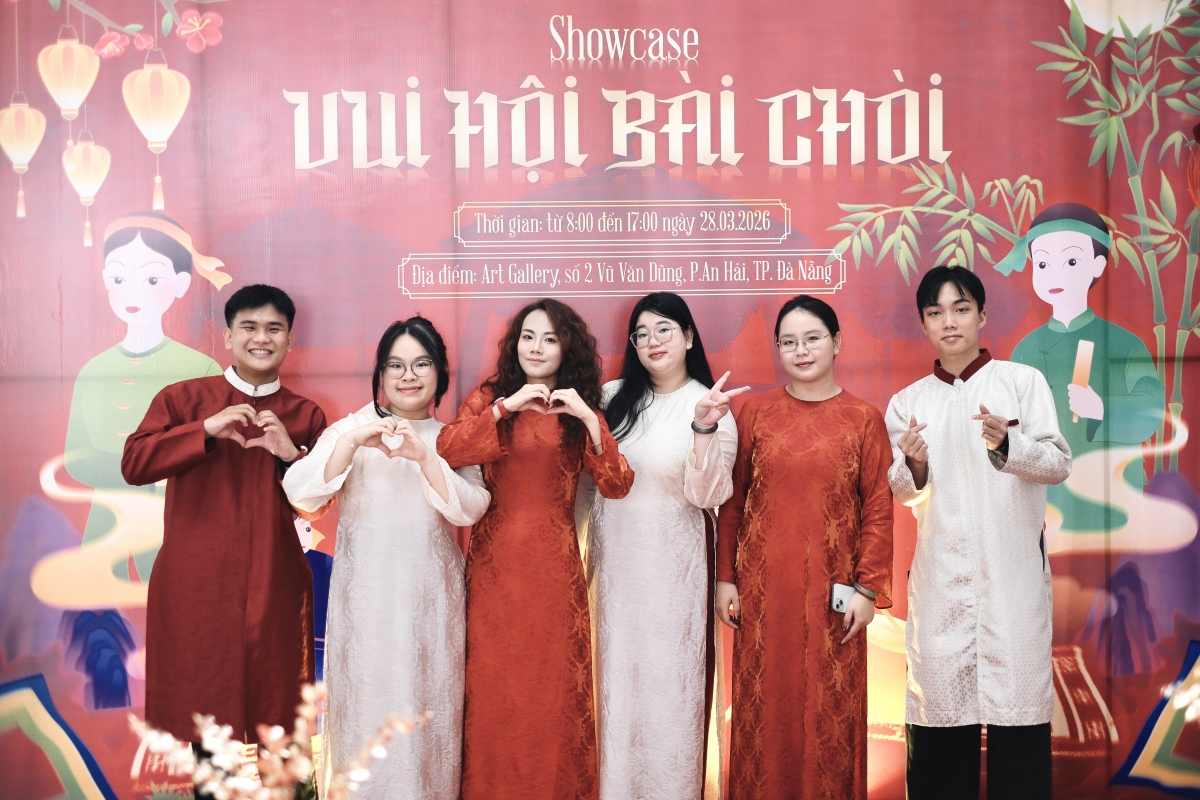
“The way we did it was to keep the art form’s essence but change the way we tell the story,” said Hoai Anh, adding, “First, we tell it on digital media platforms, using colorful graphic designs and videos, combined with a Gen Z communication style to help young people connect with and understand Bai Choi more easily. Second, we organized this showcase featuring a multi-sensory experience so that everyone could get the most complete feeling.”
The performance evolved beyond a purely auditory experience. It was not just about listening, playing, and hearing chants, but also about the visual and tactile aspects, Hoai Anh said.
“We displayed the cards made from various materials, and the audience could touch and experience them. In addition, to add liveliness to the Bai Choi chants, we made a few changes in the lyrics, integrating more Gen Z-style words so that people could easily understand it and find it more appealing.”
Associate Professor Ngo Minh Hien, the project's co-advisor, supported this experimentation, noting that culture must evolve and constantly transform. The fact that young people are setting new lyrics to central Vietnamese folk melodies or making the tunes sound more modern does no harm.
On the contrary, it makes the heritage more engaging and accessible to the youth without losing the foundational moral values. Project leader Hoai Anh assured that the team was committed to maintaining a balance as all members well understood the boundary between innovation and over-the-top disruption.
“In organizing this event, we hope young people will continue to preserve and develop traditional folk art. We can innovate, but we must keep its soul, so that it can grow while still retaining its tradition - its very essence,” Hoai Anh told VOV.
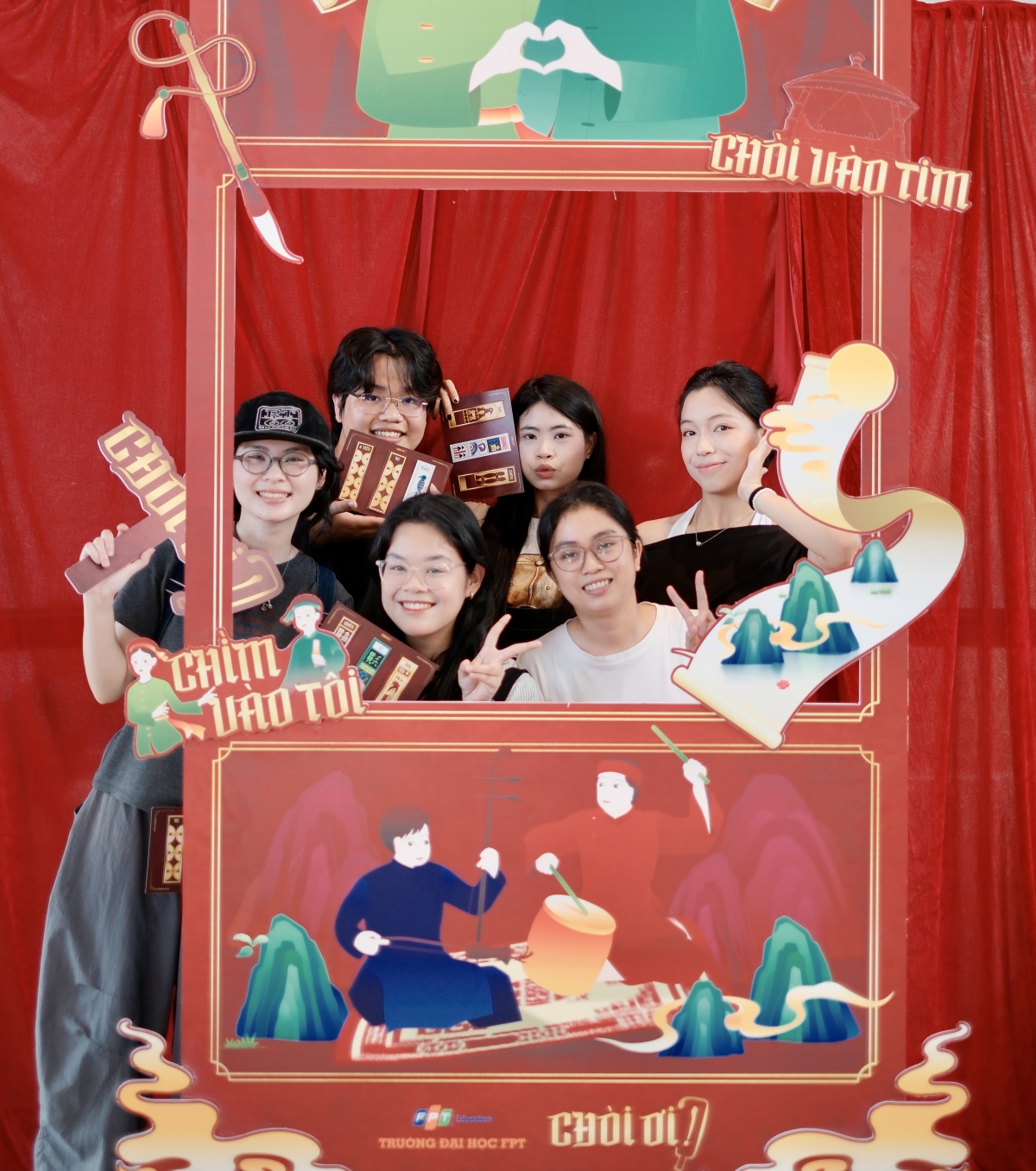
Echoes of change, connecting Gen Z to heritage
The integration of a modern media mindset, Gen-Z aesthetics, and academic rigor yielded explosive results, drawing hundreds of young participants to interactive displays, QR-coded mini-games, and check-in zones. Attendees shared their enthusiasm.
“After attending this showcase, I think Bai Choi no longer belongs to Hoi An. The performance space here is very close, engaging, and the activities are highly relatable to Gen Z,” said Dao Nam Trung of Da Nang city.
Quoc Khanh of Hue told VOV, “I used to think that Bai Choi was a folk game organized by older uncles and aunts. But this program proves that the youth can modernize Bai Choi and give us new experiences. Seeing young people host and chant Bai Choi in such a fresh way is amazing.”
Minh Quan, a student from Da Nang, said, “After seeing the showcase, I sincerely hope Bai Choi will be a part of our daily life. It can blend into our everyday routine.”
Anh Duong, also a student from Da Nang, said, “I think folk culture genres like Bai Choi need to be popularized through social media via storytelling and short viral clips on TikTok, which today's youth can easily consume. And creating multi-sensory experiences in which they can see, hear, and touch will make young people more interested in participating. Another crucial factor is KOLs. Nowadays, young people care most about whatever is viral online, so spreading culture through KOLs and famous artists will help the art form thrive.”
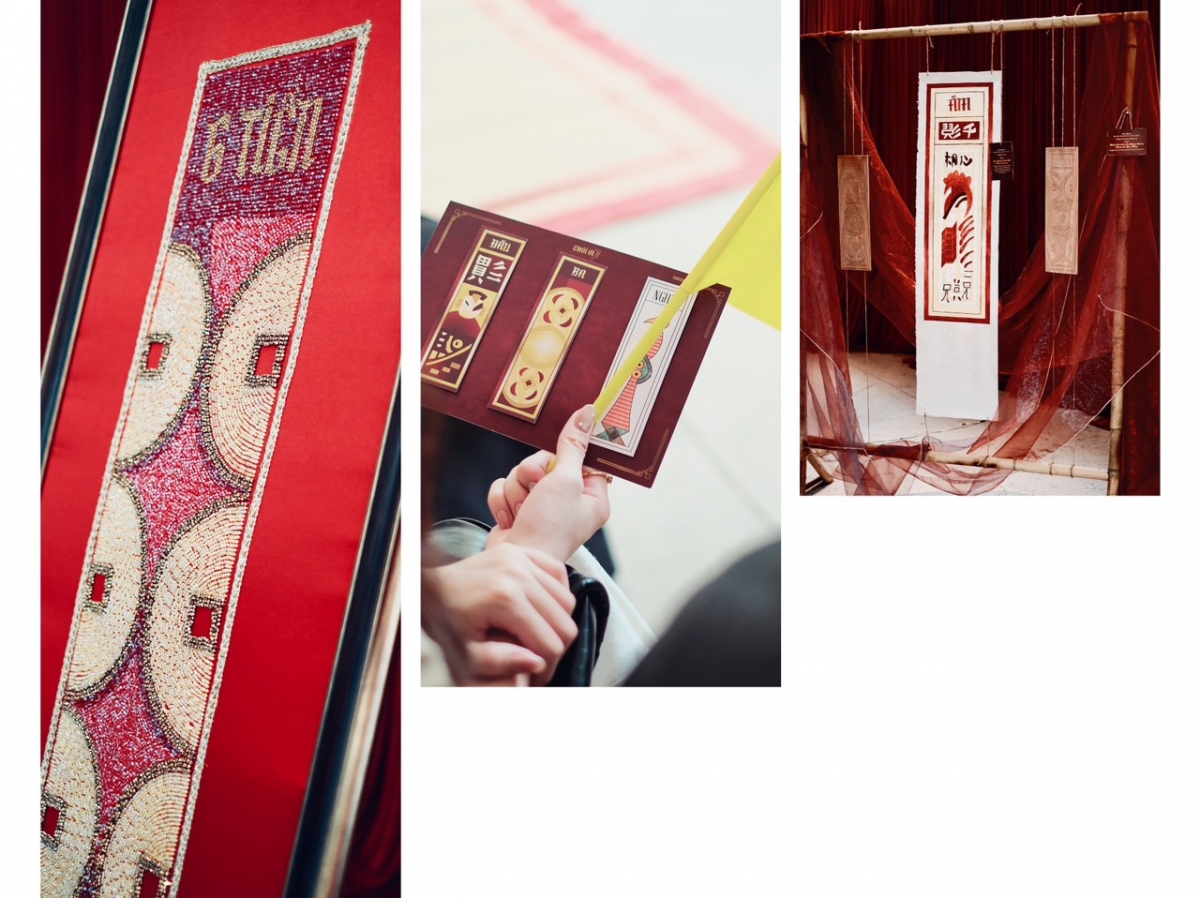
Bringing heritage into a virtual space
The project earned high praise for its practical, sustainable value. Master Duong Thuy Tram, a lecturer at FPT University Da Nang, said what they expect is not that everyone will become a Bai Choi researcher after this event, but that young people will feel Bai Choi is closer, not a far-fetched value.
“If a young person feels motivated by the program to learn more, wants to recount their experience to friends, or feels that Bai Choi is a living part of central Vietnamese culture and not just something to be stared at or heard about, that’s a valuable change. We hope to make a small contribution to bringing heritage into contemporary life with a rhythm that’s more modern and relatable,” said Ms. Tram.
The team and their advisors aim to digitize the project and bring Bai Choi into the metaverse. Associate Professor Hien acknowledged the challenge of recreating a spontaneous, interactive folk atmosphere in a virtual environment, but expressed confidence in the passion of Gen Z to find innovative solutions.
Sustainable vitality in the soul of the younger generation
The “Choi Oi” project demonstrates that younger generations are not turning their backs on tradition. By changing the storytelling while maintaining core ancestral values, the generation gap can be successfully bridged, Hoai Anh said.
“I hope young people will look at Bai Choi in a fresh way and not think of it as just a traditional folk art form for middle-aged or older people. I also hope the youth will continue to preserve and develop traditional folk culture. Just experience it, and you’ll find the beauty in it,” said the project’s leader.