







Reporter: It’s great to have you with us today. Could you tell our listeners more about yourself?
Michael: Hi, my name is Michael. I'm from England. I'm from the north of England, a city called Leeds. And I've lived in Hanoi, Vietnam, since 2012. I was a social worker in England. I wanted to continue to work with people, but change of career and teaching English is what I came here to do. To hopefully use some of the skills I've been using previously, but in a different type of work.
Reporter: You’ve now spent more than a decade building your life in Hanoi since arriving in 2012. What what drew you to Vietnam in the first place, and what have been the biggest challenges, both practical and cultural, in making it your long-term home?
Michael: I'm never quite sure why I chose Vietnam. People have asked me that before.
I didn't know much about the country. And you stand it up here and it's turned out to be a good choice. I've stayed in Vietnam ever since and in Hanoi ever since. And as nobody's keeping me here, I guess that's a positive choice because of the experiences I've had. Fourth of April, 2012 is when I arrived at Noi Bai Airport.
Reporter: Many people come to Vietnam for a short visit, while others consider building a life here long-term. From your experience, what are some of the challenges or difficulties of starting a new life in Vietnam?
Michael: Obviously, the biggest challenge is the language barrier. And that's something I've not done very well with. And I should have done much better with learning the language, which I regret. But it's a challenge you can overcome. And it's not stopping having a good quality of life, providing you're prepared to be flexible. Second challenge, I guess, is the culture and different ways of doing things. And I think for that, you need to have open eyes and be receptive and recognize that different people in different countries do things in different ways.
And there's no right or wrong answer, but be prepared to embrace the different culture, embrace the different ways of living and acknowledge that, we can all come together. And if you can do that, then the culture is there to be enjoyed and the culture is there to become part of it.
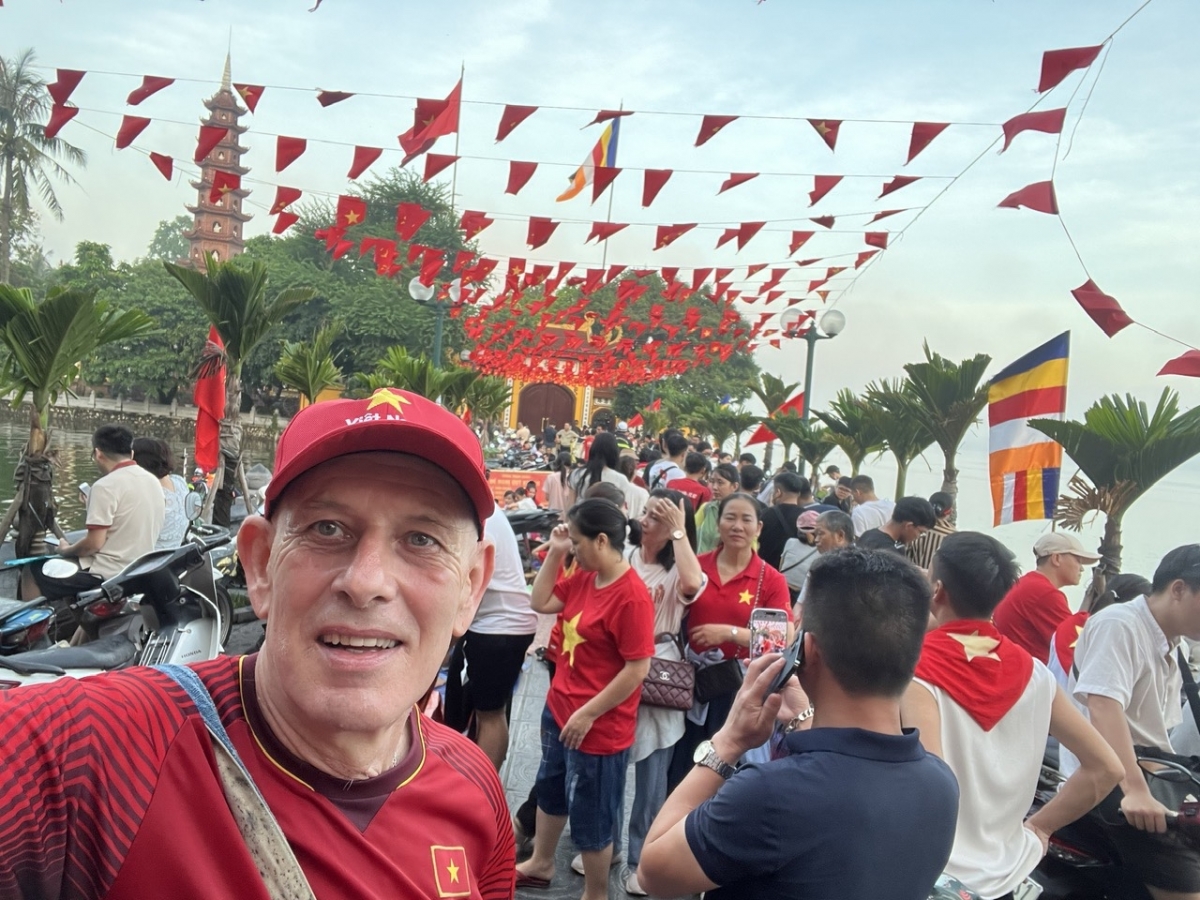
Reporter: If you strip away the idea of an “exotic” life abroad, how different is your day-to-day reality in Hanoi compared to the routine you had back in England—and what small cultural shifts have stood out the most to you?
Michael: In the early years, when I was living in Vietnam, people back home in England would think I was living this amazing life, living away from home in another country, another culture and all the rest of it. But actually, that's not true. To some extent, I've just swapped my life in England and in Leeds for Hanoi. I go to the supermarket once a week. I do my washing on a Friday. I go to work five days a week. So in some ways, I'm still doing exactly what I was doing in England, but I'm doing it in Vietnam. So, I've not lived this crazy life where you're doing a whole range of different things.
The basics of my life are all the same, working for a living, doing the weekly shopping, doing the weekly washing and all the rest of it. But obviously, in a different culture, different environment and different experience of doing all those things.
Obviously, in England, there's a bit more of a pub culture. And in Vietnam, there's bars and everything, but there's more of a cafe bar culture. And I do like the cafe bar culture. Sat around a lake, enjoying a coffee whilst listening to some music or reading a book. Or just watching life go by.
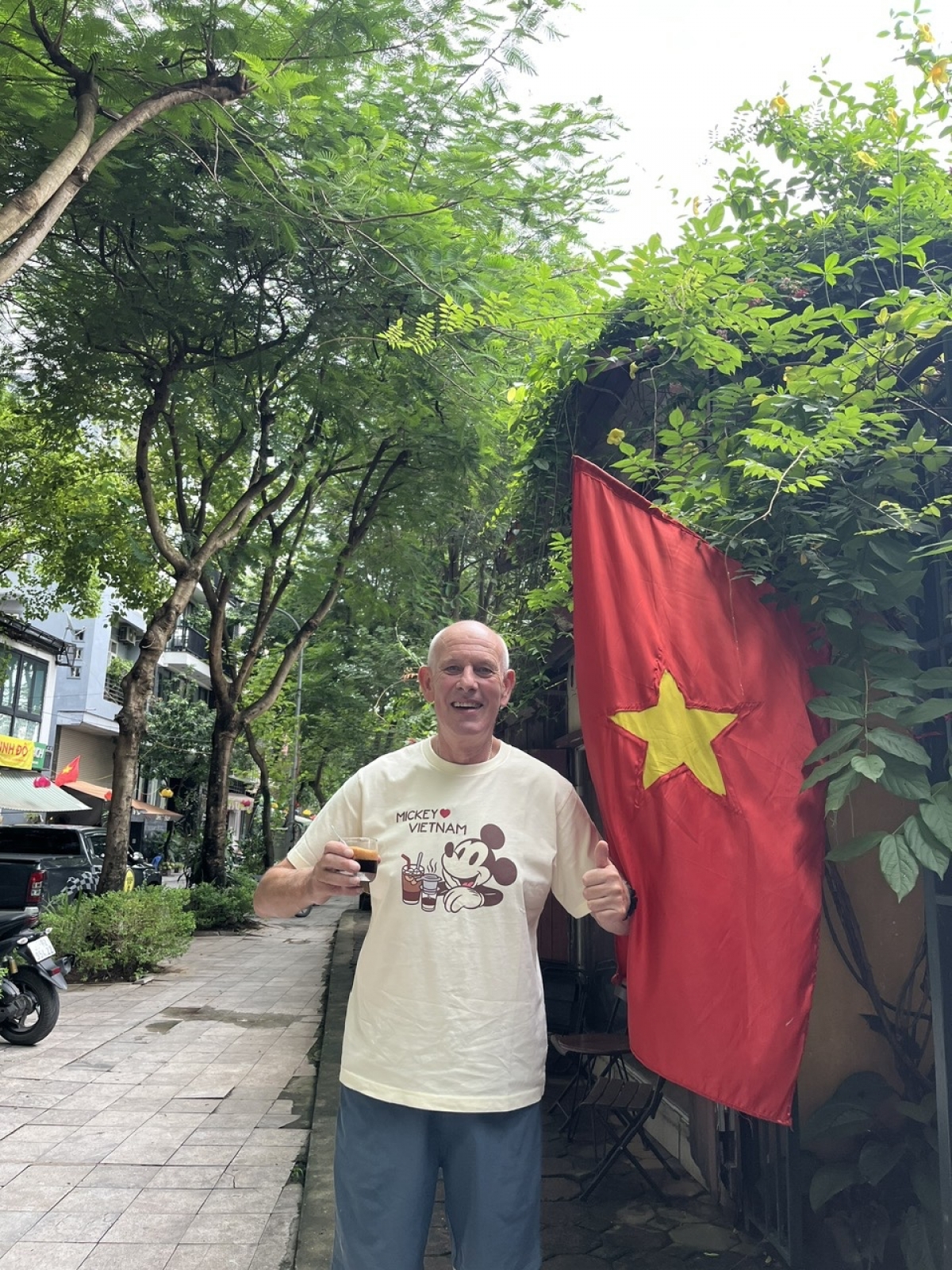
Reporter: When you first arrived in Hanoi, how did you adapt to the city’s intense traffic, especially something as simple as crossing the road, and what mindset helped you navigate it with confidence?
Michael: Yeah, transport can be difficult. And I do remember in the first week or two, I was living in the old quarter. And looking at the roundabout, which has now been demolished, the shark building. And looking down on that roundabout and thinking, how do you get across there? But then I sort of realized you walk into the traffic. You don't go across, you sort of take the traffic on and walk into it.
And look out for how other people are driving or the roads, etc. And you should be okay. And let's be honest, there are car crashes and traffic accidents throughout the world. It's not just Vietnam. I think if you're nervous on the roads or nervous crossing the road, then that's going to give you more problems than having a sense of confidence in doing it.
Reporter: Yes, and how do you usually get to work each day?
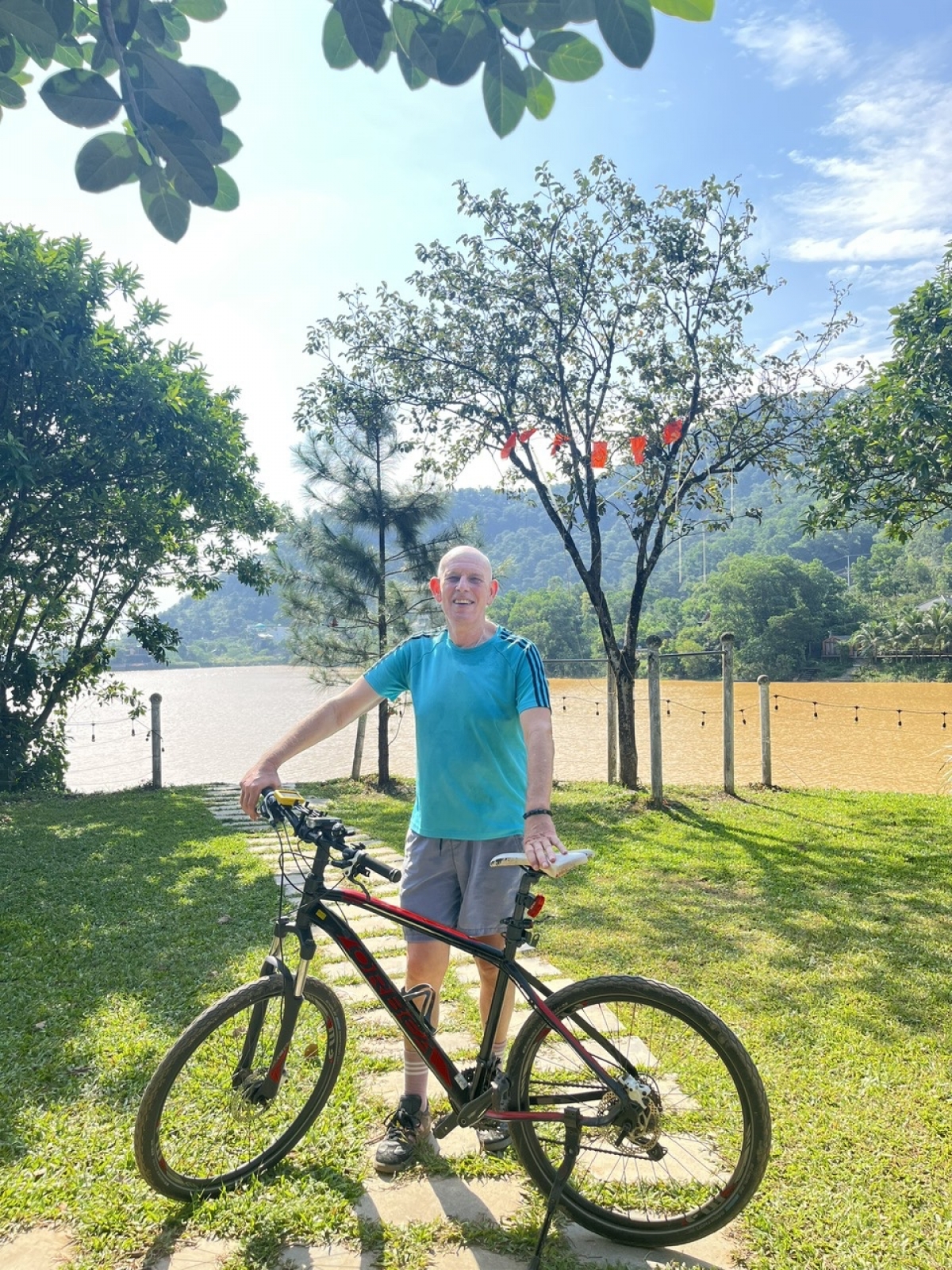
Michael: I have used my own motorbike in the past. I'll sometimes Grab and sometimes I cycle to work. At the moment, I've been doing quite a lot of cycling to work, which is 9km for me. I've also used the bus to get to work as well. The bus is much cheaper, public transport here is much cheaper than back home in England.
Reporter: How has your relationship with food evolved during your time in Vietnam, and to what extent have you embraced local cuisine versus seeking out more familiar Western options?
Michael: I like most types of food. So therefore, I found it easy to embrace Vietnamese food. And I do like the full range of Vietnamese food that is available. And in the early years of living here, there wasn't that much Western food about. Some restaurants, but not many. But now there's a lot more and a bigger, wider range of Western restaurants or Thai restaurants, Indonesian restaurants, from different countries throughout the whole world. So yeah, it's nice to know that choice is available now. But to be honest, I'm quite happy eating Vietnamese food. So I would say, I would reckon I probably eat 70-80% Vietnamese food. And 20-30% food from other countries. I'm more than relaxed having a pho or bun cha or whatever in a local restaurant, as I am looking for the restaurant from back home or wherever. Now Vietnamese food, it does well by me. And I've always been fine with it.
Reporter: So, do you cook for yourself, or eat out most of the time?
Michael: At the moment, I'm doing quite a lot of cooking at home. I've got my rice cooker, I've got my soup maker and steamer and whatever else. I'm quite happy cooking at home at the moment. And then when I do go out, it's probably for local Vietnamese food.
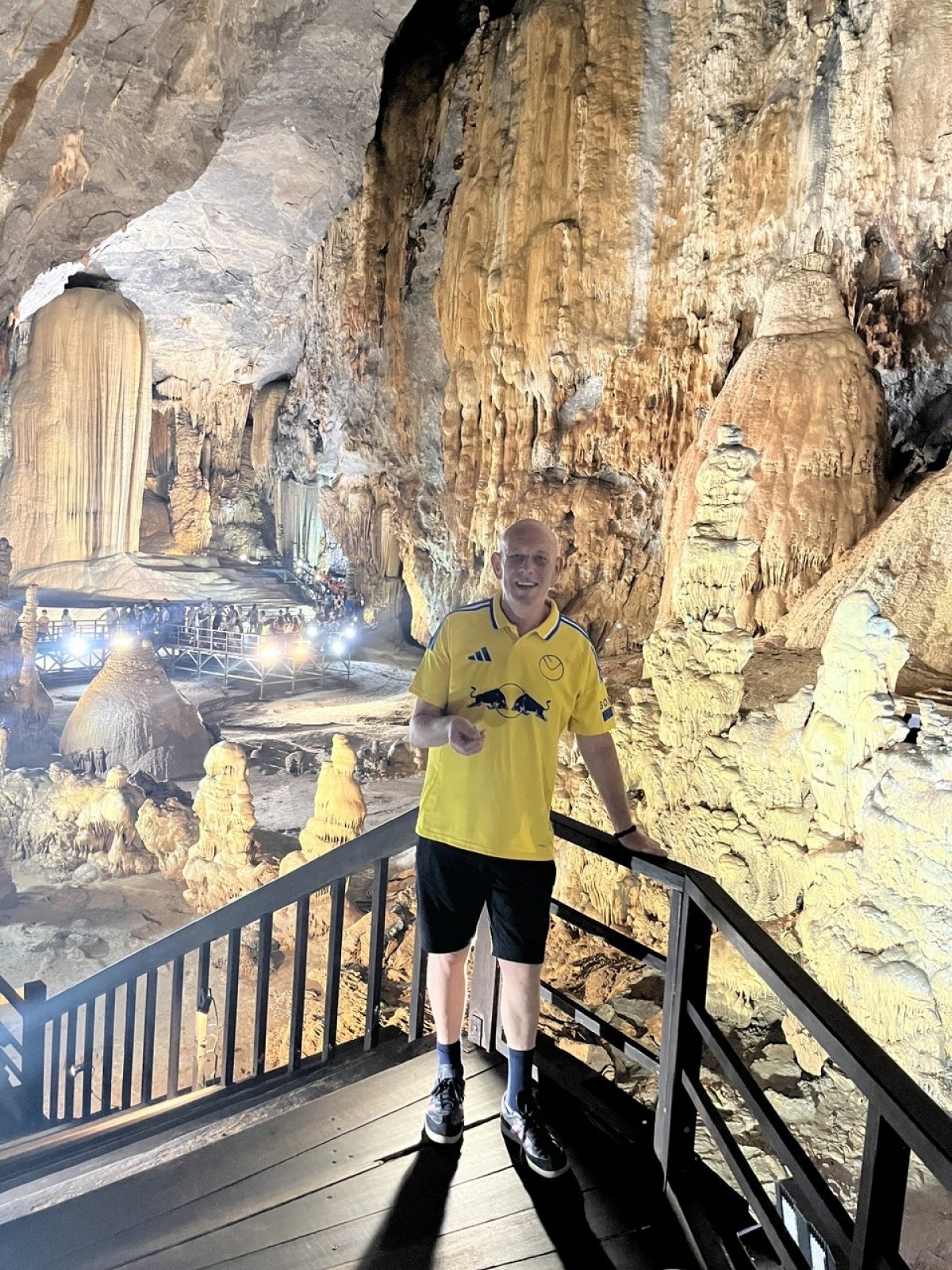
Reporter: Having explored many parts of Vietnam, which destinations have stood out to you the most, and what makes places like Ninh Binh, Quy Nhon, and Con Dao particularly memorable in your experience?
Michael: I've been to quite a good range of places within the country. The obvious ones, Ho Chi Minh, Da Nang, places like that. But some of my favourites, I really like Ninh Binh, and I think it's underrated. I think it's a great place. I've been there many, many times. Obviously, it's easy to get there from Hanoi. And a couple of years ago, I went to Quy Nhon, which I really enjoyed. For me, Da Nang's great, Hoi An's amazing, but I really like Quy Nhon. I really thought it was a great place.
And then the Con Dao island down south. Obviously, the history's there, and I am interested in the history in a genuine way, the history does hit you in the face there, there's no doubt about that. But aside from that as well, it's also an absolutely beautiful island. I really had a good time down there. I went down there for Tet holiday about four years ago. So I did the first three or four days experiencing the history, which needed to be experienced in a way that I guess only Con Dao can, because there was so much there. And then I sort of relaxed and enjoyed four or five days of just enjoying going around the island and some beautiful beaches. So yeah, Con Dao is a beautiful place to visit.
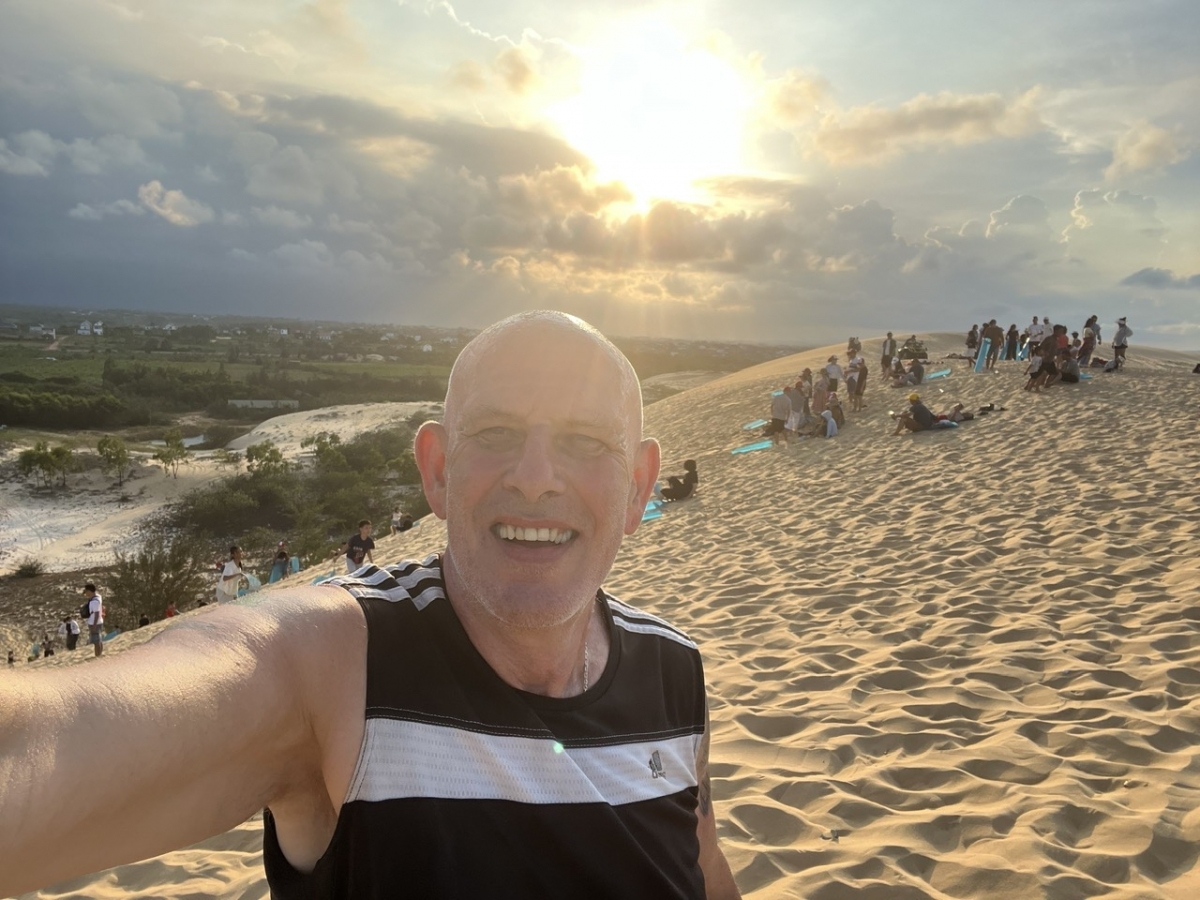
Reporter: How do you usually spend Tet in Vietnam, and what has it been like experiencing the holiday through local family traditions rather than traveling abroad?
Michael: Sometimes I stay in the country and sometimes I go out of the country. I'm happy to stay in the country. I have stayed in Hanoi during Tet holiday and enjoyed the experience of going to two or three different families' houses who I knew at that point. So I did do the Vietnamese family thing at two or three different people's houses on the day itself and the day before and the day after. And it was good.
Reporter: It seems like you’ve built a pretty comfortable life for yourself here.
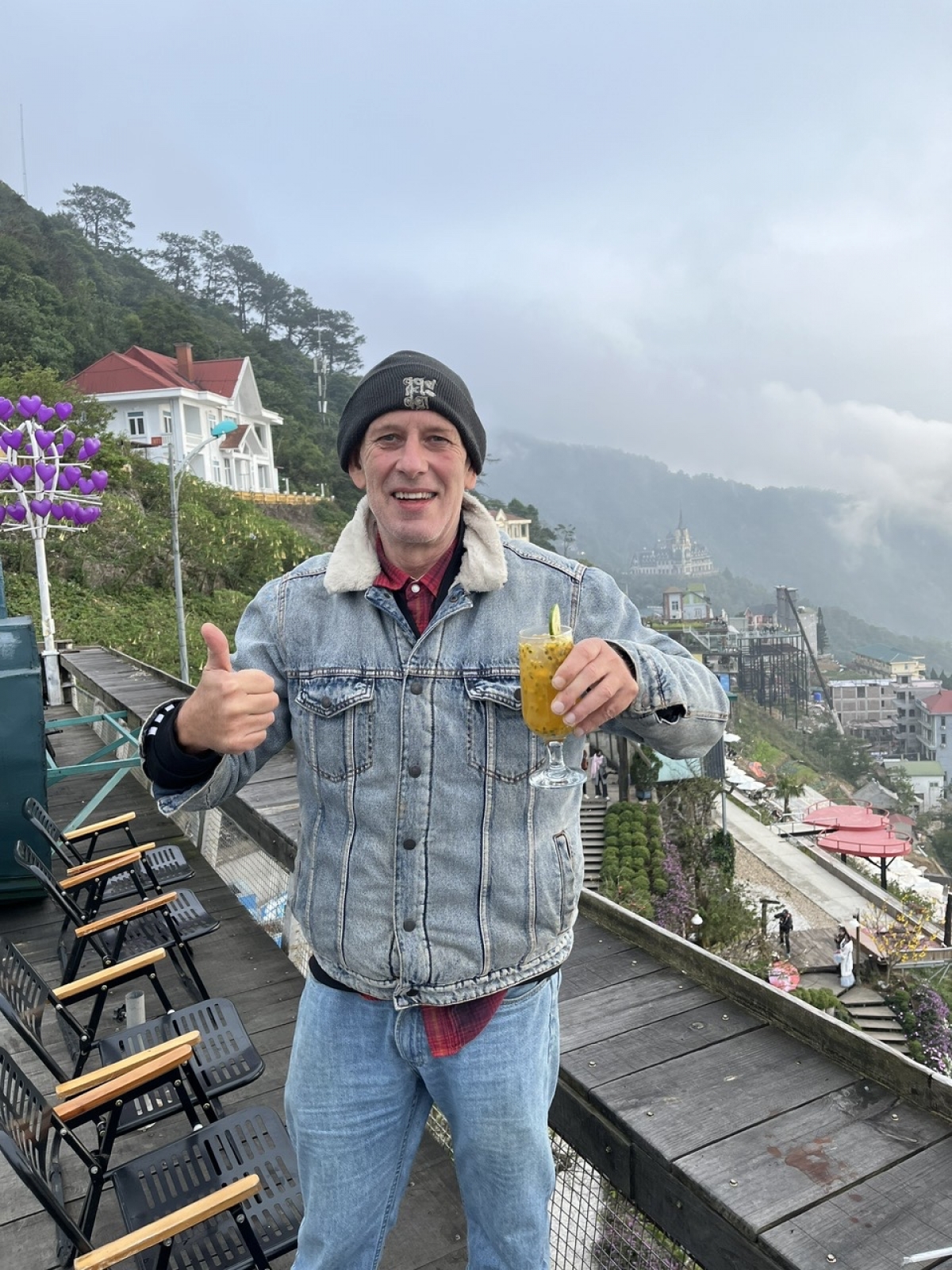
Michael: Well, like I say, I have my job here and have had for 14 years, but nobody forces me to stay here. I can leave whenever I want. And for some reason, I've chosen not to. So I guess that is down to having a comfortable life, which I enjoy and something to do with the country that is worth living in and experiencing. It's a positive choice. That's perfect. That's all about Vietnam.
Reporter: Well, what you have said shows that life abroad is not always the whirlwind people imagine. What began as a decision without a clear reason has turned into more than a decade of life in Hanoi, built on everyday routines, quiet discoveries, and meaningful connections. Thank you, Michael, for sharing your story with VOV English 247.


