



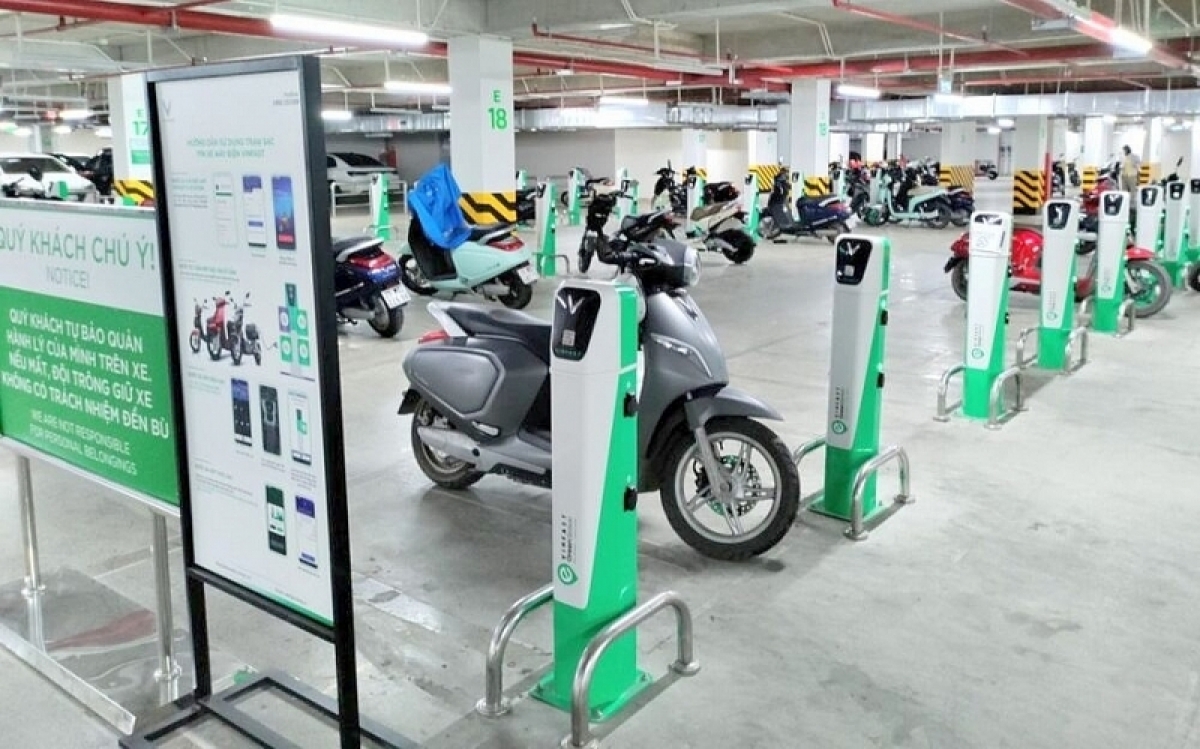
In the two major cities of Hanoi and Ho Chi Minh City, retailers said consumers are shifting to electric motorbikes, with sales at some outlets rising three to four fold since early March.
Last year, the market recorded breakthrough growth in electric motorbikes, with output exceeding one million units, up 150% compared to 2024. Experts say that demand for EVs, including cars, motorbikes, and e-bikes, will continue to rise, as Hanoi plans to pilot low-emission zones in the Hoan Kiem Lake core area from July 1, followed by a roadmap expansion.
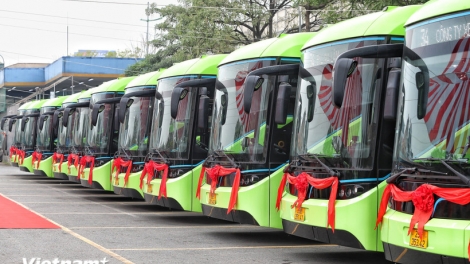
Regarding the taxi fleets in Hanoi, Deputy Head of the Transport Management Division at the municipal Department of Construction, Nguyen Quang Huy, said the Department manages 14,370 licensed taxis, of which 8,690 have been converted to EVs, accounting for about a 60% conversion rate. The remaining cars are expected to be converted to EVs between now and 2030.
“The Department of Construction has worked with the Hanoi Taxi Association and 65 taxi operators to implement the city’s roadmap, targeting a full transition of all cabs in Hanoi to electric or environmentally friendly vehicles by the end of 2030 to improve air quality and cut emissions. The transition is expected to balance the interests of the State, businesses, and the public,” said Huy.
The Prime Minister’s Directive No.9 dated March 19 has focused on strengthening energy saving, promoting energy transition, and accelerating the development of electric transport to enhance national energy security.
The Prime Minister’s March 31 Official Dispatch urges accelerating the building of an EV charging infrastructure in residential areas. These decisions have strengthened public confidence in policies supporting electric vehicle development.

Pham Van Quan, Deputy Director of the Industry Department at the Ministry of Industry and Trade, said that EVs will form a new industry, which requires coordinated regulations.
By the end of 2025, the Ministry of Industry and Trade, in coordination with the Ministry of Justice, had developed 18 standards and regulations for charging equipment, stations, and batteries.
The Prime Minister has required the finetuning of legal framework by the second quarter of this year, as the charging infrastructure involves complex procedures concerning management agencies, investment, electricity, and construction.
“We have worked with relevant parties to recommend incentives to promote the EV industry, including taxes and fees for EV users and import tariffs for EV manufacturers. New programs are being developed to support energy storage batteries for EVs, enabling power to be stored for use during peak hours or periods of energy shortage,” Quan noted.

Dr. Vo Tri Thanh, Director of the Institute for Brand and Competitiveness Strategy, said a number of solutions have already been implemented or planned by the Ministry of Industry and Trade, Hanoi authorities, and EV manufacturers.
He emphasized that electric vehicles symbolize a country’s industrial development level and technological capability.
“Electric vehicles have been a heated topic globally. While there remain concerns such as whether energy sources are truly green and how batteries are handled, overall assessments suggest that EVs contribute positively to the green transition and significantly reduce pollution in major urban areas,” Thanh explained.
“EVs can also play a positive role in energy security, but not all. Energy security revolves around the sufficiency of both primary energy, such as oil and coal and secondary energy like electricity.”
When switching to EVs, dependence on fossil fuel may decrease, but reliance on electricity increases. Another argument is that switching to green energy may shift pollution rather than eliminating it. So the solution must be much more comprehensive, according to Thanh.
According to the Hanoi Department of Construction, vehicle transition must go hand in hand with the development of public transport and the management of private vehicles.
It is necessary to rapidly develop metro systems, buses, and public bicycles to meet the demands of commuters. Sustainable development of EVs is not just the story of a single sector but a comprehensive issue for the entire economy.