



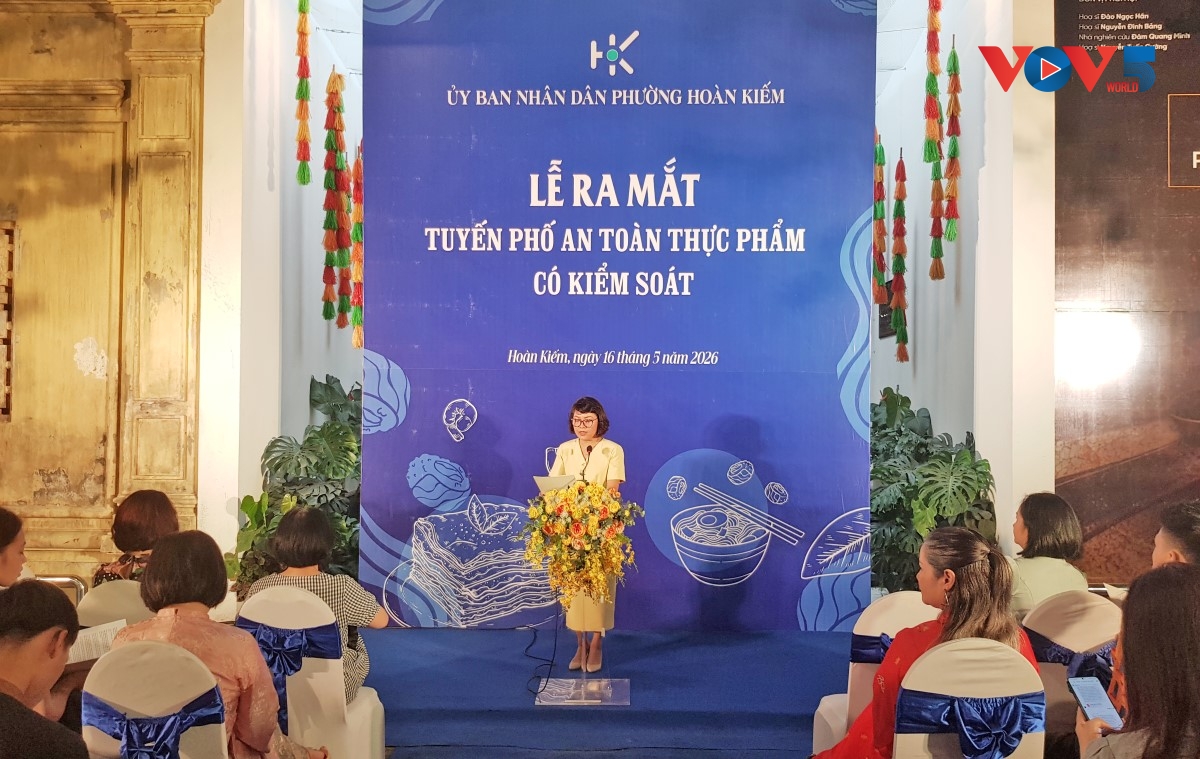
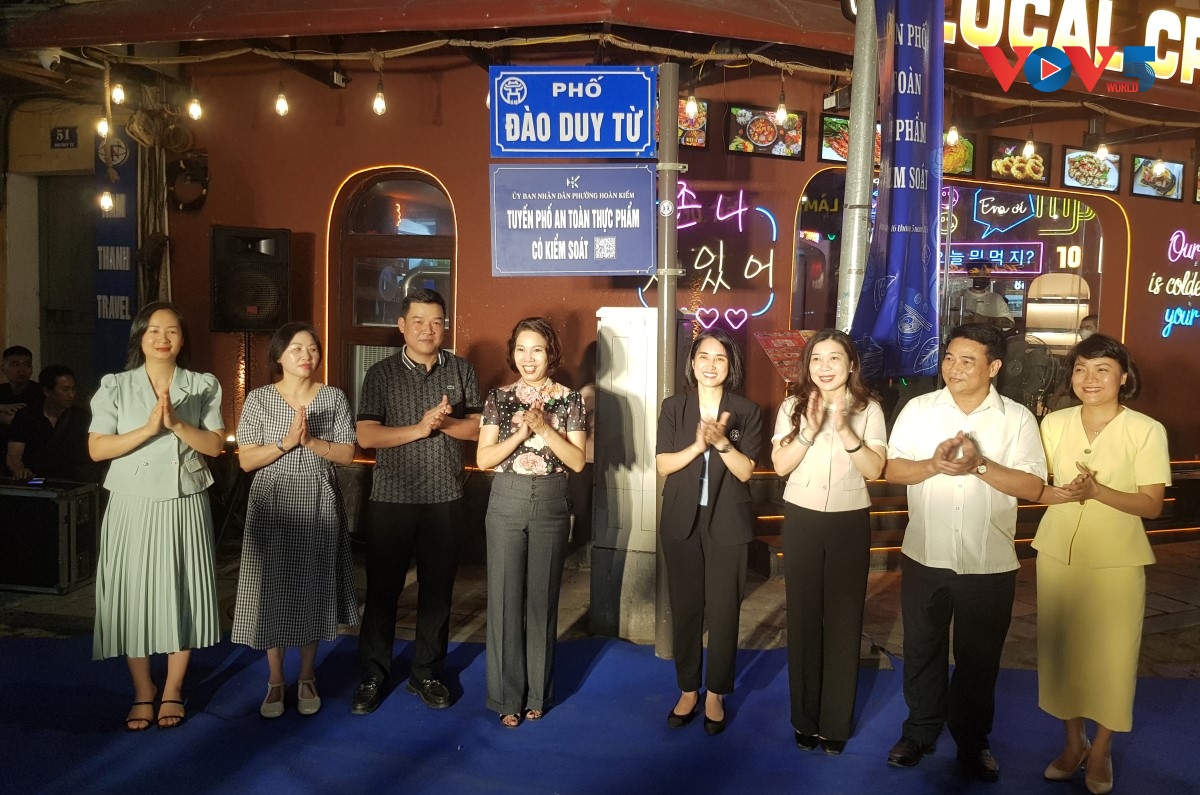
Located in the Old Quarter, Dao Duy Tu, Ta Hien, and Ma May streets are home to 91 businesses, including food and beverage establishments, hotels with dining services, and street food vendors. The Hoan Kiem ward People’s Committee conducted a comprehensive review of these businesses, classifying them by sector and operational model in order to apply tailored and effective management measures.
Food safety guidance and supervision teams have been established, and businesses have received food safety training. Health checks have also been conducted for staff directly involved in food preparation, and IT-based traceability systems have been introduced for raw ingredients.
Nguyen Ngoc Ha, Head of the Culture and Social Affairs Division of Hoan Kiem ward, said that to date, the model has achieved many positive results.
“All eligible establishments have been granted food safety certificates and signed food safety assurance commitments. All employees have undergone health checks, and all establishments publicly disclose the origins of their food products,” Ha said, adding, “Many businesses have invested in upgrading facilities and storage equipment. We have also established a 24/7 hotline, a rapid response team, and interdisciplinary inspection teams to promptly detect and handle violations, creating a clear shift in food safety management within Hanoi’s Old Quarter.”
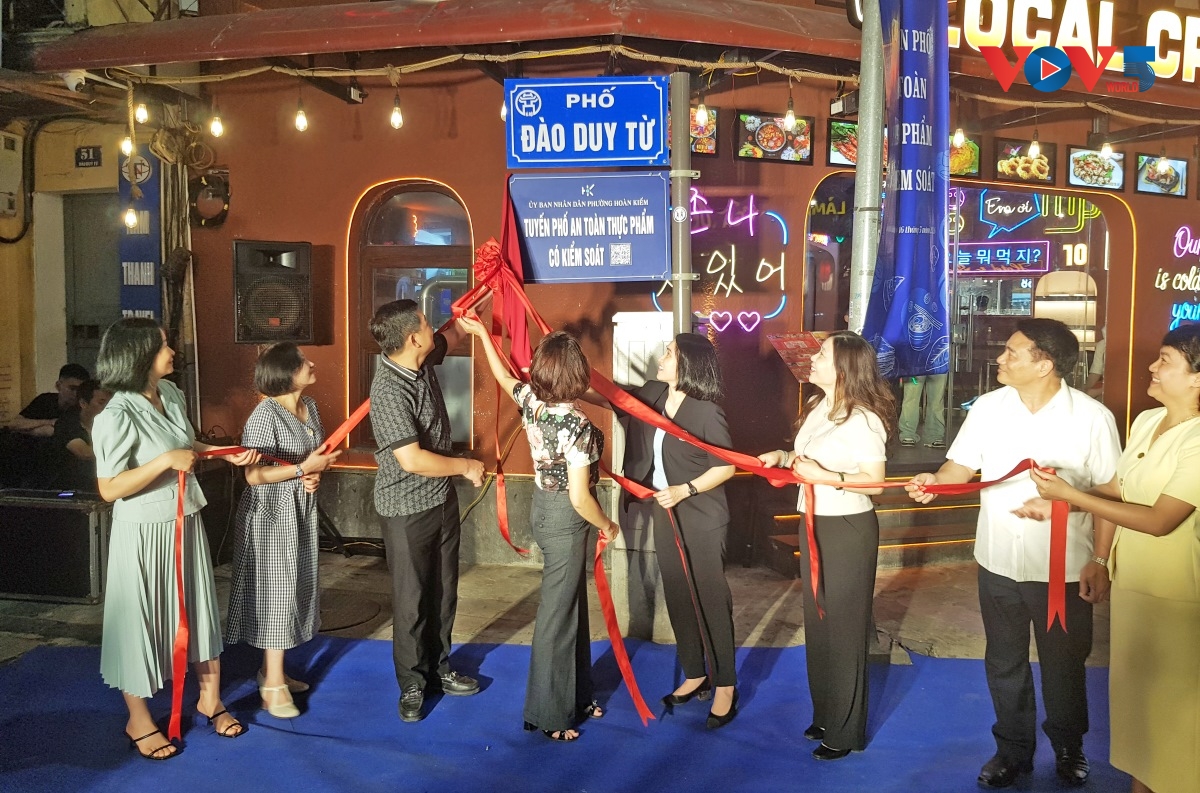
Local culinary businesses have responded to the initiative by installing glass display cabinets for food preservation, standardizing seating arrangements and staff uniforms, and sourcing ingredients with clear and verifiable origins.
Culinary artisan Vu Kieu Trang, representing Anh Tuyet Restaurant at 25 Ma May Street, said, “We are fully aware of our responsibility to the community, tourists, and the image of Hanoi’s cuisine. Cooking is not just a livelihood; it is also a duty to preserve culture.”
“To sustain a business in the long term, you must first earn diners’ trust, and that trust begins with food safety,” Trang said. “This is especially important in Hanoi’s Old Quarter, where large numbers of domestic and international tourists gather every day.”
“Building a food safety street also means building a culture of responsible business. When every establishment shares that awareness, the business environment improves, and the image of Hanoi’s Old Quarter becomes even more attractive to locals and visitors,” she added.
To ensure the model delivers genuine, long-term effectiveness, authorities plan to replicate it across the ward.
Nguyen Hong Trang, Vice Chairwoman of the Hoan Kiem People’s Committee, said, “Food safety must never be treated lightly or viewed as a temporary trend. Even a minor incident can affect public health, damage the reputation of the street and local tourism image, and undermine the trust of residents and visitors.”
“Therefore, our top priority is to maintain awareness, responsibility, and good business practices among local households. To ensure the model remains truly effective, we will continue strengthening inspections, monitoring, and post-inspection supervision. Through these efforts, we aim to build a clean, attractive commercial space that reflects the unique tourism identity of Hanoi’s Old Quarter,” said Trang.
Nowadays, diners care not only about taste, but also about where ingredients come from, how food is prepared, and whether hygiene standards are strictly observed.
A tourist from Ninh Binh province dining on Dao Duy Tu street said, “This model makes restaurants more accountable. Diners like us feel more reassured when enjoying delicious, hygienic meals. I hope this initiative will be expanded in Hanoi and tourist destinations nationwide.”
The launch of the food safety control street route is expected to create momentum for similar initiatives throughout Hoan Kiem ward and Hanoi.