






Vietnam’s 16 religions with tens of millions of followers create a diverse religious landscape. Religious organizations meet people’s spiritual needs while contributing to social welfare, humanitarian activities, education, and national unity.
Religions accompany the nation and contribute to development
Religious organizations in Vietnam are actively involved in community development, charity, and humanitarian work. Religious dignitaries and followers also participate actively in other areas of the nation’s political and social life.
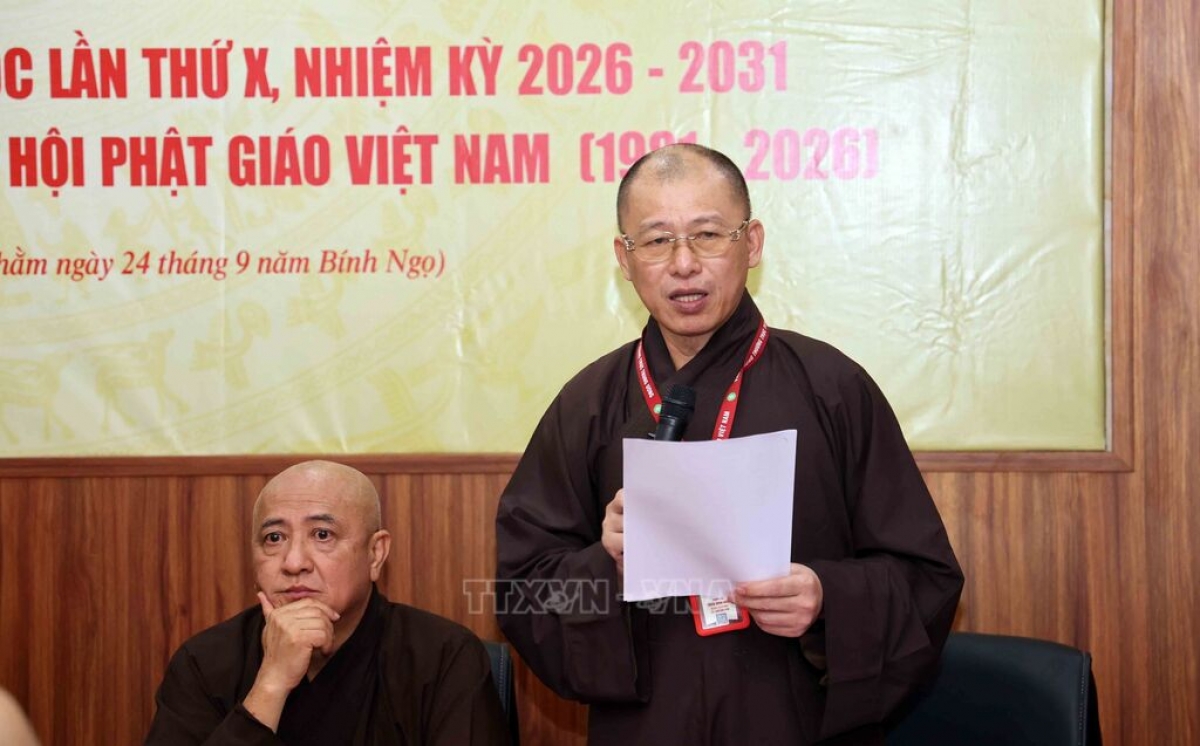
The ongoing National Buddhist Congress themed “Discipline–Innovation–Effectiveness–Efficiency”, aims to build a united, harmonious, and dynamic Buddhist Sangha committed to serving humanity.
Venerable Thich Minh Nhan, Secretary of the Executive Council of the Vietnam Buddhist Sangha, said: “The Sangha has set the goal of building a united, harmonious, disciplined, and innovative organization. We take the Buddhist precepts and the moral conduct of monks and nuns as our foundation, innovation in Dharma publicity and Buddhist education as our central task, and service to humanity as our guiding principle.”
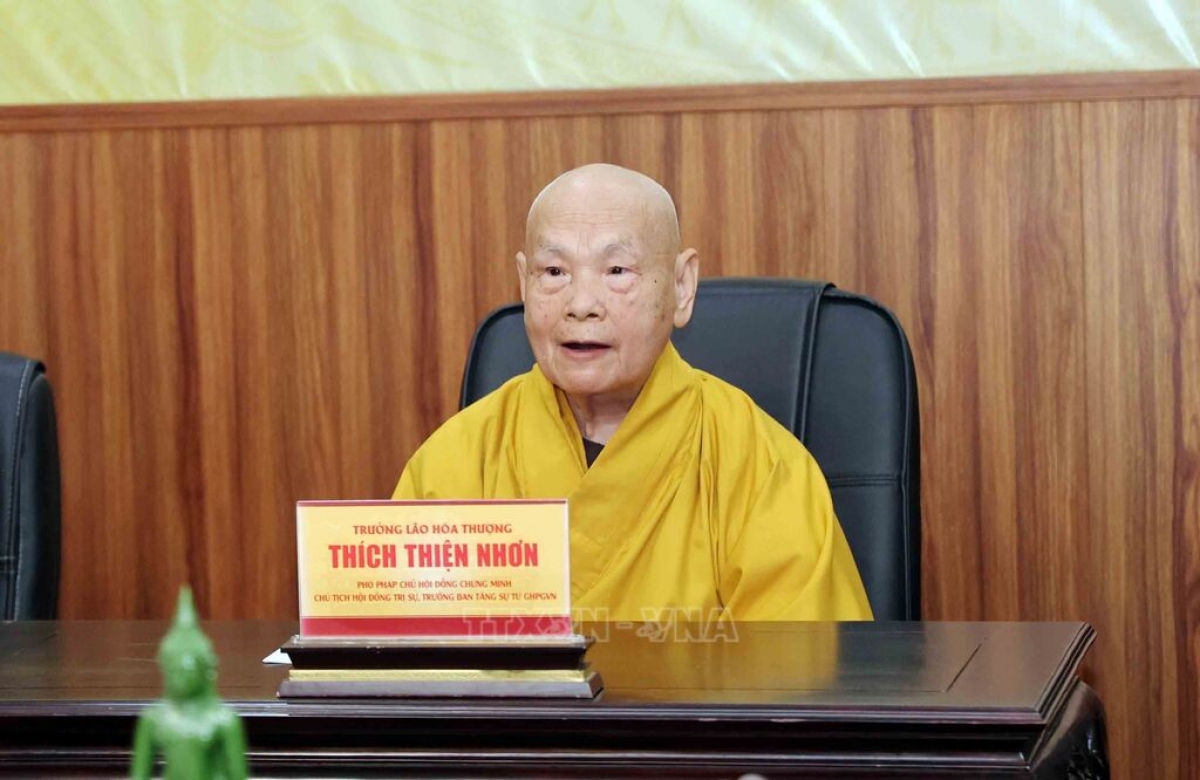
Over its 45 years of development, the Vietnam Buddhist Sangha has contributed a great deal to policy consultations.
Most Venerable Thich Thien Nhon, Vice Patriarch of the Supreme Patriarch Council and President of the Executive Council of the Vietnam Buddhist Sangha, said: “Vietnamese Buddhist monks and nuns have participated in consultations and contributed opinions on important political and social matters. The Sangha, for example, has submitted 2,680 comments and recommendations on 47 laws, draft documents, and policies of the Party and State. This demonstrates Buddhism’s capacity to contribute its collective wisdom to institutional and policy development, helping establish a legal framework for sustainable development.”
Buddhist and other legally recognized religious organizations also work alongside local authorities in social security, community development, poverty reduction, helping disadvantaged people, and promoting humanitarian values.
Protecting religious freedom and equality
The development of religious organizations are underpinned by the consistent policy of the Party and State to respect and guarantee freedom of belief and religion. According to the Government Committee for Religious Affairs, as of early 2026, more than 95% of Vietnam’s population follow a religion or hold religious beliefs. The country has 43 recognized or registered organizations representing 16 religions, with nearly 28 million followers.
All religions are entitled to conduct activities in accordance with the law, while maintaining their own traditions and practices.
Pastor Nguyen Huu Mac, Vice President of the Evangelical Church of Vietnam (Northern Region), said: “The authorities have facilitated the registration of religious activities for our congregations and groups at the local level. They have also issued permits enabling us to invite speakers from abroad. We have likewise received support in obtaining permits for activities held outside religious establishments.”
Vietnam is continuously improving its legal framework for religious activities. In April, 2026, the National Assembly passed the amended Law on Belief and Religion, which will take effect on January 1, 2027. It simplifies administrative procedures, facilitates religious activities, and introduces specific provisions governing such activities in cyberspace.
Ensuring equality among religions, respecting differences, and safeguarding freedom of belief are essential to national unity. Promoting the humanitarian values and social contributions of religious communities will help Vietnam build a peaceful, prosperous, civilized, and happy country.


