







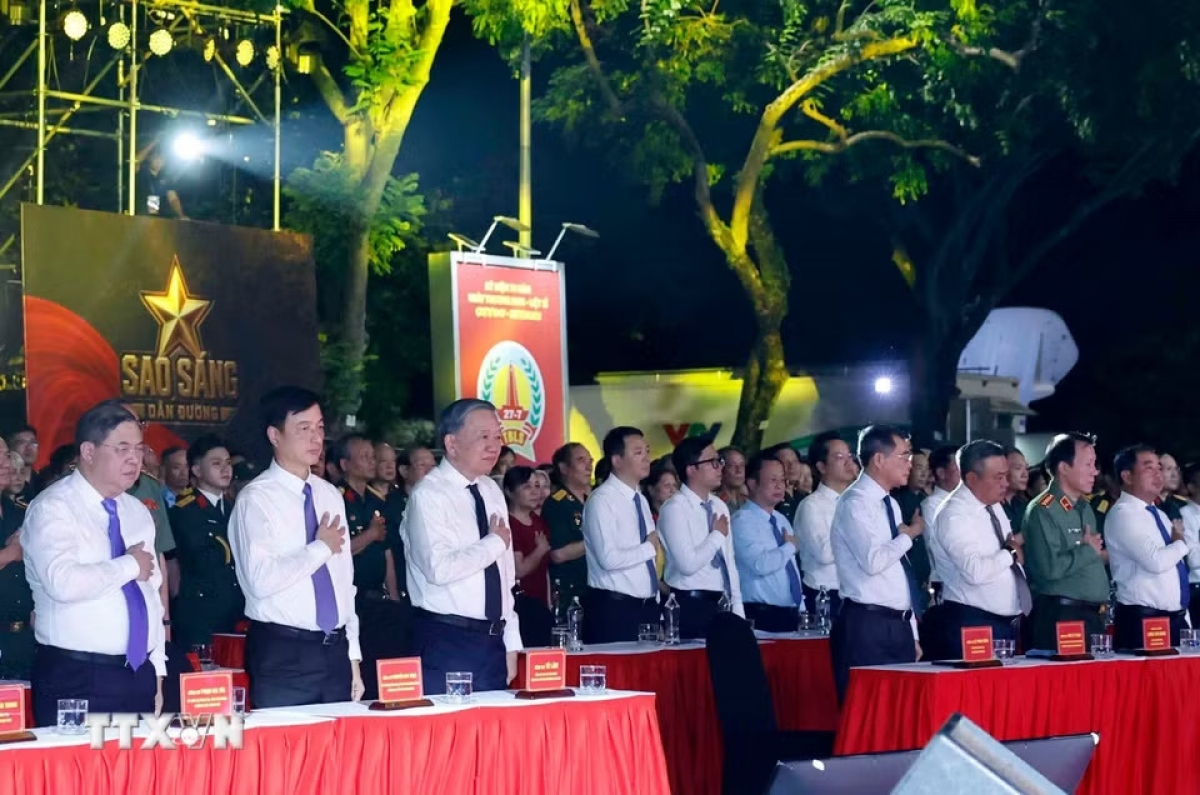
The nationwide broadcast connected four symbolic venues: the memorial stele dedicated to fallen heroes in Thanh Thuy commune of northern Tuyen Quang province, the Bac Son Monument in Hanoi, the National Road 9 Martyrs' Cemetery in central Quang Tri province, and Le Thi Rieng Park in Ho Chi Minh City.
Attending the program from the Hanoi venue were Party General Secretary and State President To Lam and Prime Minister Le Minh Hung, while National Assembly Chairman Tran Thanh Man attended from the Ho Chi Minh City venue.
The program portrayed the journey of paying tribute to the heroic martyrs who sacrificed their lives for the Fatherland and honored the forces that are working day and night to search for, collect, and identify the remains of martyrs.
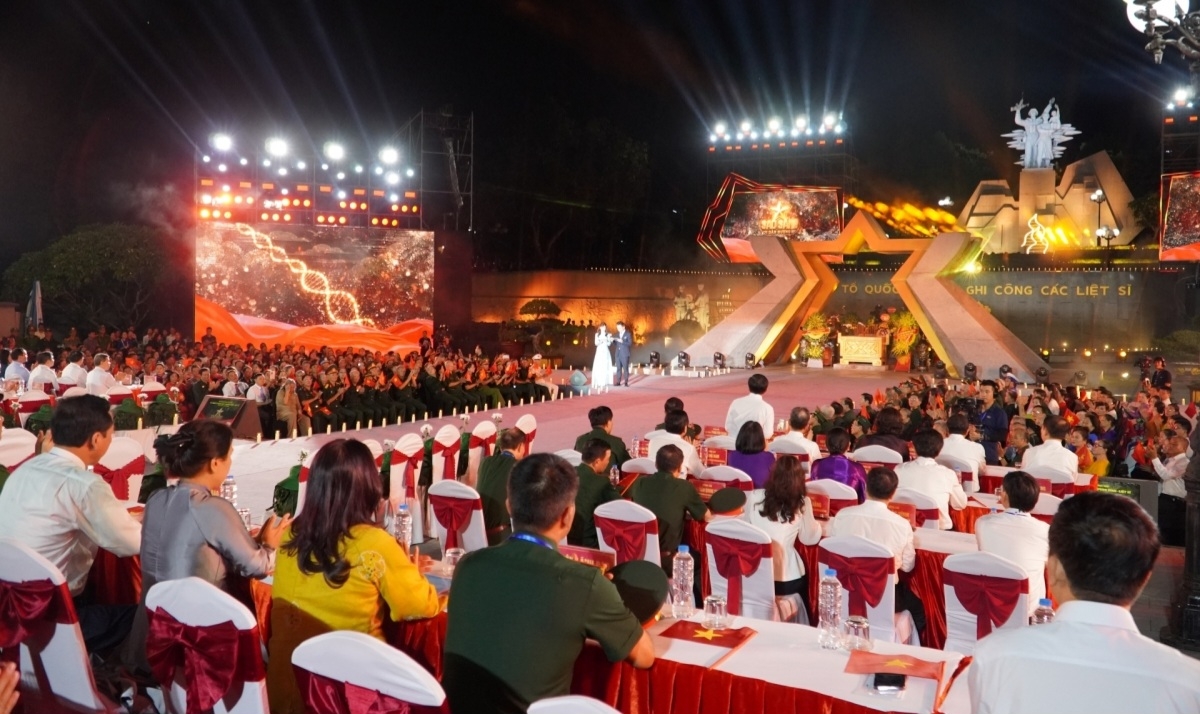
On the spotlight was the "500-Day Campaign to Intensify the Search, Collection, and Identification of the Remains of Fallen Soldiers." The audience watched a series of documentaries telling the story of the journey to bring the remains of fallen heroes back home with the performances by famous artists connecting emotions.
Private Tran Trung Thai, 14th Artillery Company, 19th Regiment, 968th Division, 4th Military Region, joined in the program with his comrades at the Quang Tri province venue. “I feel very proud to participate in the program to find my comrades in peacetime. I feel grateful as we remember the source of the water we drink to show respect to the heroes who sacrificed themselves to regain independence, freedom, and peace for today. As a soldier in the Vietnam People's Army, I will strive to study and work harder to protect and develop the country,” Thai said.
Veteran Do Thanh Tam from Lao Cai province and his comrades, attended the program at the National Martyrs' Cemetery on Road No 9. “We came here to visit the old battlefield, deeply moved and grateful to our comrades who dedicated their blood and sacrificed their lives for our country's peace and unity. We are deeply moved by the spirits of the heroic martyrs,” Tam said.
The 500-day campaign aims to find and collect roughly 7,000 remains, complete sample collection for 230,000 unidentified martyrs' graves, and conduct DNA testing on 18,000 samples of martyrs' remains.


