







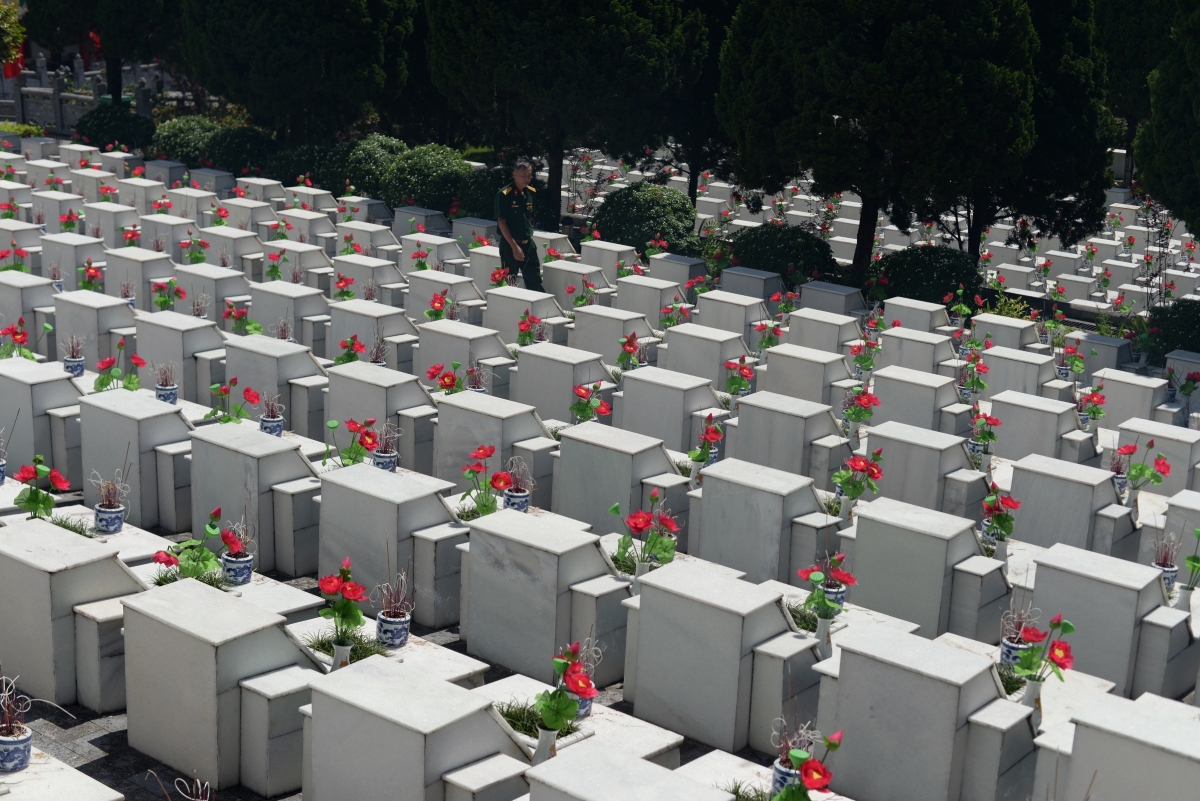
Amid the clouds and jagged limestone peaks of Vi Xuyen in Tuyen Quang province, once one of the fiercest battlefields of the northern border defense war, a provincial team works patiently, turning over patches of earth and inspecting crevices in the rocks, driven by one mission – to bring every dead comrade home.
Racing against time
In the communes of Vi Xuyen and Minh Tan in Tuyen Quang province, formerly part of Vi Xuyen district in Ha Giang province, scars of the war, which continued from 1979 to 1989, are etched into the mountainsides. During the conflict's most intense years, from 1979 to 1984, more than 4,000 soldiers and civilians died defending Vietnam’s frontier. Decades later, thousands still lie beneath the soil of these rugged mountains.
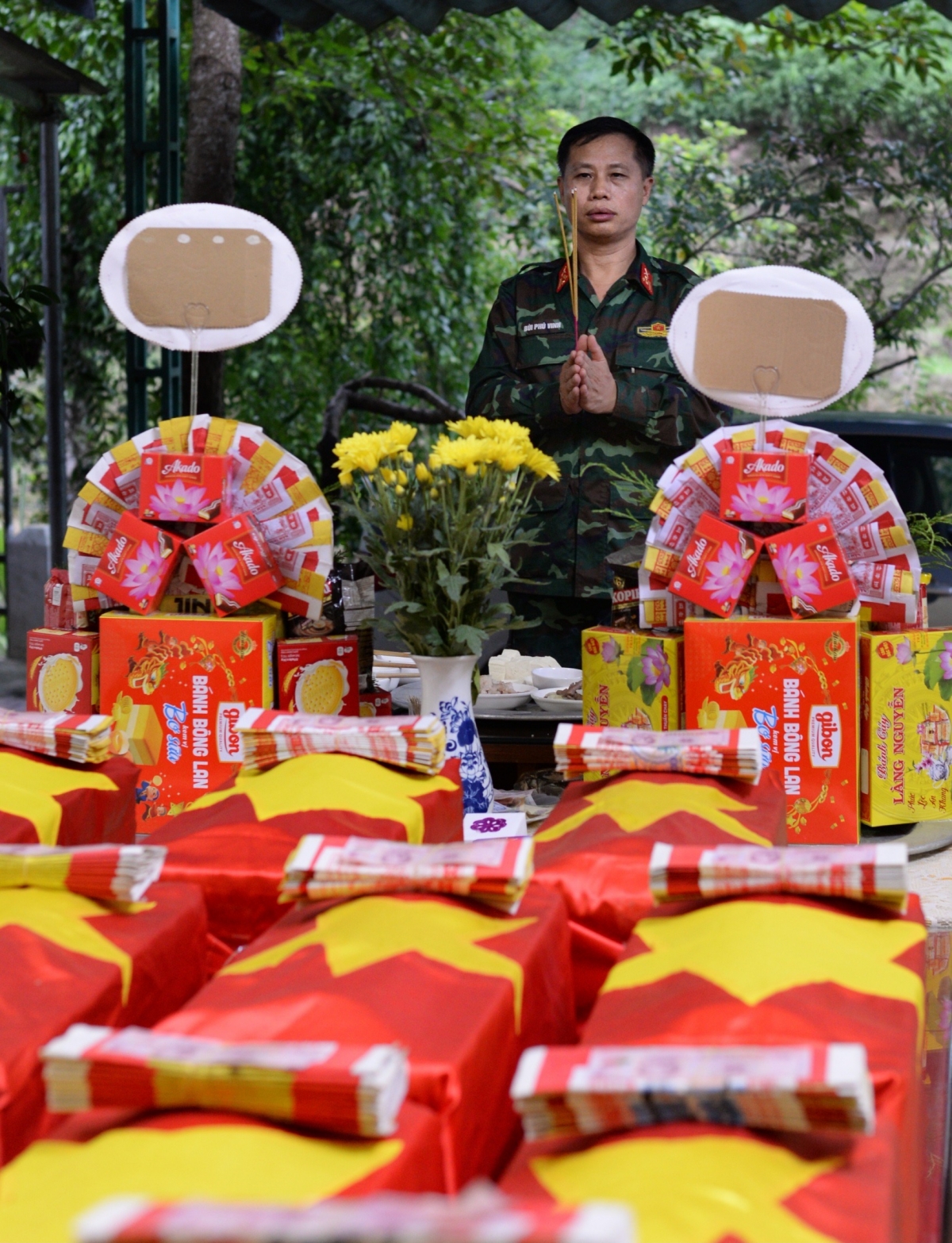
"Information about fallen soldiers and burial sites is becoming increasingly scarce. The information provided by veterans is often no longer accurate because they are now elderly, and many decades have passed since the war. This creates significant challenges for search and recovery efforts. At the Vi Xuyen battlefield in particular, most searches take place among rocks, crevices, and caves. We often have to move massive boulders, one by one, making the work extremely difficult," said Senior Lieutenant Colonel Bui Phu Vinh, Political Commissar of the Tuyen Quang provincial team for the search and recovery of fallen soldiers' remains.
Senior Lieutenant Luu Van Nien, a serviceman and member of the search team, said, "We know that the families of the fallen soldiers wait every day in hope. For our team, nothing is more meaningful than recovering as many remains as possible, conducting DNA testing with the families, identifying the fallen, and finally bringing them home."
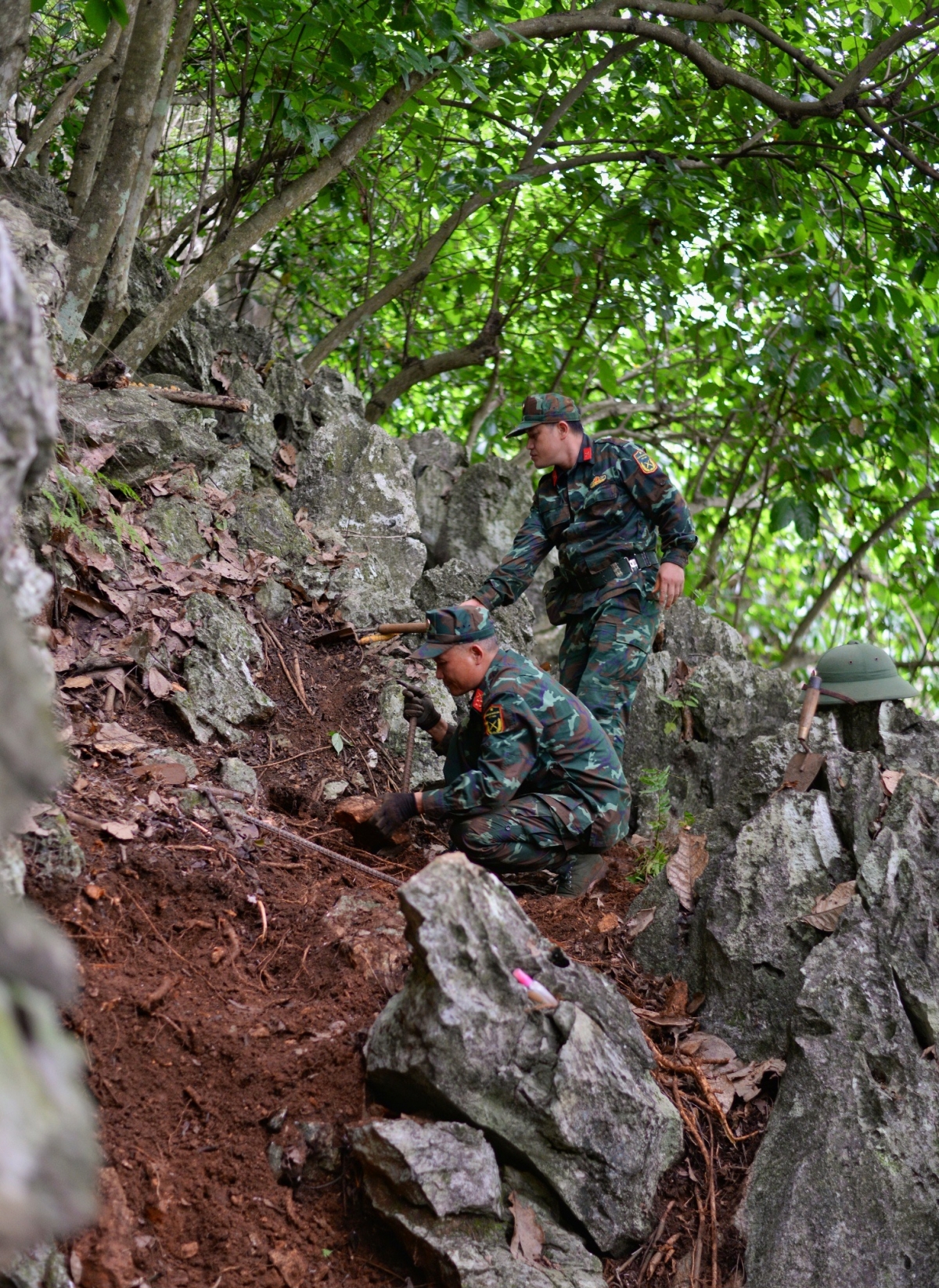
As part of the 500-day campaign, the Tuyen Quang provincial Military Command has mobilized all of its manpower and technical resources. Before entering the field, the search team undergo intensive training, from unexploded ordnance disposal to emergency medical response.
"During our training, we received comprehensive instruction for every situation we might face in the field. Above all, we hope to find the fallen soldiers and honor their families this July, so they can finally welcome their loved ones home. Many of those who sacrificed their lives were only 18 or 20 years old," said Senior Lieutenant Luu Van Nien.
Senior Lieutenant Colonel Bui Phu Vinh believes that even a 500-day campaign is only a beginning. "Five hundred days is still a short period for our team. To complete the campaign, we’ll divide into several smaller groups to investigate every location where information about fallen soldiers has been reported. Based on our findings, we’ll recommend deploying additional forces whenever necessary so that we can achieve the campaign's objectives," he said.
Veteran Nguyen Van Duong, a former soldier of the Lao Chai Border Guard Station, said standing before the mist-covered mountains where so many comrades fell, he still carries the burden of nearly half a century of waiting.
"It means so much that so many units are searching for the remains of our fallen comrades. Many of my fellow soldiers are still lying on these hillsides and cliffs, unable to return home. We continue searching alongside the recovery teams. My greatest wish is that every one of them can be found and laid to rest here at Vi Xuyen Martyrs' Cemetery. Their comrades, families, and loved ones are still waiting for them."
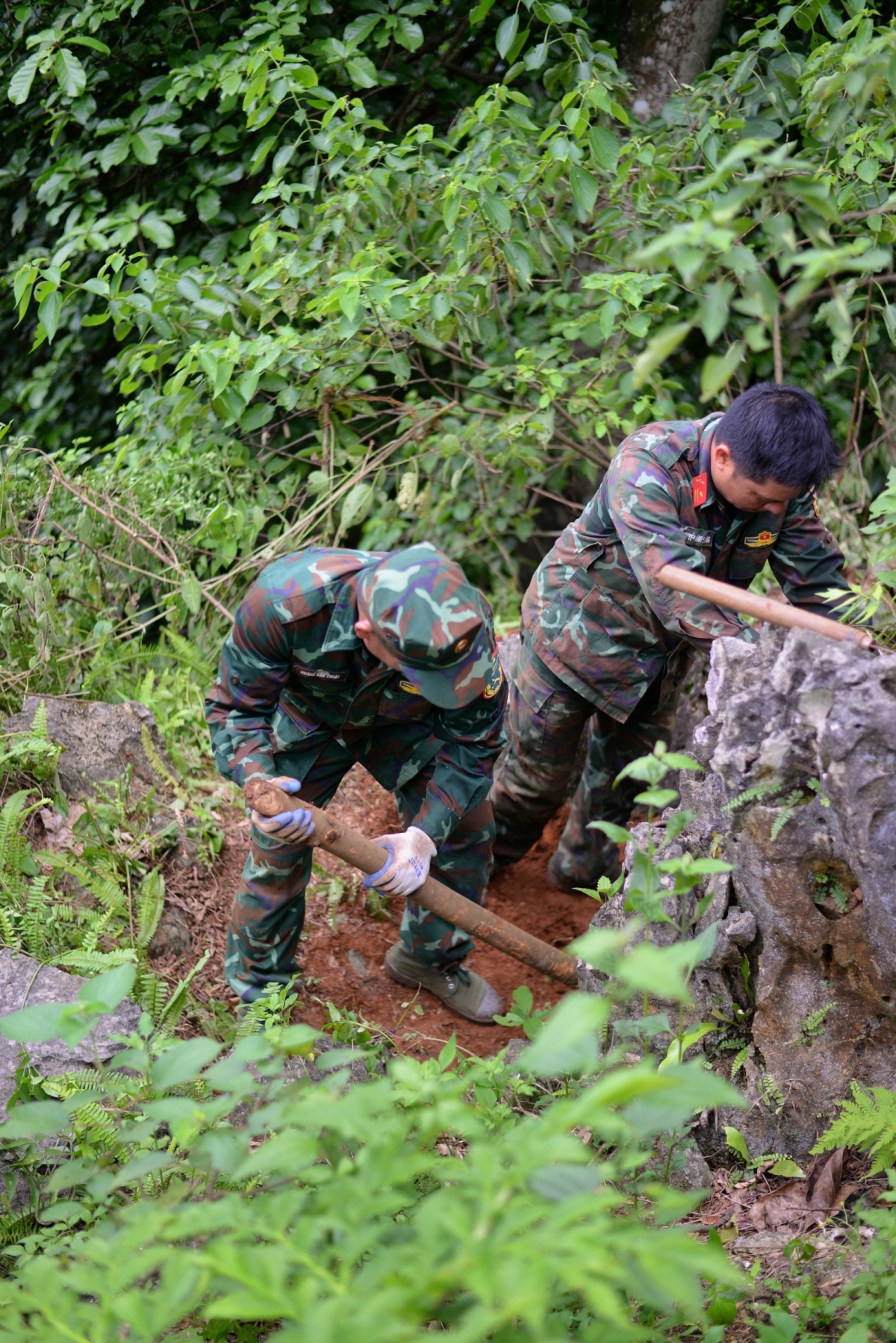
Searching for fallen comrades among jagged limestone mountains
More than four decades have passed since the northern border defense war became part of Vietnam's history. Today, forests have reclaimed the once-devastated hilltops known as the "Century’s Lime Kiln" and the infamous battle positions 685, 772, and 1030 in Vi Xuyen. Beneath collapsed bunkers and among the razor-sharp limestone crevices, thousands of Vietnamese soldiers still lie where they fell. For every member of the search and recovery team of the Tuyen Quang provincial Military Command, the mission is "an order from the heart."
To reach former battlefields in the Vi Xuyen mountains, soldiers hike for hours, gripping exposed tree roots and climbing on makeshift ladders fashioned from forest timber, suspended precariously from steep cliffs.
Blanketed by dense fog and battered by sudden mountain downpours, the jagged limestone rocks become dangerously slippery. In the remote highland commune of Lao Chai, where mist often obscures the trails even in summer, the ascent to Hill 1688 begins well before dawn.
"Attention! Check your uniforms. Remember that we’re carrying out a sacred and noble mission. Every one of you must work carefully, patiently, and thoroughly, so that we can bring our fallen comrades home as soon as possible."
These brief instructions are given by Senior Lieutenant Trieu Tien Phu, leader of subteam 2, as he and 21 fellow soldiers prepare for their mission in Nhieu Sang hamlet, Thanh Thuy commune.
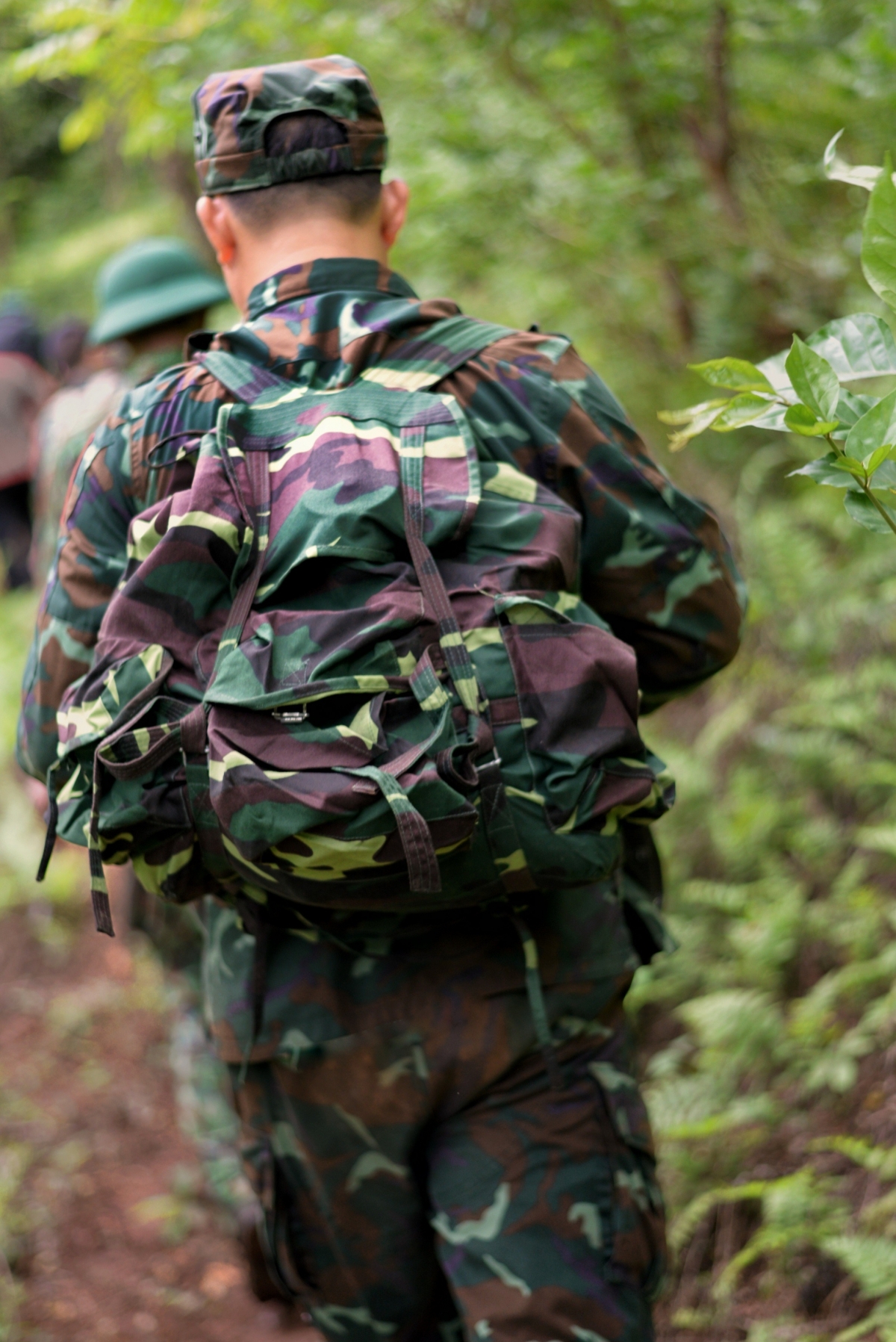
Every day, the team spends hours hiking steep mountain trails. Harsh weather tests not only their physical endurance but also their patience. Torrential rains turn the red earth into thick mud, concealing weathered bone fragments, unexploded ordnance, and other traces of the battlefield, making the search even more arduous.
Working at the rugged Rocky Hill 400, Senior Lieutenant Hoang Ngoc Thuyen said the difficult conditions only strengthen the team's resolve. "Rain makes everything much harder. The red soil becomes sticky, so excavation is slow, and it becomes difficult to distinguish bone fragments from the mud. But we never give up. Time waits for no one, and our fallen comrades have lain here in the cold for far too long."
Inside caves collapsed by artillery fire decades ago, no machinery can operate. Every task depends on human strength and tools – crowbars, rock hammers, and shovels – to pry apart the massive stones.
Perhaps the most important tool is a small masonry trowel, the recovery team's constant companion. With it, soldiers gently scrape away thin layers of earth, carefully searching for tiny fragments of bone, handling each movement with the tenderness owed to the comrades resting beneath the cold mountain soil.
Major Nguyen Dang Cuong, who is taking part in the mission for the first time, said courage comes from gratitude. "What keeps us going is our deep respect for our predecessors. We’re doing our best to find as many of our fallen comrades as possible and bring them home."
Hoang Van Lien, who volunteered for the mission at the age of 46, has found the experience deeply emotional. He struggles to hold back tears when he recalls the first time he uncovered the remains of a fallen soldier. "Whenever we find bones or any part of a soldier's remains, we're overwhelmed with emotion. Whether it's just a few fragments or more, we search every inch with great care, hoping not to leave behind even the smallest piece. We feel such deep compassion for them."
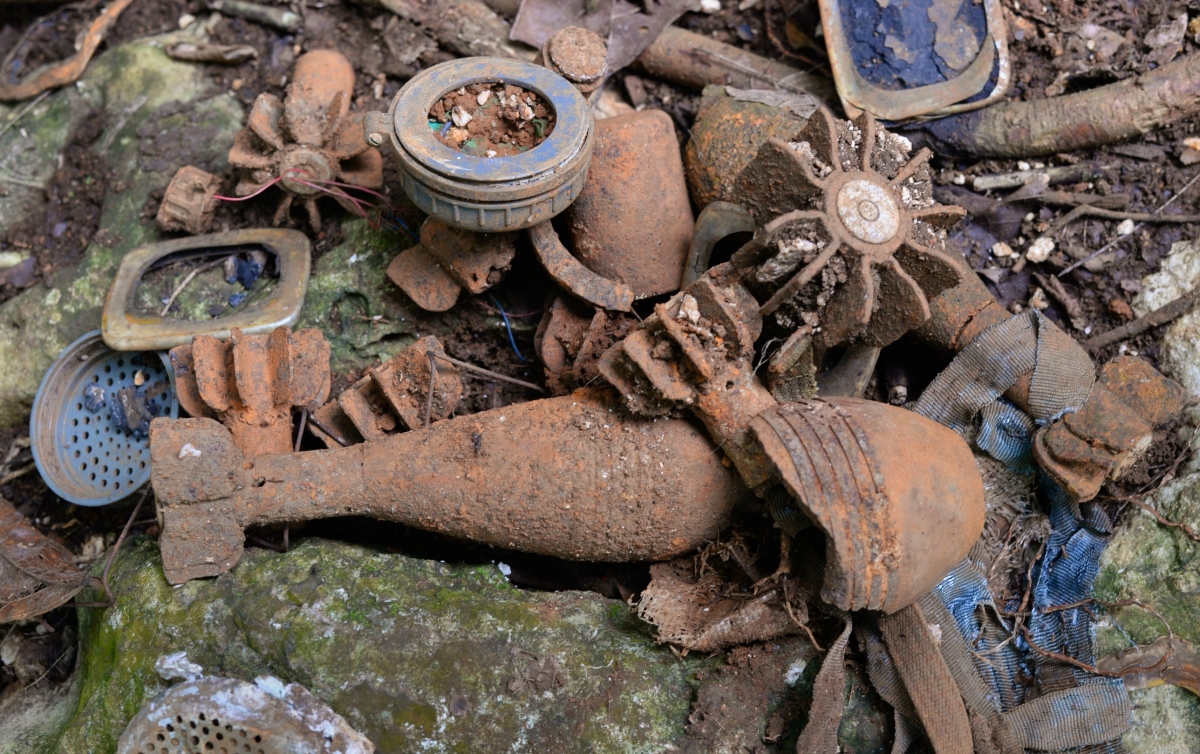
In addition to harsh weather, limestone cliffs, venomous snakes, and blood-sucking leeches, members of the search team face the danger of war-era landmines and unexploded ordnance. 652A and 652B mines with detonators still intact can explode after lying buried underground or wedged between rocks for decades. Unexploded artillery shells and bombs lie scattered across former battle positions like Hill 400, Hill 685,and Hill 1509. 40 years of flash floods and land erosion have altered the terrain, washing many explosives into deep crevices where metal detectors can hardly detect them.
A guiding principle of the mission is: "Clear first, search second." Combat engineers move ahead of the team and conduct one final sweep with their metal detectors before any shovel breaks the ground.
“Safety always comes first. As we dig, we constantly observe the surroundings. If we detect any unexploded ordnance, we stop working immediately so that the engineers can deal with it. Over the years, we've gained valuable experience. The remains of fallen soldiers are often found near streams or low-lying gullies because, over many rainy seasons, floodwaters gradually carry soil, rocks and their remains to those places,” Senior Lieutenant Hoang Ngoc Thuyen said.
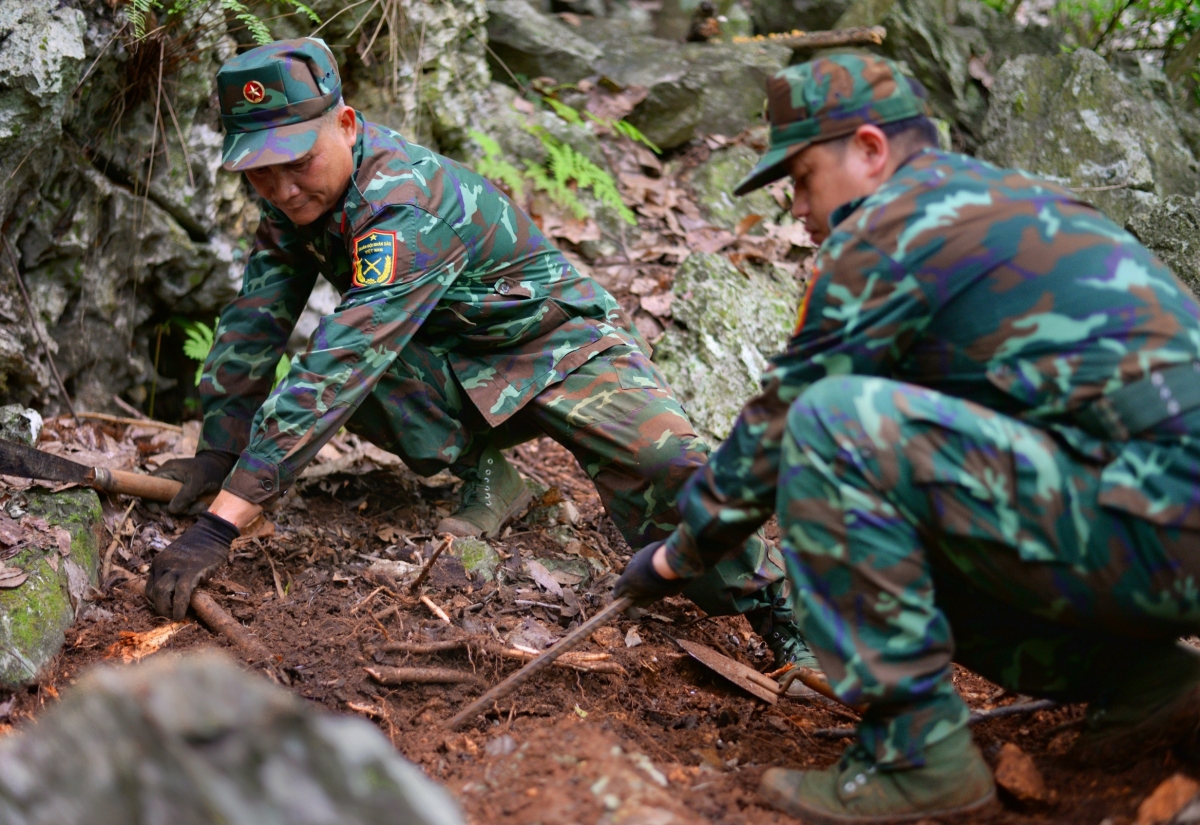
At Hill 400, which saw some of the fiercest fighting, Senior Lieutenant Thuyen and his team spent two weeks conducting a meticulous search. Their efforts finally paid off when Thuyen found a fragment of human remains near the entrance of a cave. Time seemed to stand still. A soldier who had lain in the remote mountains for nearly half a century had finally been found.
“At that moment, I felt overwhelming joy. Everyone was deeply moved and filled with even greater determination. Whether under scorching sun or pouring rain, we were determined to complete our mission to the very best of our ability,” said Thuyen.
The recovery team is filled with joy whenever a trowel contacts a scorched canteen, a fragment of a military uniform, or a button. Senior Lieutenant Luu Van Nien said every set of remains – whether largely intact or consisting only of a fragment of a leg bone or a finger bone – is treated with the utmost respect. It is carefully wrapped in red cloth and covered with Vietnam's national flag. At the mortuary, whatever meal the recovery team eats is respectfully offered to the fallen soldiers, as if they were family members.
“Whenever we recover remains, one team member is assigned to conduct a ceremony inviting the fallen hero’s spirit to come back to his remains. Everyone falls silent. We bow respectfully before his spirit before bringing him to the mortuary,” said Nien.
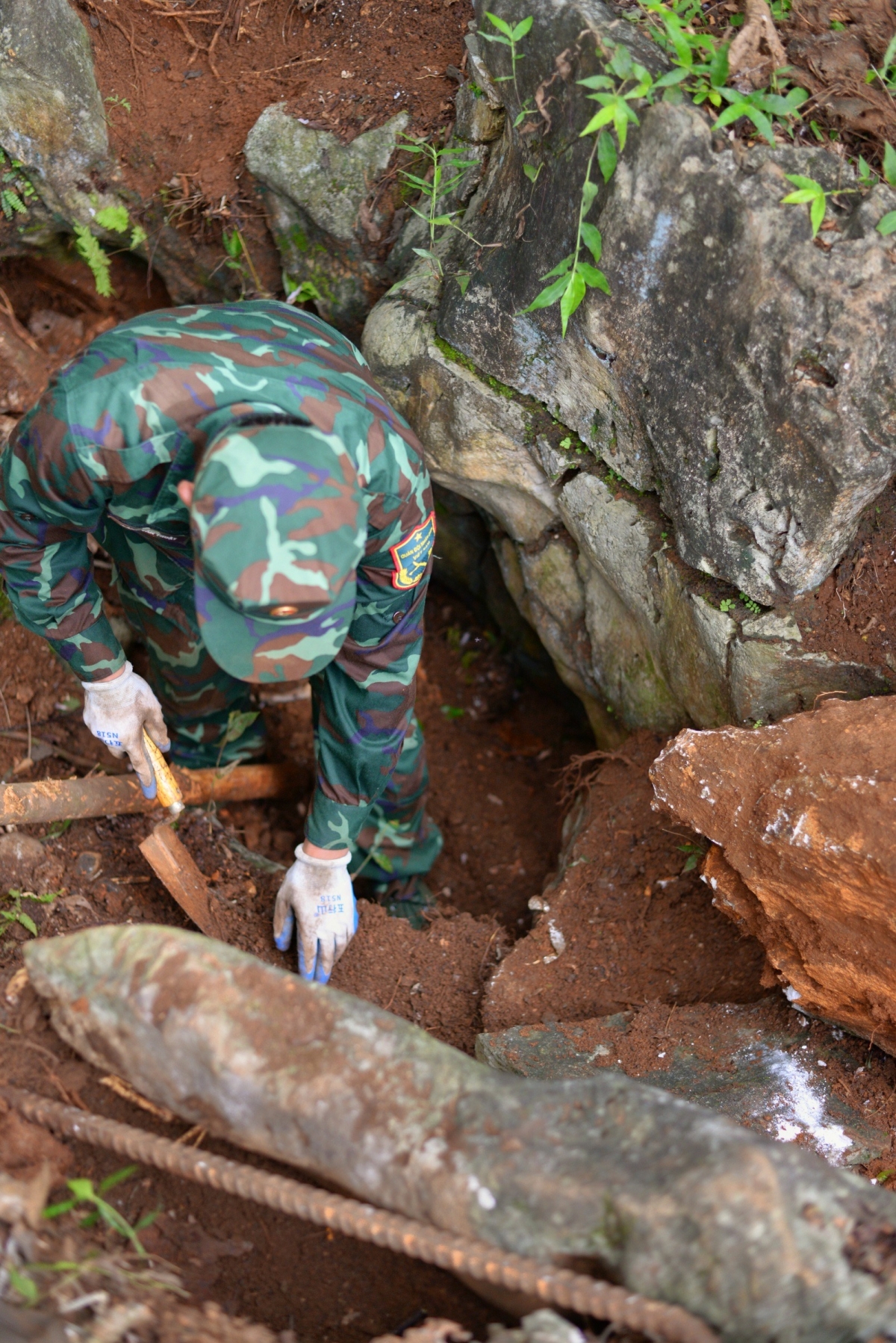
The 500-day campaign to locate, recover, and identify fallen soldiers' remains is only one-fifth completed. Every morning, members of the Tuyen Quang provincial Military Command's recovery team make their way into the limestone mountains. The wartime pledge of earlier generations—"Not an inch in retreat, not a step insurrender"—has inspired a solemn promise to bring every fallen comrade home. Every inch of Tuyen Quang's soil was defended with the blood and sacrifice of a heroic generation. The nation will never forget them, and the mission of honoring their sacrifice will continue.
Keeping their promise to fallen comrades
Established on April 20, 2018, with an initial strength of 18 personnel, the team has so far recovered the remains of 208 fallen soldiers, including 5 mass graves. At the beginning of the 500-day campaign, the team was reinforced with an additional 67 personnel. Lieutenant Colonel Hoang Vu Dung, deputy head of the team, spoke with VOV.
Reporter: Lieutenant Colonel Dung, what is your greatest hope as you and your comrades carry out this mission?
Lieutenant Colonel Hoang Vu Dung: We regard this as a sacred mission. Since being assigned this responsibility, I’ve carried it out with the highest sense of duty and commitment. Since starting the 500-day campaign, my comrades and I have given it our best effort and spent as much time as possible on the work. Our greatest wish is to find more fallen soldiers so we can bring them to their home cemetery and their family.
Reporter: What challenges has your team had to overcome to bring the remains of fallen heroes home?
Lieutenant Colonel Hoang Vu Dung: The search areas are usually far from residential communities. Some locations take nearly two hours of trekking through the forest to reach. More often than not, it starts raining as soon as we arrive. But nothing can stop us. Even in heavy rain, everyone is determined to complete the mission. Seeing the whole team soaked to the skin yet continuing the search for the remains has made a lasting impression on me and everyone else involved. Most of our campsites have been far from any water source. We live in simple bamboo shelters and sleep in hammocks, surviving on rice and food brought from home. Supplying drinking water is our greatest challenge. But those hardships are insignificant compared with the sacrifice of the soldiers who laid down their lives defending our country's northern border.
Reporter: How have local people and war veterans supported your search efforts?
Lieutenant Colonel Hoang Vu Dung: Our work relies on three main sources of information. The first is information from the veterans who fought here. The second is local residents who discover old trenches, bunkers, wartime relics, or soldiers' remains and report it to us. The third is the historical records of the military units that fought here. Those documents help us identify the places where soldiers were killed but haven’t yet been recovered. Based on that information, we deploy teams to survey, verify, and organize search operations.
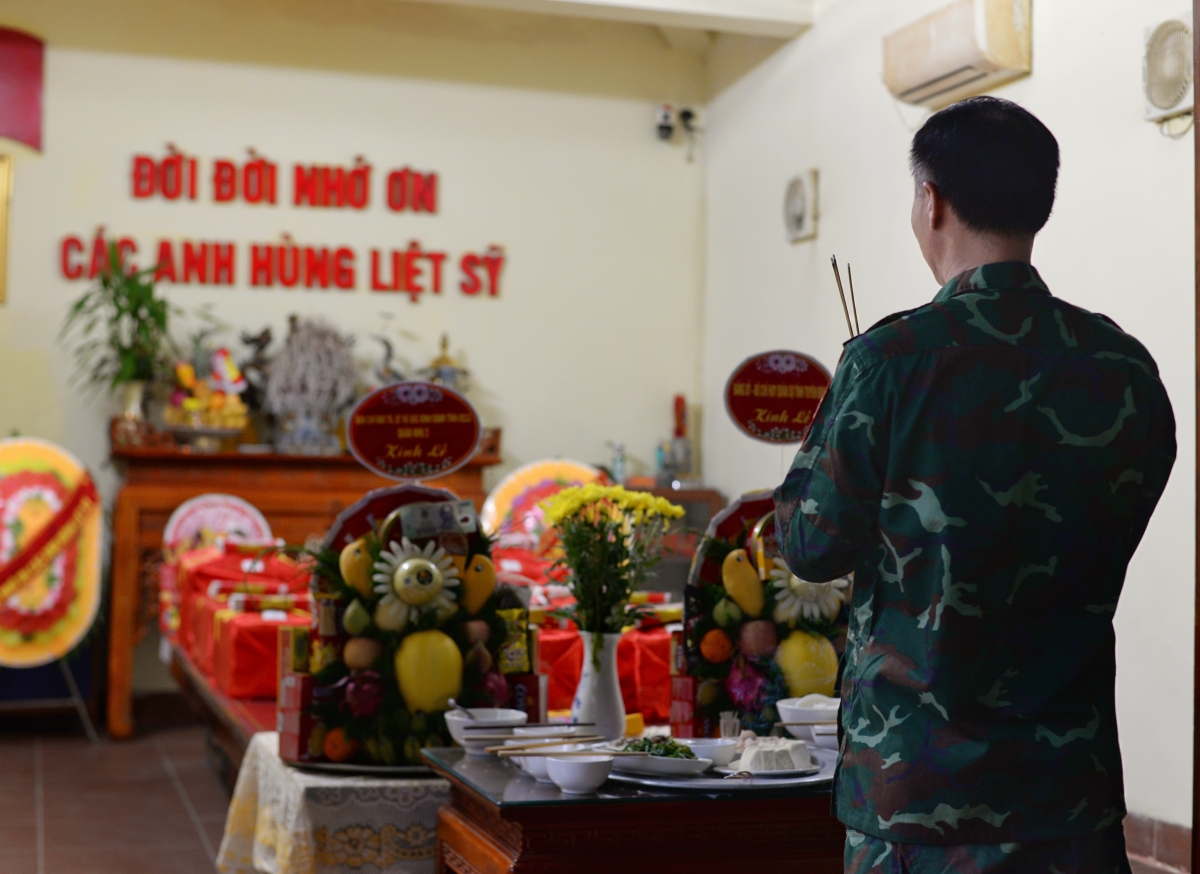
The Epilogue of July
In July, convoys of vehicles from the lowlands made their way up to the border region of Vi Xuyen, carrying veterans and relatives of fallen soldiers. Each vehicle displayed a red banner reading "Returning to the former battlefield." And on July 12, the anniversary of the Vi Xuyen battle, the mountains and forests of Vi Xuyen welcomed back the surviving war veterans.
“My brother joined the army in 1986, and in 1987, just as he was about to be discharged, he was hit by artillery fire. When I received the death notice, I was speechless. The family searched for him for ages but couldn't find him. When, eventually, someone went to light incense at a cemetery, saw his name, took a photo, and sent it to us, the whole family burst into tears.”
“I wasn't born when my uncle passed away; I only heard stories about him from my grandmother and mother. Today, for the first time, I've come here to meet him, a national hero, and I'm deeply moved. I deeply sympathize and hope that other families will soon find their loved ones as well.”
These are the touching words of Luc Thi Thuan and Do Thi Phuong Thuy, whose relatives rest at the Vi Xuyen National Martyrs’ Cemetery.
Many veterans with silver hair and limited mobility were among the stream of people offering incense at the cemetery. For them, this was a sacred rendezvous with comrades who still lie somewhere among the rocky crevices and cliffs of the Vi Xuyen mountains.
Han Dinh Ngu, a former special forces soldier, returns to Vi Xuyen every year. “We come to light incense for our comrades who fought alongside us here. They’re still lying among the cliffs. If we don't go every year, we feel guilty toward them.”
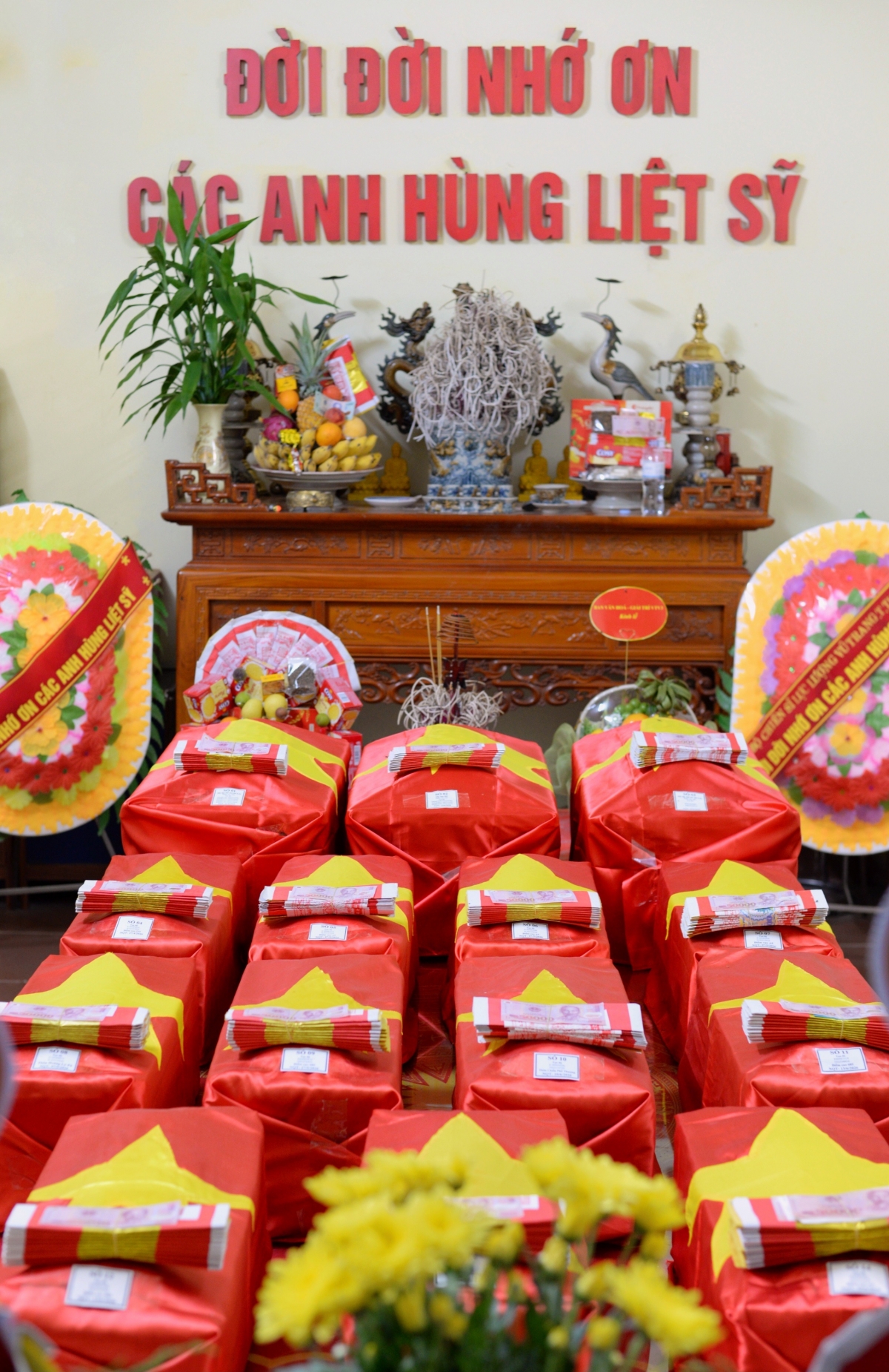
Hill 685, once known as the "Century's Lime Kiln," was a place where the artillery fire was so intense that the mountain rocks were broken and ground into lime powder.
Nguyen Van Ca served in the 356th Division. His voice chokes with emotion when he recalls the battle on the night of July 11. “We suffered many casualties. The mountain rocks were reduced to lime by hundreds of tons of artillery shells. While we were still healthy, we tried to light incense for our comrades once a year because we were luckier than others in that we were able to return home and have families.”
Hoang Van Dam, a soldier of the 122nd Regiment, has never forgotten the battle of May 28, 1984, on Hill 1509, where he carried the bodies of his comrades into the bunker amid a hail of bullets. Now all traces of the past have been erased by time. “I remember there was an oak tree in front of the bunker, but now I can't find it. I rang a bell and called out: 'Van, where are you? Show yourself and we will bring you back home.' But I couldn't find him.”
Dinh Nuoc Long, a soldier from the 313th Division, travels to Vi Xuyen dozens of times a year. He pays for the trip, climbs mountains, and crosses streams to guide the search and recovery team. He has brought 10 or more comrades back to their homes. “Every time I come here, I'm so choked up. I feel so much sorrow for my brothers-in-arms, who are still scattered along the border. The remains of more than 2,000 comrades have yet to be found. Tomorrow, I’ll lead some witnesses to Hill 1509 to pinpoint the location for the repatriation team.”
These soldiers of yesteryear have turned their pain into action, their promises into tireless steps. One soldier wrote: "When they die, they turn to stone, becoming immortal / Still residing here, guarding the border…"
On the former Vi Xuyen front, there are now green Shan Tuyet tea hills, cinnamon forests, cunninghamia forests, and corn fields. Veteran Hoang Van Dam gazed into the distance toward the mountains. “In the past, we fought to defend the land. Now, returning to see young people searching for my comrades, I’m very happy. I hope to bring all the fallen soldiers back to be reunited with their fallen comrades so they can rest in peace together.”
Duong Viet Hung, Vice Chairman of the Fatherland Front and Secretary of the Youth Union of Minh Tan commune, Tuyen Quang province, said:
“We cooperate with the militia forces to help the search and recovery team find the remains of fallen soldiers. Youth Union members have become deeply aware of the value of peace and support the local people in developing the economy on these lands, free from bombs and mines.”
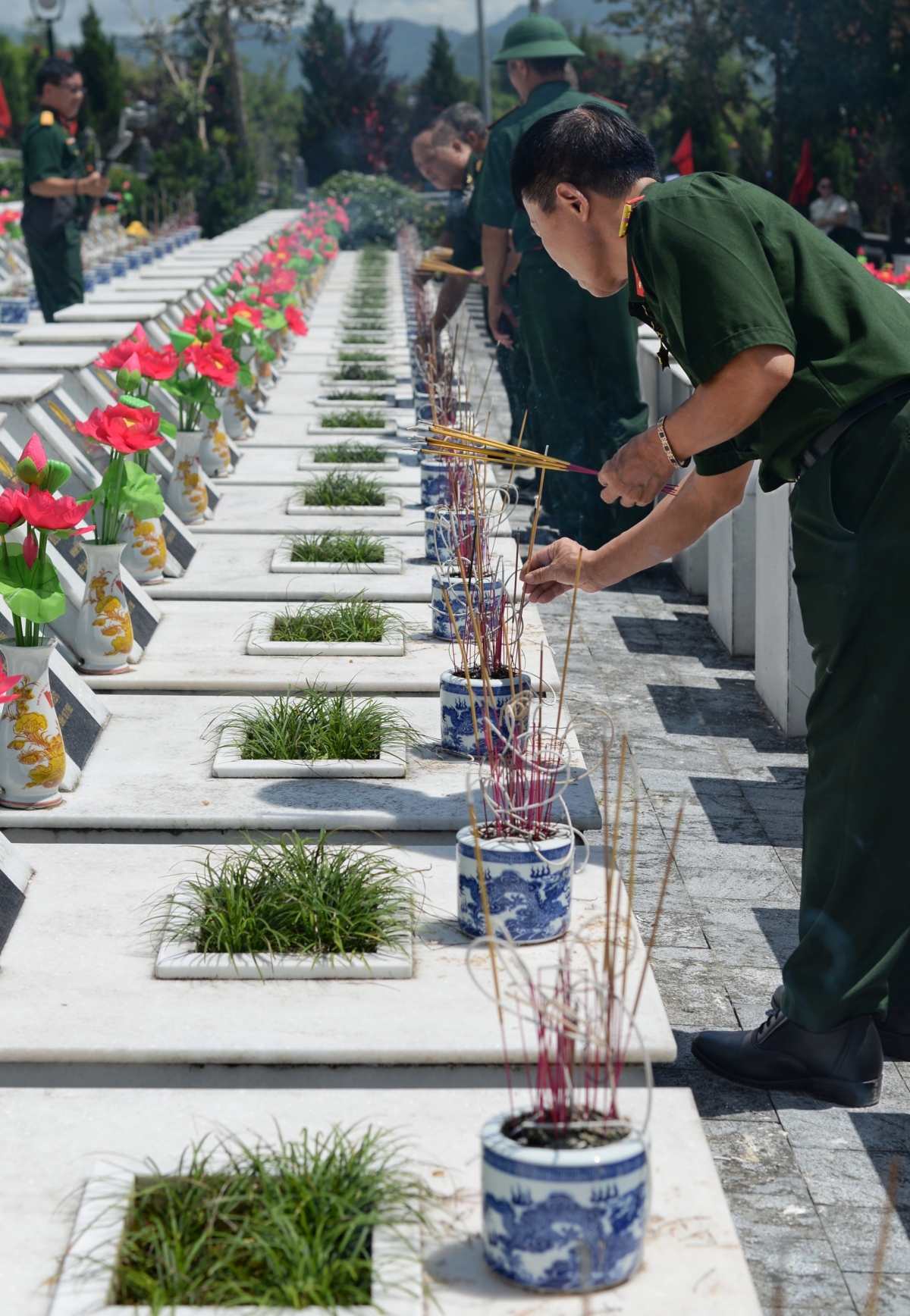
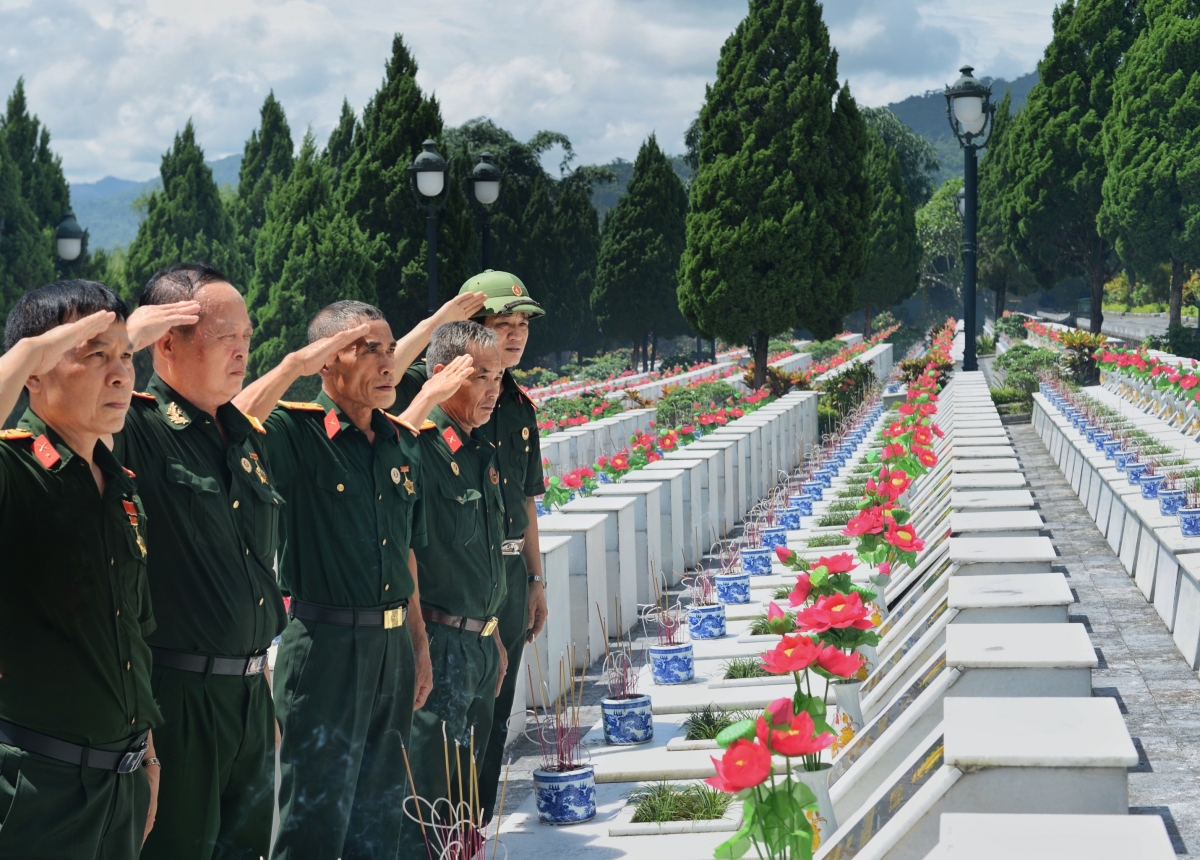
In the incense smoke at Vi Xuyen National Martyrs' Cemetery, veterans shake hands and greet each other affectionately as if they hadn’t been apart for decades. They discuss how the country has changed, and how the 500-day campaign is bringing fallen soldiers back to their homes.
Today's peace was bought with the blood and bones of countless young men in their twenties. Today's generation promises not to stop until the remains of the last fallen soldier are found. Bringing them back home is the most sacred act of these July days.
Since the beginning of the 500-day campaign, Tuyen Quang’s repatriation team has searched 935 hectares, excavated 10,000 cubic meters of soil and rock, and collected 42 sets of remains. They have also taken samples for DNA testing from 84 unidentified graves in 10 martyrs' cemeteries. These figures are the result of the sweat and tears of a younger generation respectfully paid to members of an older generation who gave their lives for the Fatherland.
Artifacts and the remains of many fallen soldiers have been found, but thousands more lie somewhere on the rocky mountainsides near the border. The 500-day campaign is about one-fifth complete, but the mission won’t stop until the last martyr returns home.
This report is our expression of gratitude to the heroic martyrs who died for the independence and freedom of the Fatherland, to their families, to the veterans who are waiting for the return of their dear comrades, and to the young soldiers who are honoring those heroes by working hard to find them and bring them home.


