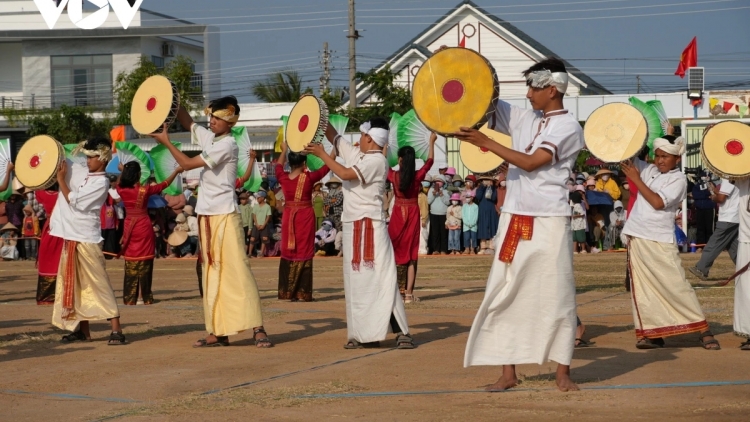




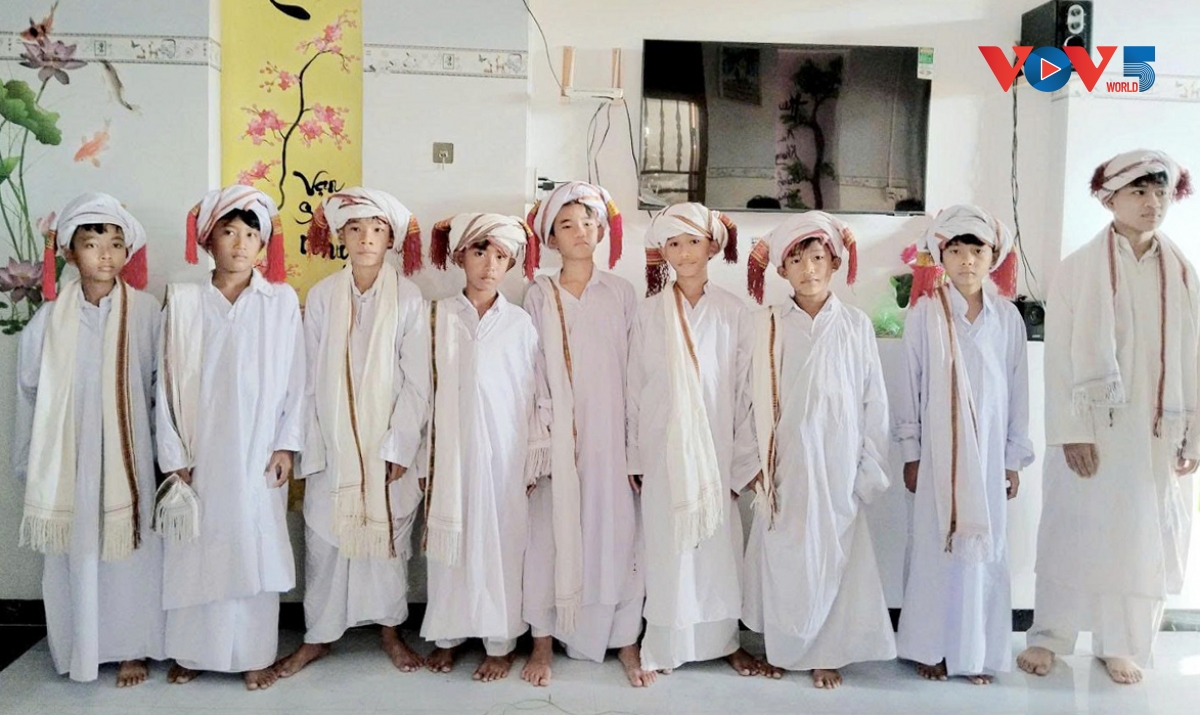
For generations, the Kareh-Katal ceremony, a coming-of-age or initiation rite for boys and girls turning 15, has been regarded as one of the most important rituals in a person’s life.
The ceremony, usually held in the 6th, 8th, or 10th month of the Cham calendar, includes hair cutting, the giving of a sacred name, ancestor worship, and the receiving of a dowry. On the first day, family members prepare clothing and set up a ceremonial space. On the second day, they prepare offerings. The main ritual takes place on the third day.
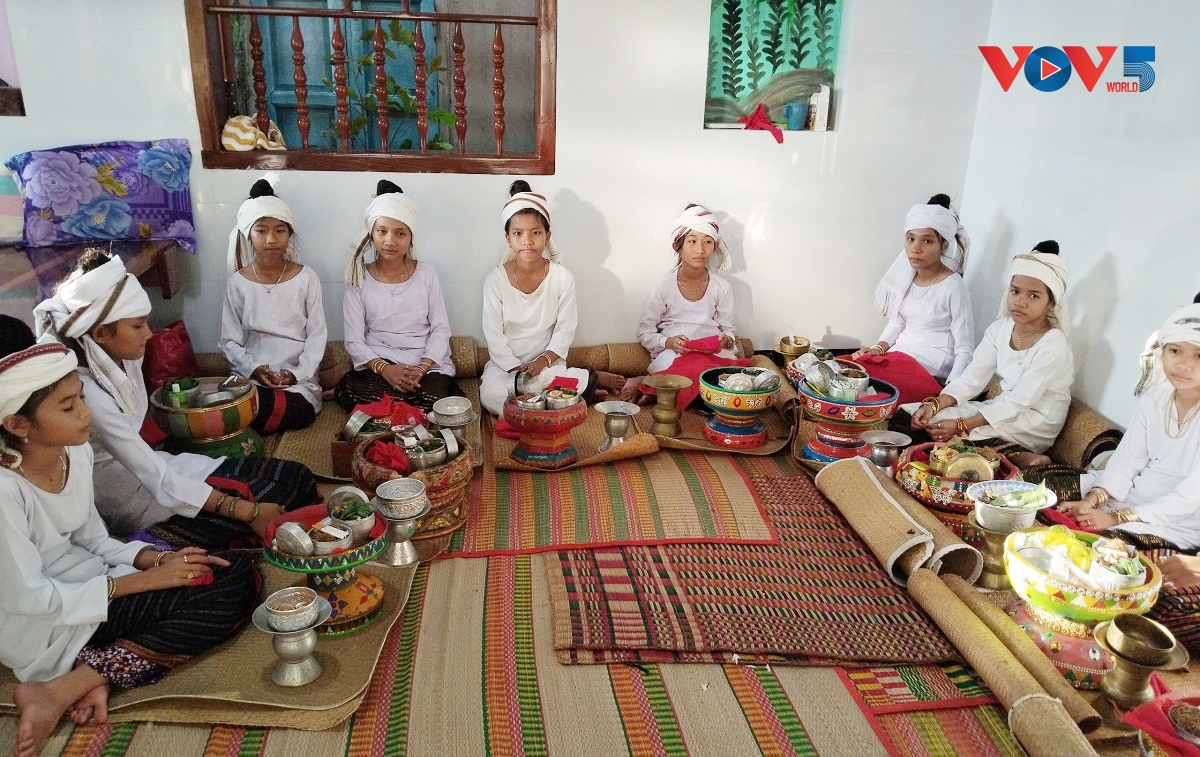
The host families invite all the villagers to the ceremony to witness the moment when the adolescents are recognised by the deities as an adult. Depending on the family’s financial status, the ceremony will be on a larger or smaller scale. Typically, the offering includes bananas, popped glutinous rice, and a rooster. At sunset, the initiates come to the ceremony site, where males are guided by a religious dignitary called an “Imem” to one tent, while females are guided by an “Amuk Buh” to another tent.
Early the next morning, the mentors lead the adolescents to the river for a purification ritual, a crucial part of the ceremony. The Cham believe the river washes away all worldly dust and sins, bringing purity to the individual. Bathing in the river recalls one’s origins and informs heaven and earth of the transition to adulthood.
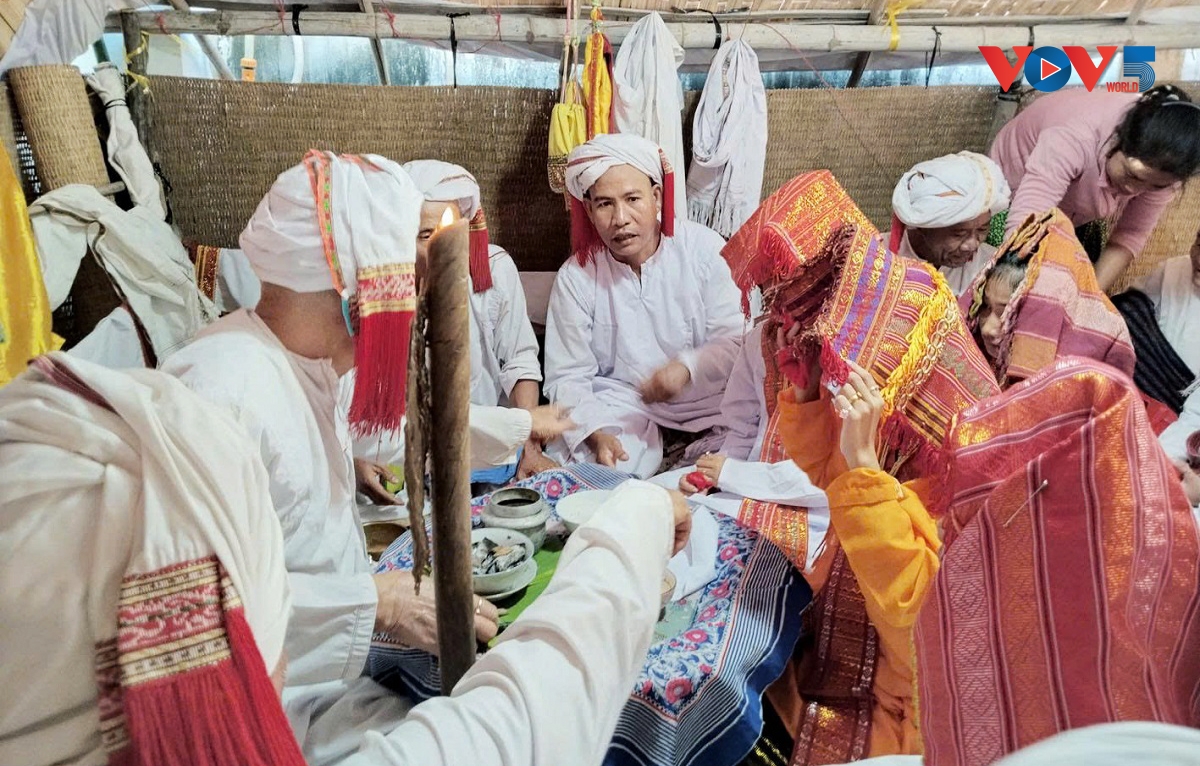
After the purification ritual, the adolescents return to the ceremonial site, where the dignitaries give them a sacred name, derived from the name of a guardian deity. This is the name they will use after death, in the afterlife.
Then comes the “circumcision” ritual for a male, which these days is carried out symbolically, not literally. A female has a lock of her hair cut and vows to adhere to her religious teachings.
During the main ritual, a person carries a baby boy between 8 months and 1 year old, a child of the host clan, into the ceremony.
“The presence of the child is compulsory. It’s a long-standing custom passed down by our ancestors. He must be dressed in accordance with religious requirements. The baby boy is usually from within the clan – only in exceptional cases is a child from outside the clan permitted,” Imem Ket, a resident of Lam Dong province, explained.
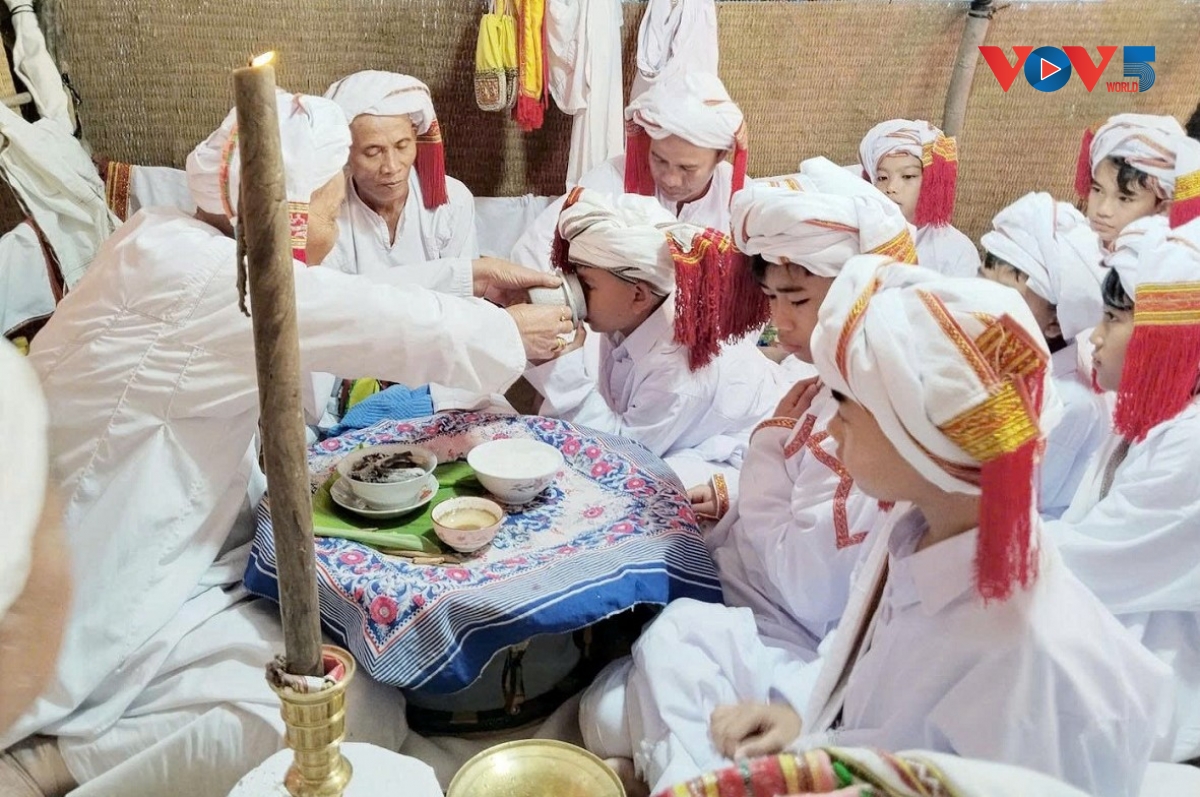
The Kareh-Katal ceremony still includes all the major rituals, but they’re shorter in duration than in the past.
“In the past, participants in the Kareh-Katal ceremony had to catch fish in a pond and go into the forest to collect firewood to prepare for the ceremony. Then they stayed and helped the host family for 7 to 10 days. From start to finish, the ceremony could last nearly half a month. Now it’s been shortened to three days,” Lu Van Xuong of Lam Dong province said.
At the end of the 3-day ceremony, the host families invite the participants to have a meal together at which the adolescents receive gifts and congratulations from relatives and villagers. From that moment on, they are official followers of Bani Islam and full members of the clan.