



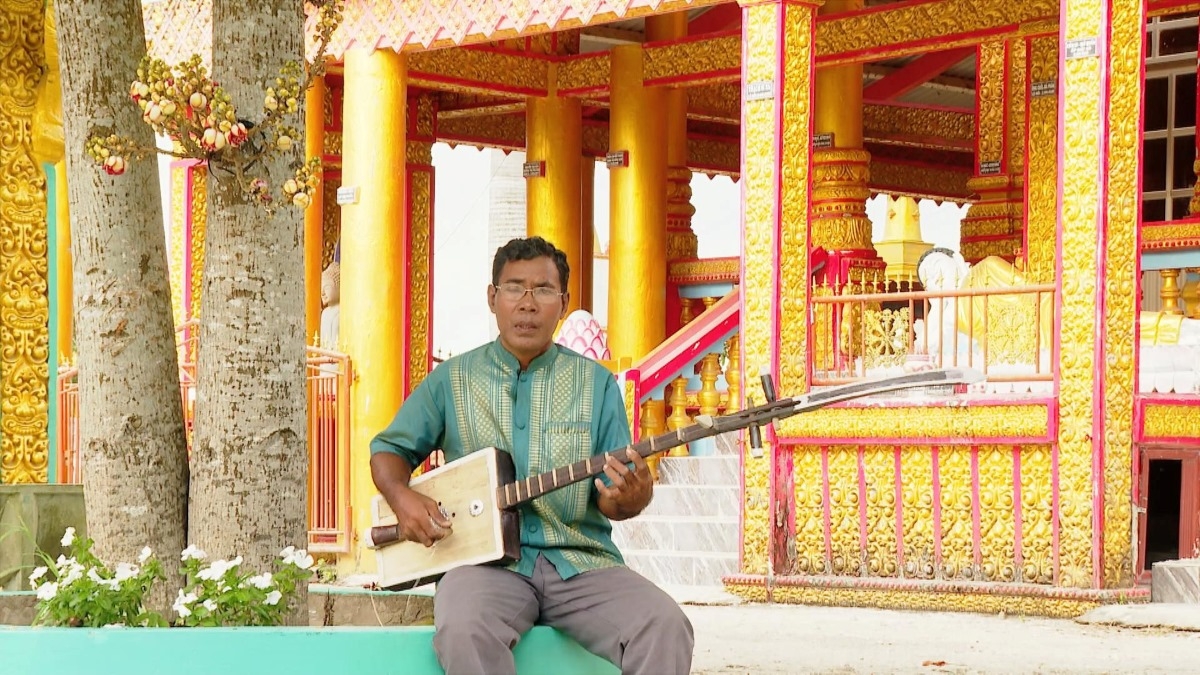
In the Khmer language, “Chapey” is the name of the musical instrument used to accompany the singing after each verse. When performing Cham Rieng Chapey, the artists often draw inspiration from folk poetry, mainly composed in four-syllable or seven-syllable verse forms. At times, the performers do not rely on any venerable stories but improvise while on stage, creating their own lyrics to reflect life, emotions, and aspirations.
“The Chapey plays a very important role in traditional musical ensembles. A Cham Rieng Chapey performer must be proficient in playing the instrument, singing, and improvising,” Thach Hoai Thanh, a lecturer at Tra Vinh University in Vinh Long province, said.
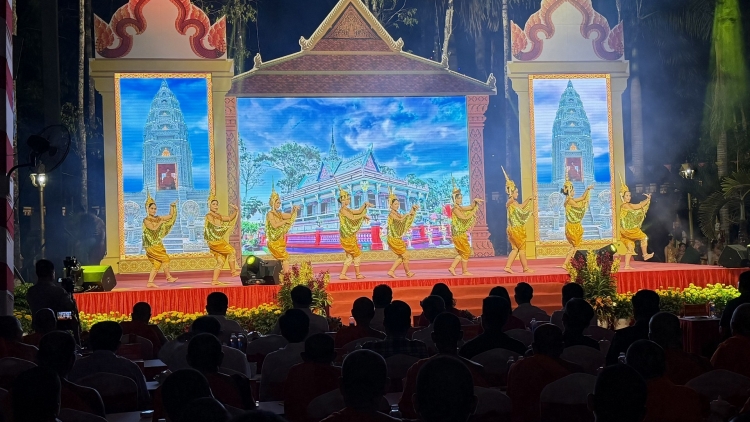
The image of Cham Rieng Chapey artists has become deeply embedded in the collective memory of generations of the Khmer people. The heartfelt songs that teach moral values and proper conduct have helped shape the cultural identity and virtues of the community.
Having practiced and cherished Cham Rieng Chapey since he was young, Danh Yen of Can Tho city said the art form stands out for its unique characteristics. During a performance, the artists do not sing along while playing their instrument. Instead, they sing a cappella verses, pause to play the instrument, and then continue singing. The improvised lyrics show their individual styles and a deep understanding of Khmer culture, language, and literature.
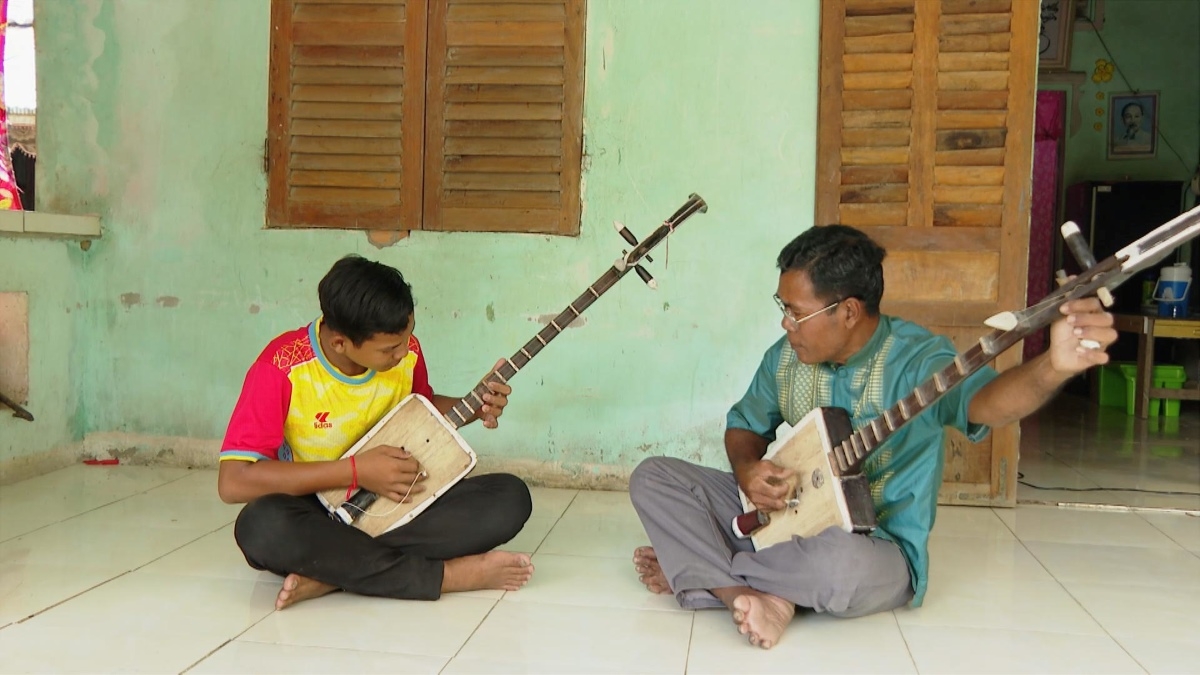
“The selection of songs depends on the events. For example, at a wedding ceremony, only a few traditional songs are performed during the areca flower-cutting ritual. However, if the host family requests a longer performance, we must improvise verses praising parental devotion. That is the most challenging part because the lyrics must be created on the spot,” Danh Yen said.
The Chapey is played both in solo performances and in musical ensembles. Depending on the time, place, and performance context, the artists select suitable repertoires and adjust their instrument’s tuning to blend harmoniously with the ensemble.
“The Chapey has 12 frets. When performing with an ensemble, I adjust the tuning to match the other instruments. When performing solo, I tune it to suit my own vocal range,” Danh Yen said.
Cham Rieng Chapey reflects the creativity of the Khmer people as well as their ability to adapt flexibly to their living environment. Thanks to its distinctive artistic and cultural values, the art form was recognized as a National Intangible Cultural Heritage in 2013.