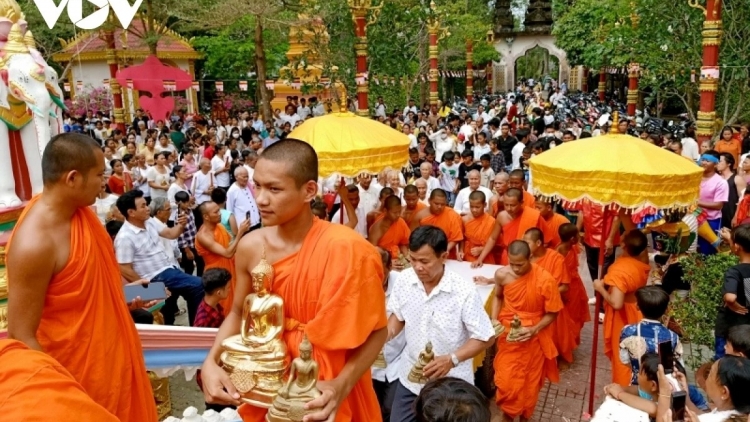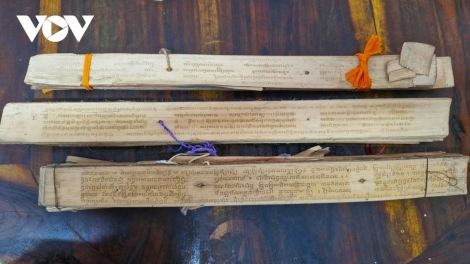




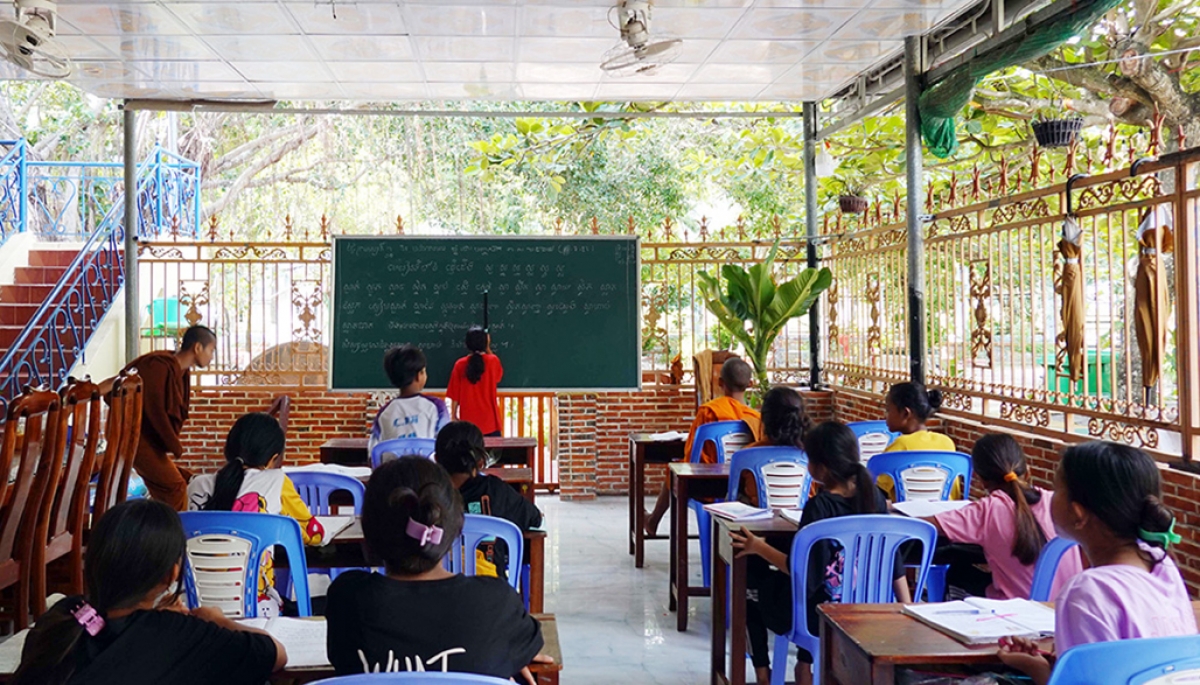
The Mekong Delta province of An Giang is home to a large Khmer population. Besides the Vietnamese and Khmer languages, the locals also use Pali, the liturgical language of Theravada Buddhism, which is used to write scriptures, teach doctrine, and conduct religious rituals, and Sanskrit, an ancient Indian language used in religious ceremonies. These languages and scripts are taught in schools and in pagodas.
Summer classes at pagodas also follow the curricula of the education sector, said Venerable Chau Ty, abbot of Soai So Pagoda in Tri Ton commune. “We teach Khmer children mostly during the summer holidays. Every year, pagodas open classes for two months to teach the Khmer speaking and writing skills.”
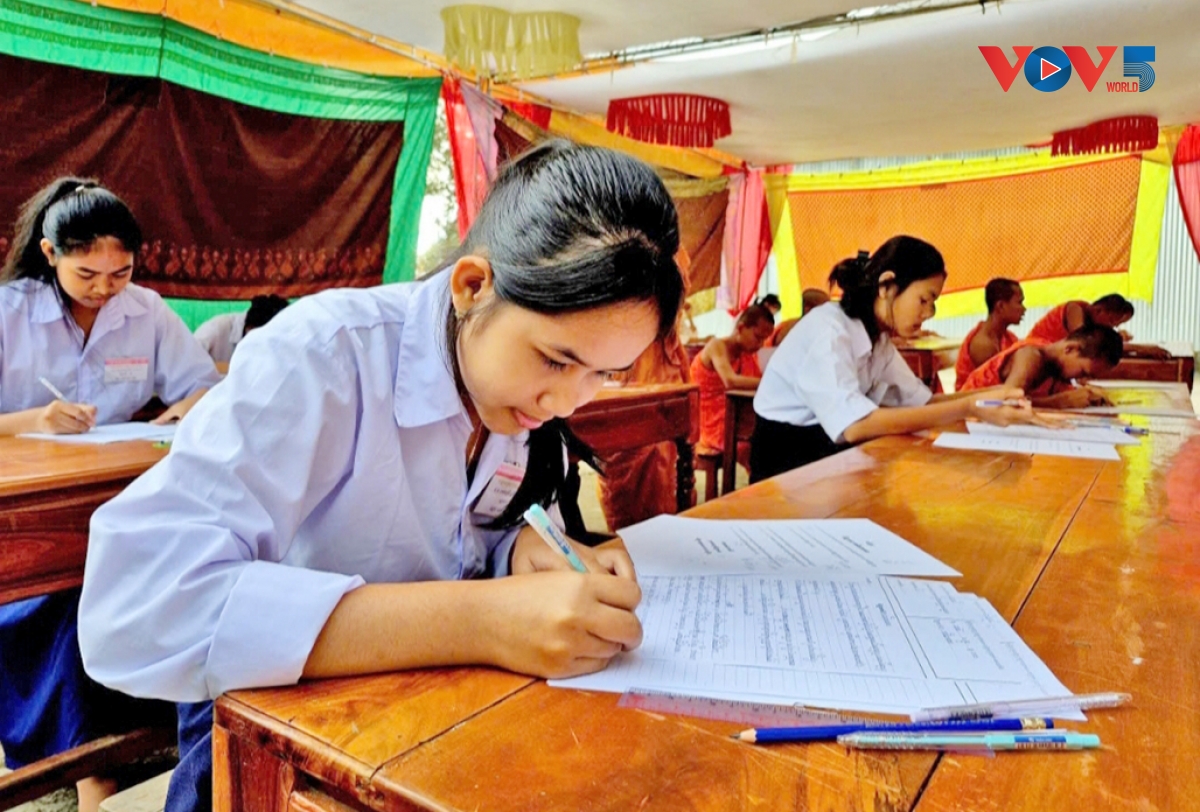
Teaching Khmer language at pagodas is also a way to strengthen coordination between pagodas, schools, and families in educating the youth. With dedication and a strong desire to preserve cultural identity, monks devote their summer time to teaching.
“At the pagoda, children practice monastic life and learn Pali. Each year, we open one or two classes depending on the conditions. With strong support from local authorities and the community, we feel greatly encouraged,” said Venerable Chau Cat, abbot of My A Pagoda in Chi Lang ward.
While learning Khmer language and Pali script, the children are also taught customs, etiquette, and traditional cultural values.
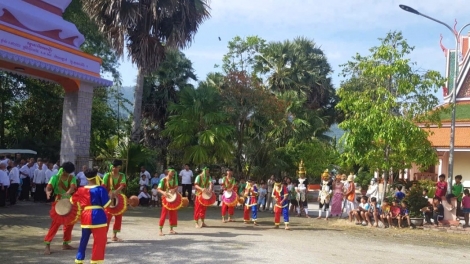
“During summer, we often go to pagodas to learn Khmer. The monks teach us free of charge. After the course, we take a test, and the top three receive prizes. During the classes, monks also teach social behaviour, Buddhist teachings, and ethnic culture. Some pagodas even offer lessons in traditional music, such as the five-tone ensemble, Chhay-dam drumming, and Du Ke theatre. This learning is meaningful, helping us understand our language and beliefs, which is why many young people join these classes,” Pupil Chau Ne Som Nath, from O Lam commune, said.
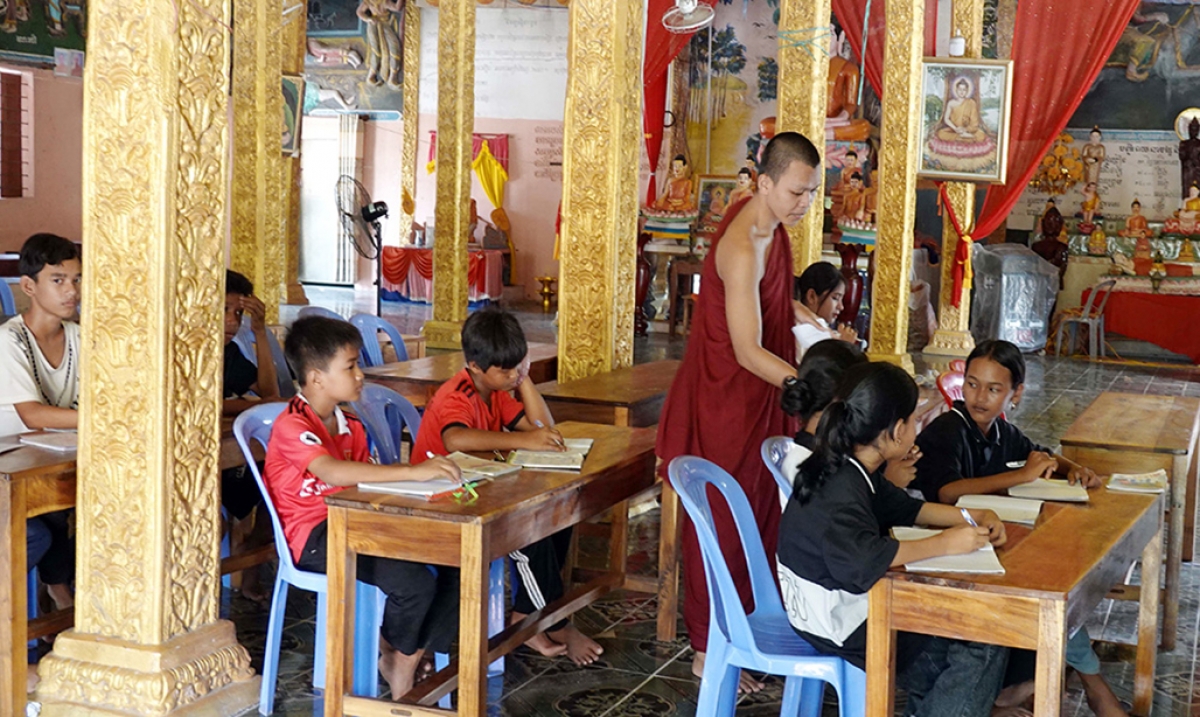
Local authorities support and coordinate with pagodas in teaching activities, and the education sector may assign teachers from schools to teach at pagodas. The authorities also make community cultural houses available to monks and children for studying.
“Religious establishments work with local authorities to teach Khmer language to children. In O Lam commune, 14 out of 15 Khmer pagodas offer Khmer language classes every summer. Families encourage their children to study to preserve their language and script. In 2025, the State provided financial support for teaching, with O Lam commune alone receiving nearly over 15,000 USD,” said Neang Sam Bo, Vice Chairwoman of the People’s Committee of O Lam commune.
These free classes at Theravada Khmer pagodas in An Giang have provided valuable learning opportunities for children, and played an important role in preserving the language, script, and cultural identity of the Khmer community.