



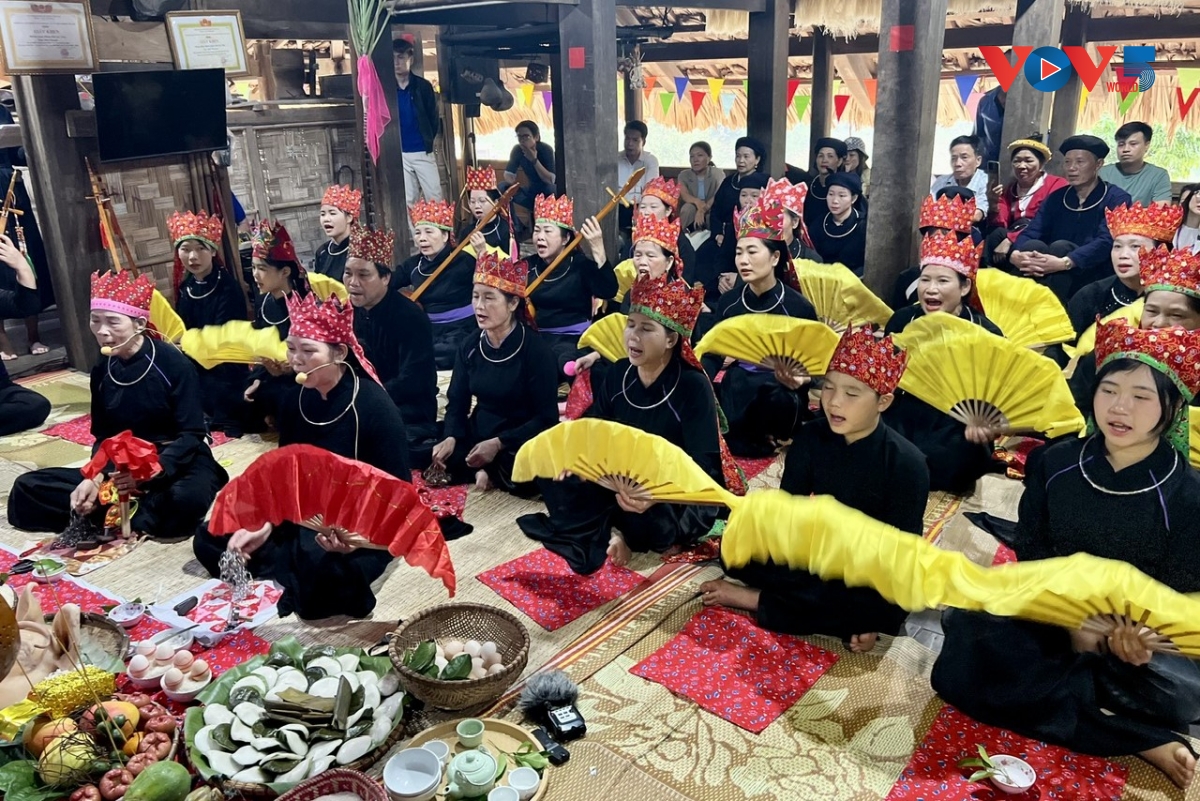
In a sacred space, Meritorious Artisan Hoang Thi Vien, the main Then master (also known as the Then mother), leads the ritual. Holding a set of shaking bells in one hand, she sings a melodious Then song to invite ancestors, deities, and spirits to the ceremony. When the bells ring, the Lau son trang ritual officially begins, marking an important turning point for the Then apprentice.
“The apprentice must be someone whose destiny and temperament align with the master’s. The apprentice invites the master to their home, or the apprentice may come to the master’s home to perform the Lau son trang ritual on an auspicious day,” said Vien.
In the life of the Tay people, beyond being a form of folk performance, Then also serves as a bridge between humans and the spirit world. On behalf of the community, the Then masters, male or female, conduct a ceremony to pray for peace and good production, dispel misfortune, and heal the sick. The apprentice must receive recognition from the master in the presence of the ancestral masters and deities.
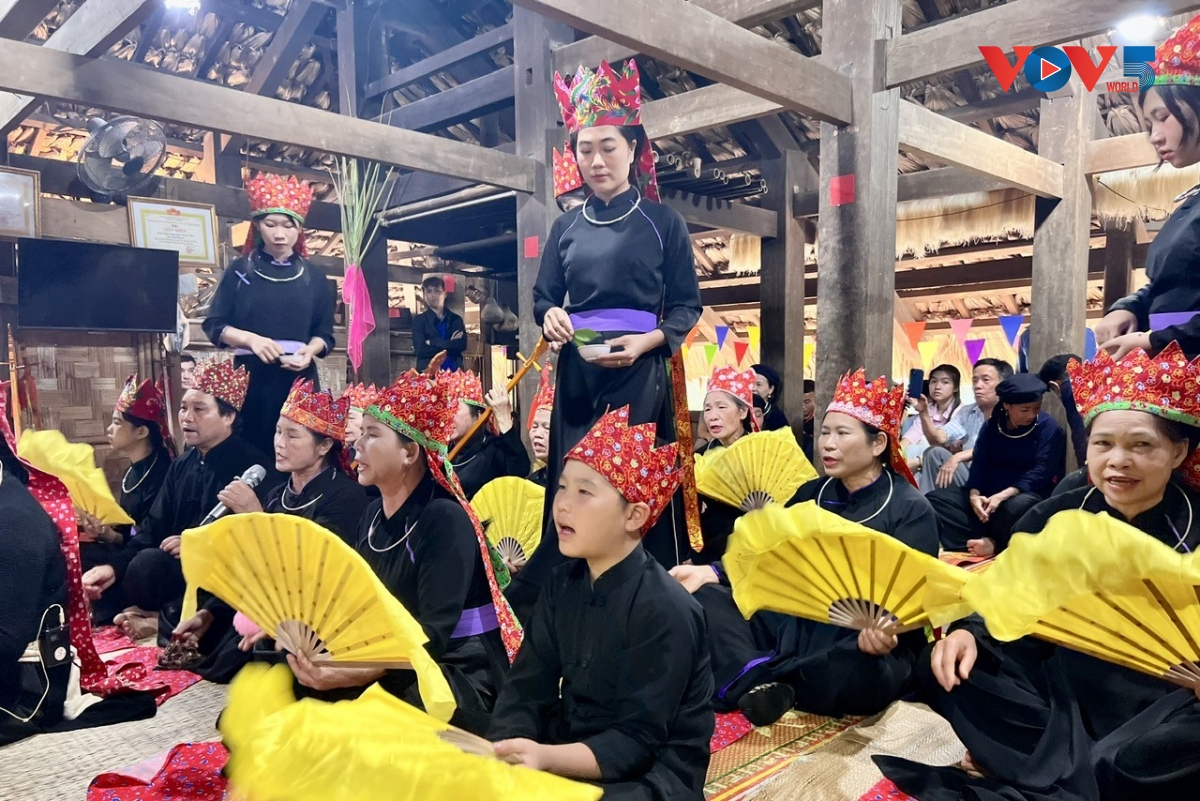
An important part of the Lau son trang ritual is “sending off the troops”. The Then master leads a procession of practitioners, singing verses to guide the apprentices through symbolic palaces and gates to learn rituals and performance techniques, marking the first Then lesson.
The master sings to lead the group into the “boat rowing” ritual, crossing the river to deliver offerings to the other side. The graceful Then melodies guide the group across the waves, which symbolizes the path of learning ritual practices and inner discipline.
They continue to travel through gates of moonlight, wind, sunlight, and 9 layers of clouds. Each stage symbolizes a challenge and a step forward.
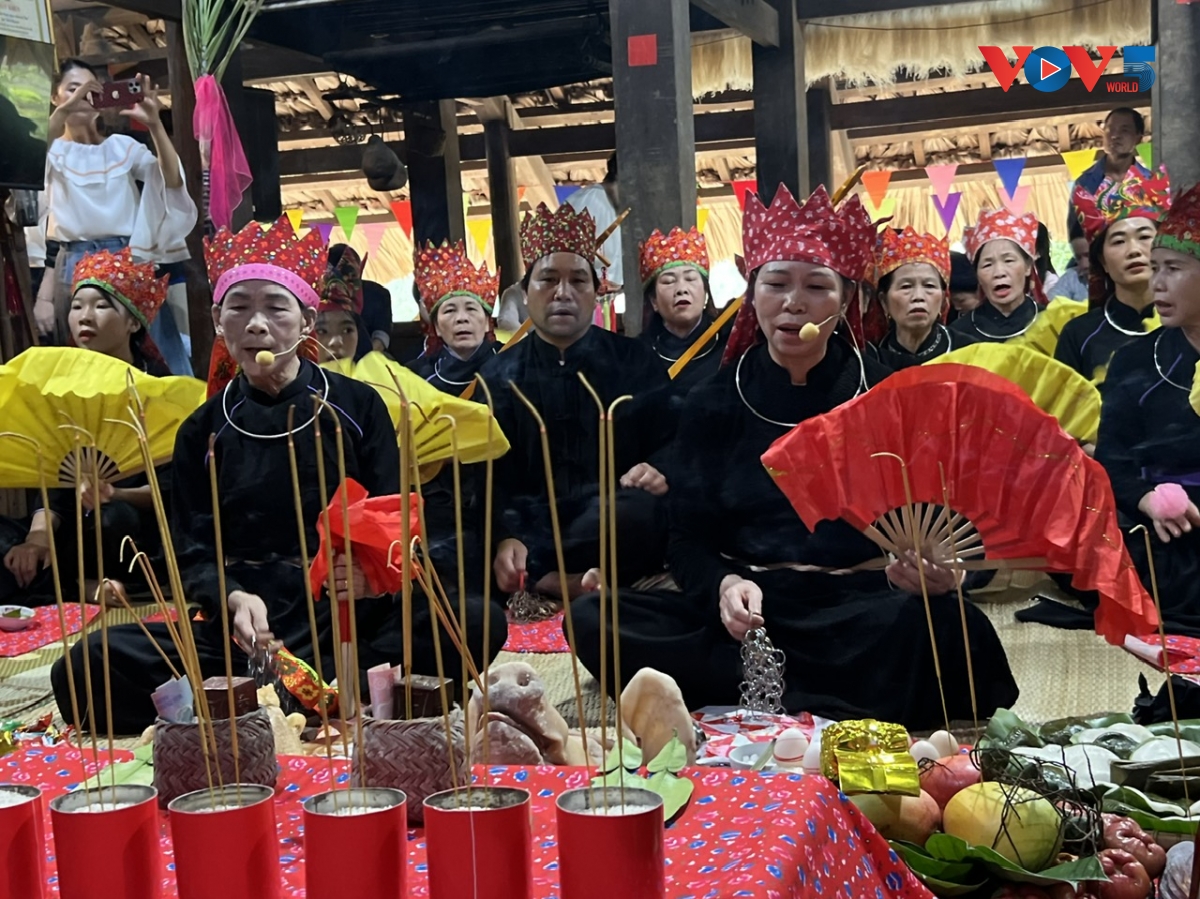
“The Lau son trang ritual is the first ceremony to guide the apprentice through various trials to the heaven and the sea. Stage two, called enlightenment, begins the learning of verses and melodies. Stage three is the grand ceremony allowing the apprentice to enter the 12-level Then tower. Three years later, another ceremony will be held, called ‘withdrawing the troops’, which allows the apprentice to officially begin practicing,”Then master Hoang Thi Lan said.
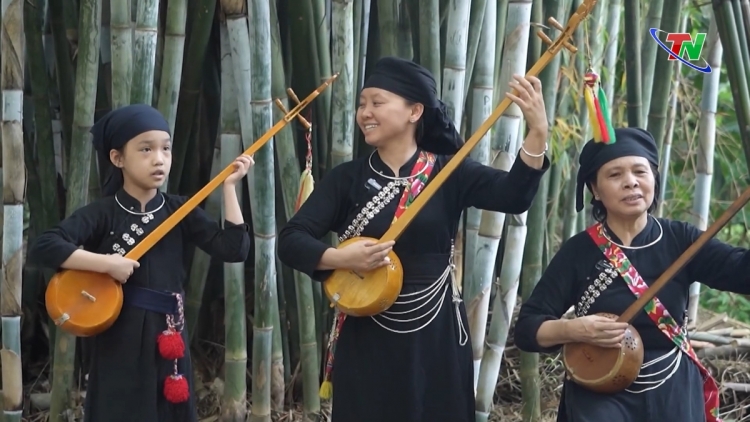
Under the witness of the deities, the master-apprentice relationship is established, closely linking profession and spirituality. The apprentice begins the journey of inheriting traditional cultural values and taking on a sacred responsibility to the community. The master gives the apprentice professional tools, such as a tinh lute, shaking bells, fans, hats, and costumes.
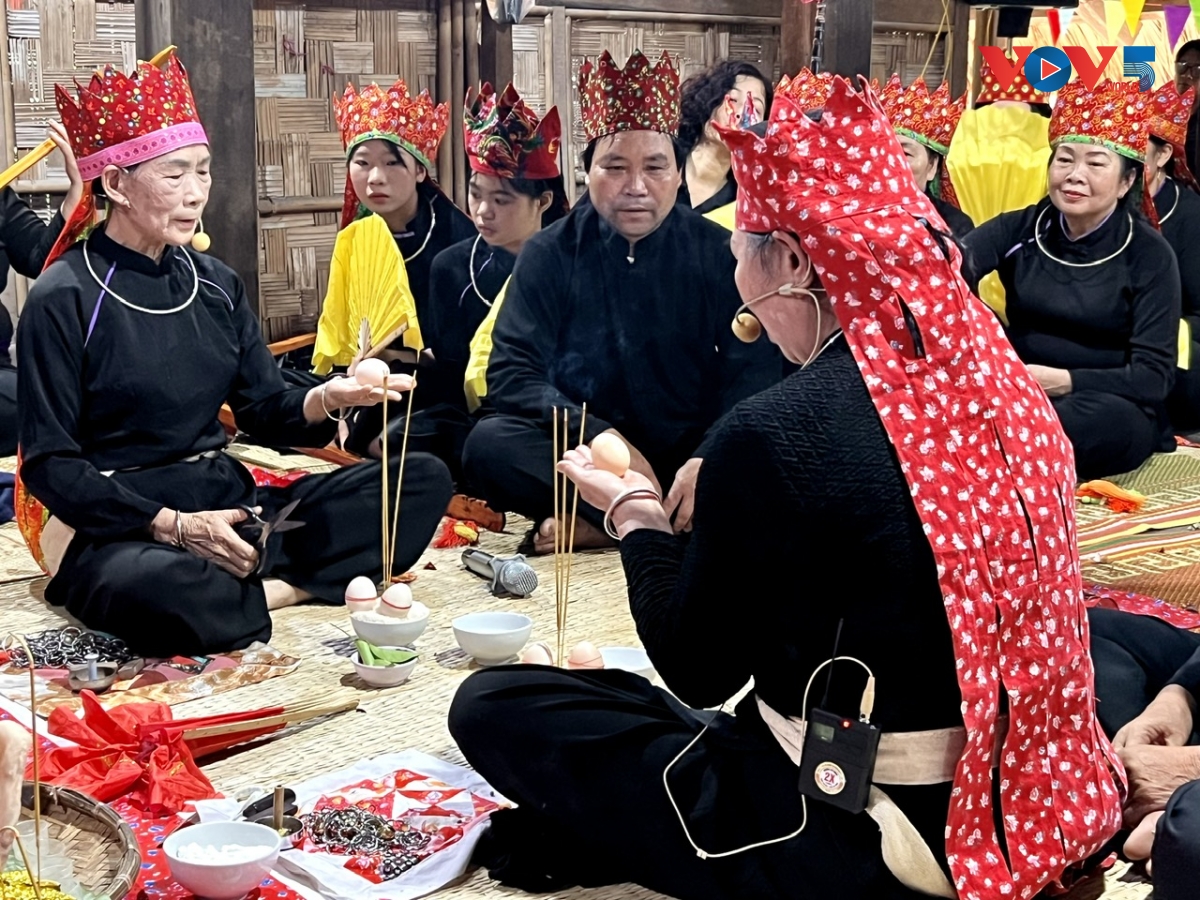
The Lau son trang ritual usually involves one main Then mother and one or two assistant Then mothers. Bigger ceremonies may have up to five assistants. A shaman also plays an important role.
“There must be a shaman to guard the house and prevent outside spirits from entering, so that the Then masters can conduct the ceremony with peace of mind. The Then masters take the apprentices across the world to the heavens and the seas and introduce them to the ancestral masters, the Water Deity, and the Jade Emperor,” said Shaman Tran Van Hoan.
The Lau son trang ritual concludes with a dance featuring a tall sugarcane stalk which symbolizes the growth and upward striving of the apprentice. When the ceremony ends, a new journey begins of training to become a skilled Then master.