



Mitate: The Japanese art of seeing the familiar in new ways
Mitate, deeply embedded in Japanese culture, uses one thing to suggest another through the power of imagination and allusion. This leads to new connections that often surprise or delight the observer.
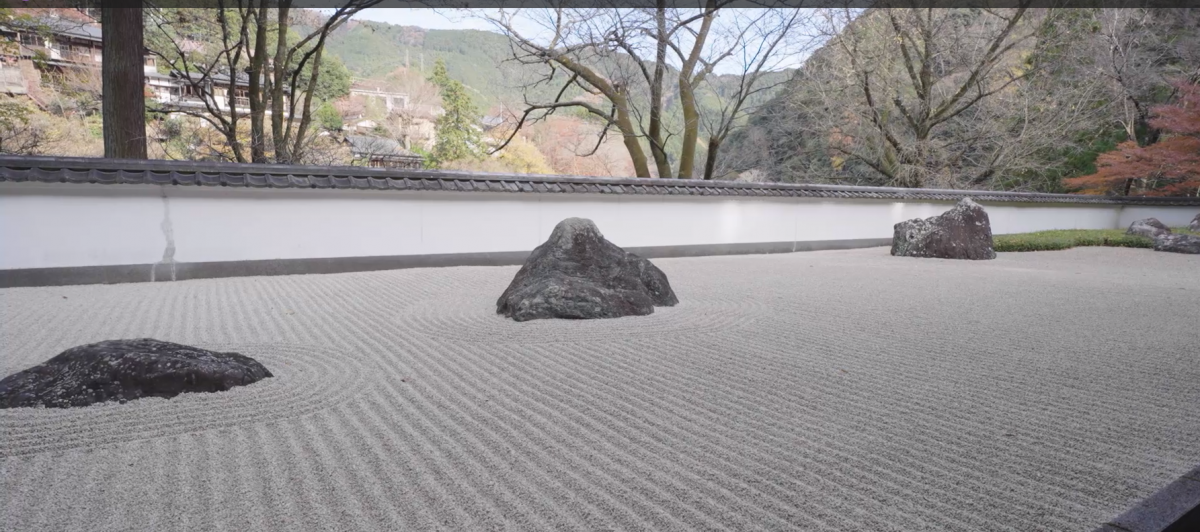
In Japanese gardens, mitate shows up in the art of karesansui, where patterns in the gravel suggest the ripples of flowing river water.
Japanese cuisine employs mitate in carving food to resemble various other objects to give diners a sense of the season.
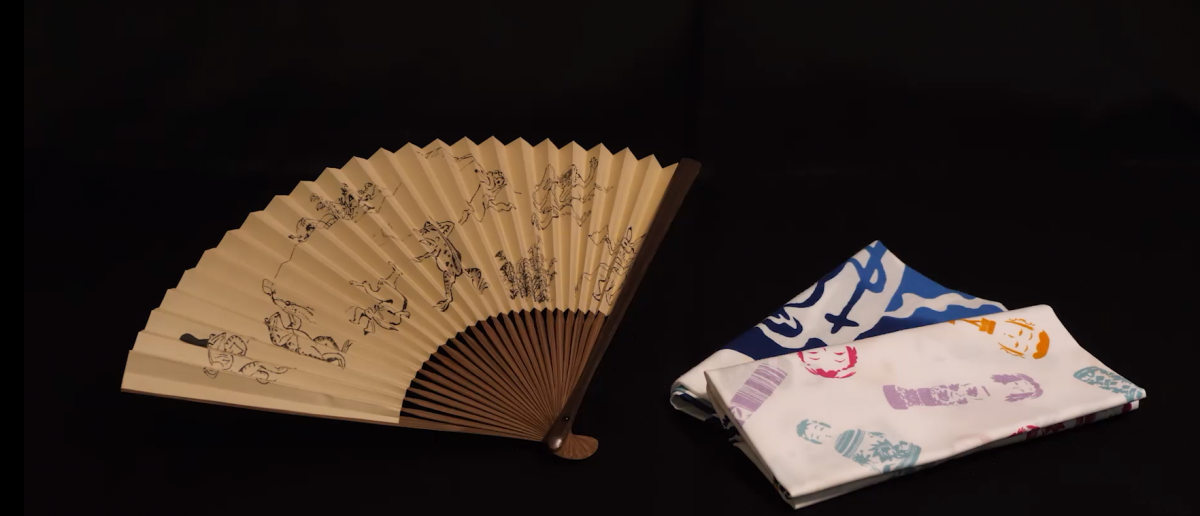
In rakugo storytelling, which goes back to the 17th century, a solo performer acts out stories using only a Sensu (folding fan) and a Tenugui (a small hand towel) to make the audience see the scene they’re describing.
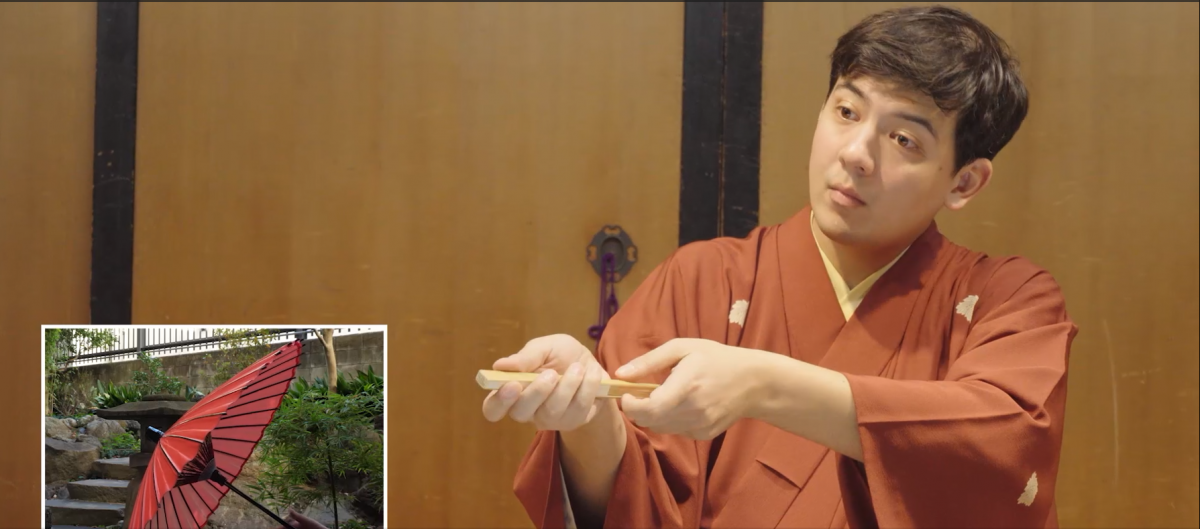
Rakugo artist Kokontei Kikumasa uses his fan as if it's an opening umbrella, and the audience's imagination completes the picture. He uses the hand towel to represent a book.
“Rakugo strips everything down to its simplest form. With skillful use of just two very basic props, we stimulate the power of imagination and more deeply involve the audience,” said Kokontei.
Mitate: Finding unexpected meaning in everyday things
Mitate is a common technique in the design of traditional Japanese gardens. In a karesansui, or dry landscape garden, rivers are suggested without the use of water. Patterns raked into the gravel evoke the ripples of flowing streams, inviting the viewer’s imagination to transform the gravel into a river.
In another example, carefully placed rocks may represent mountains, while a small pond can symbolize the vast ocean. Rather than aiming for a literal depiction, mitate seeks to capture the essence or feeling of something grand or distant through simple, evocative elements.
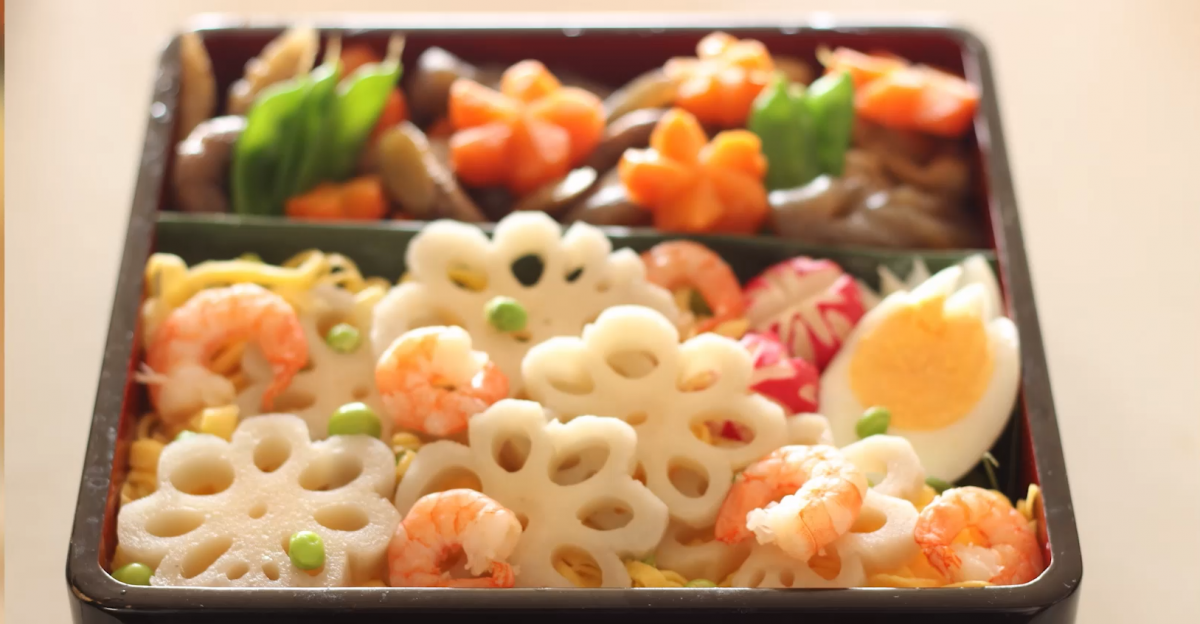
In Japanese cuisine, the spirit of mitate can be seen in kazarigiri, the art of carving food into shapes that resemble other objects. This technique is an essential element of washoku, Japan’s UNESCO-recognized traditional dietary culture.
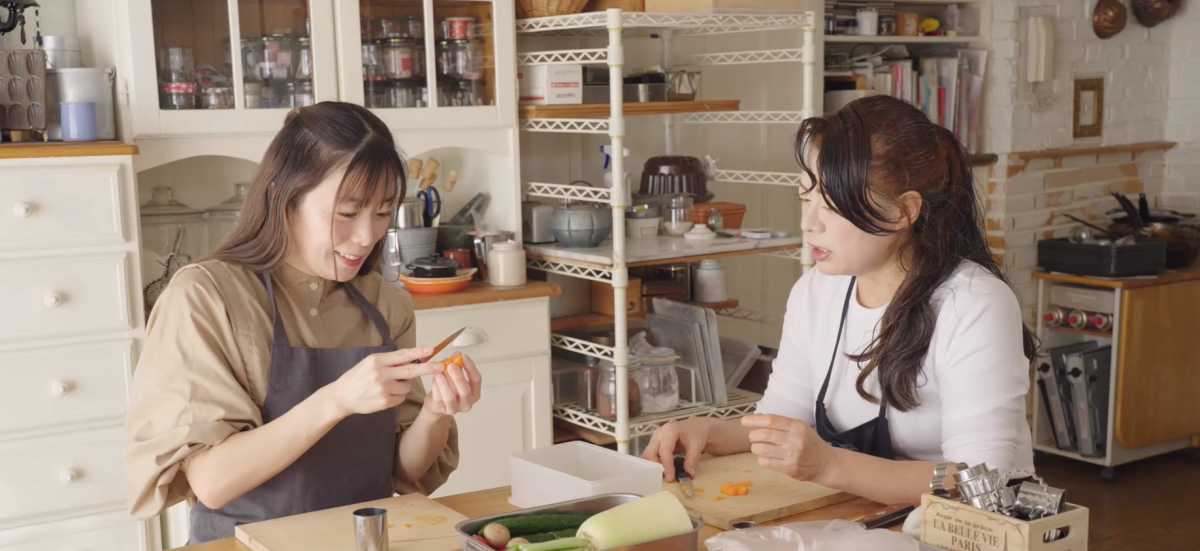
Mayumi Kumagai, founder and director of La Crème des Crèmes, a well-regarded cuisine and patisserie school in Japan, teaches kazarigiri to both Japanese and foreigners.
The prominent Japanese culinary research specialist Mayumi and her students make flowers from daikon radishes by rolling thin slices of radish into floral shapes. Carrots and lotus root are also easy to carve. Such decorations make any meal more attractive and enjoyable.
“Not many people can master the more difficult techniques. I realized that, to keep this art alive, I would have to teach a simpler version so that anyone can enjoy kazarigiri at home. That will ensure that it gets passed on to the next generation,” Mayumi explained.
Why mitate matters
What makes mitate so valuable is that it gets us to look beyond the obvious and engage with the world more mindfully and imaginatively. In a tea ceremony, serving tea in an ordinary bowl can become a profound meditation on simplicity, humility, and the beauty of the present moment.
The concept of mitate continues to inspire modern design, fashion, and art today. Artists keep finding new ways to connect the familiar with the unexpected. Mitate can be used to evoke natural phenomena or historical events in unexpected ways, such as a building suggesting the flow of a river or a piece of modern fashion apparel recalling a traditional kimono.
Mitate is an art technique that provokes curiosity, creativity, and deeper insight. In a world that often values the tangible and the literal, mitate encourages us to pause, look again, and discover new beauty in familiar things.