







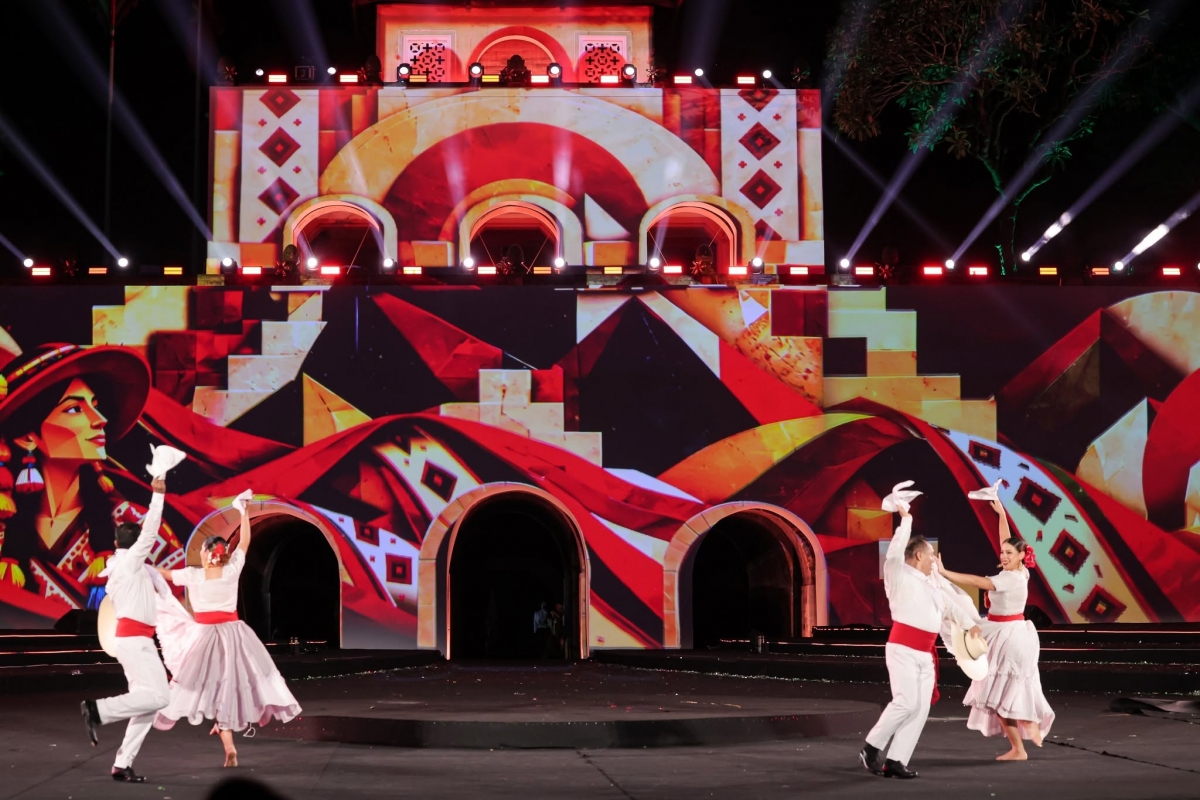
Declared a Cultural Heritage of the Nation in 1986, the Marinera is widely recognized as Peru’s national dance. It is a romantic, playful courtship dance in which a man and woman carry on an intricate, flirtatious dialogue in dance movements.
There are a number of Marinera styles but the best-known is Marinera Norteña. Unlike many other South American dance forms, the Marinera Norteña has distinct features that make it instantly recognizable.
The female dancer performs entirely barefoot, showcasing graceful, floating footwork despite the hard ground, while carrying a delicate white handkerchief in her right hand. Her partner dances in a traditional suit, waving a woven straw hat and a matching handkerchief, using subtle, flattering steps to win her affection.
Accompanied by a live brass band of trumpets, clarinets, snare drum, and a box-shaped percussion instrument called a cajón, the couple trace circular patterns across the floor, keeping a flirtatious distance that gradually closes as the courtship intensifies and ends in a dramatic gesture where the gentleman kneels before his lady in a sign of romantic submission.
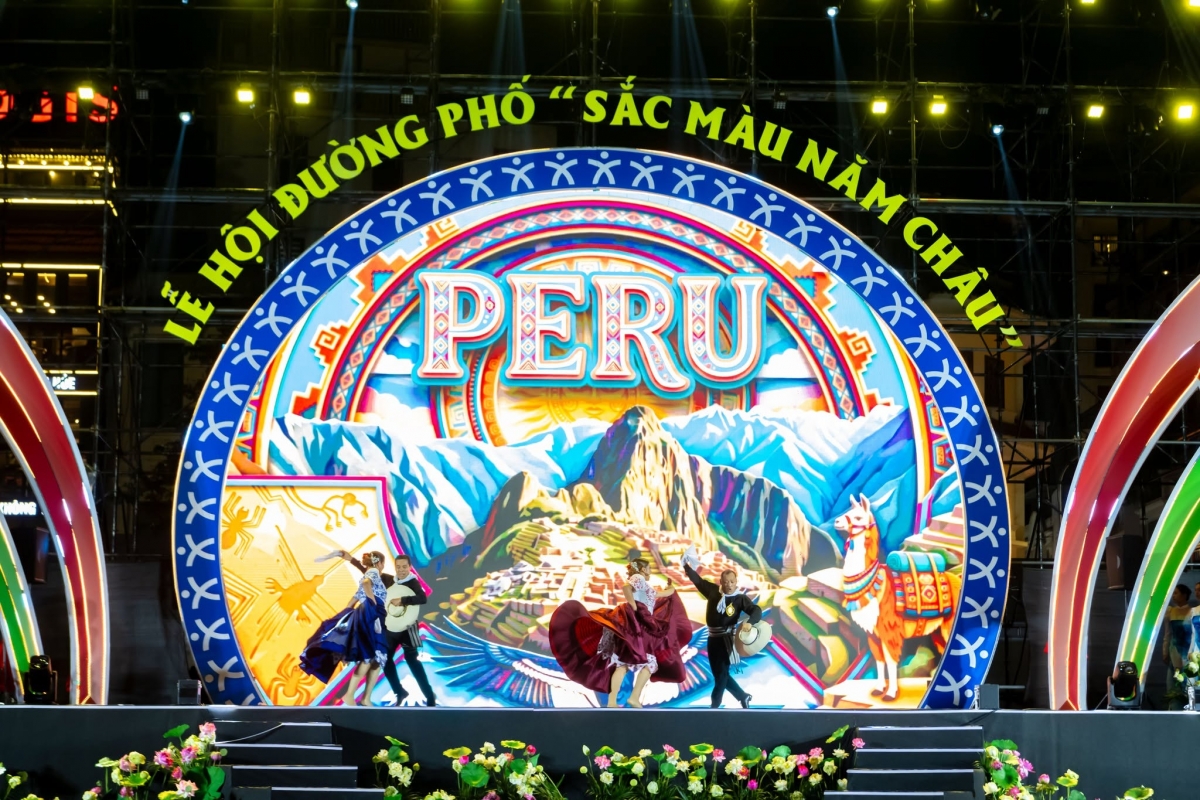
Representing Peru at the Hanoi festival were master dancers from the Sol y Luna Peruvian Dance School Japan. The school’s Director José Sujara introduced to us the emotional essence and global reach of the dance, "Marinera Norteña originated in the coastal region of Peru and is performed in pairs. This is a dance that expresses love, grace, flirtatiousness, and the skill of the dancers. Marinera is very famous throughout Peru. It’s a national dance and is known in Europe, the Americas, and now in Asia."
Behind every graceful spin on stage lies dedication and passion. For the members of Sol y Luna, performing in Vietnam represents years spent promoting Peruvian culture abroad.
Ana Sujara, José’s wife and dance partner and Sol y Luna’s co-manager, is proud to bringing their national art to a new Asian audience. She told VOV, "We have had 14 years of artistic career in Japan. Behind those years are sacrifices and perseverance. Every opportunity to introduce Peruvian culture to other countries in Asia is a source of pride, and reminds us to continue working with professionalism. This is a special opportunity to showcase the richness and diversity of Peru's dances and customs."
The universal language of dance breaks through geographical and linguistic barriers. For the younger performers in the troupe, taking the stage in Hanoi was about sending a message of warm friendship to the Vietnamese people.
Dancer Akemi Suhara, the eldest daughter of José and Ana, said, "Through our performances, we want to convey our joy, energy, and pride in Peruvian culture. We hope the Vietnamese public can feel that Peru is a country with an immensely diverse culture and a rich treasure of art. Above all, we hope that after the performance, you will carry with you a beautiful memory of Peru and a growing desire in your heart to learn more about our country."
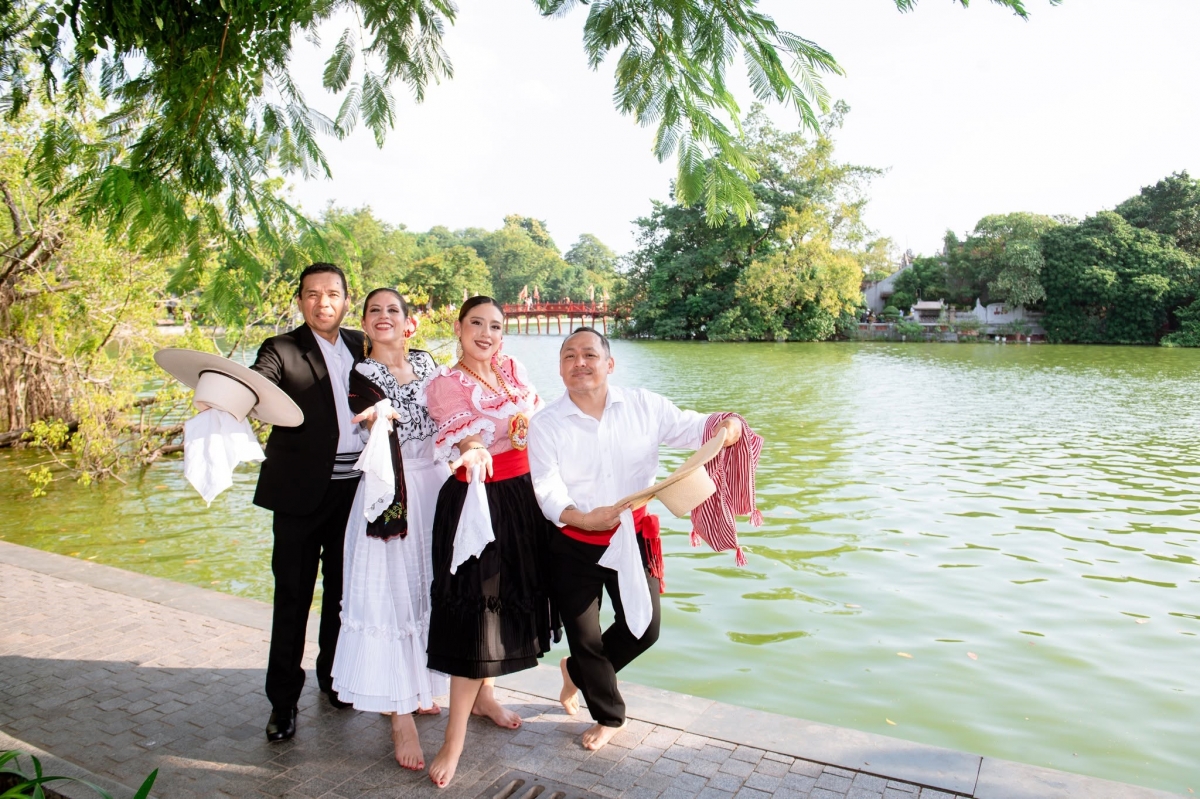
Cultural exchanges like the Cultures of the World Festival are a vital part of diplomatic relations, building people-to-people connections between Vietnam and Latin America.
Reflecting on the impact of this performance, Peru’s Ambassador to Vietnam Patricia Raez Portocarrero said that culture is the shortest path between nations. “Peru and Vietnam are far apart on the map, but we both have long-standing cultures and a deep pride in our traditions. We hope everyone who visited the Peruvian pavilion will take away a small piece of our country, along with a desire to learn more about Peru," said the diplomat.
Through the beat of a cajón, barefoot steps, and the elegant wave of a white handkerchief, the Marinera has danced its way into Hanoi, bringing Peru’s romance to life.




