



Bao Tram: Thank you, Lorenzo, for joining us on VOV24/7. Spanish music follows many classical traditions shared across Europe, but it still has a very unique Spanish character. As a musician, how do you bring out that special Spanish feeling while still staying true to the rules of classical music?
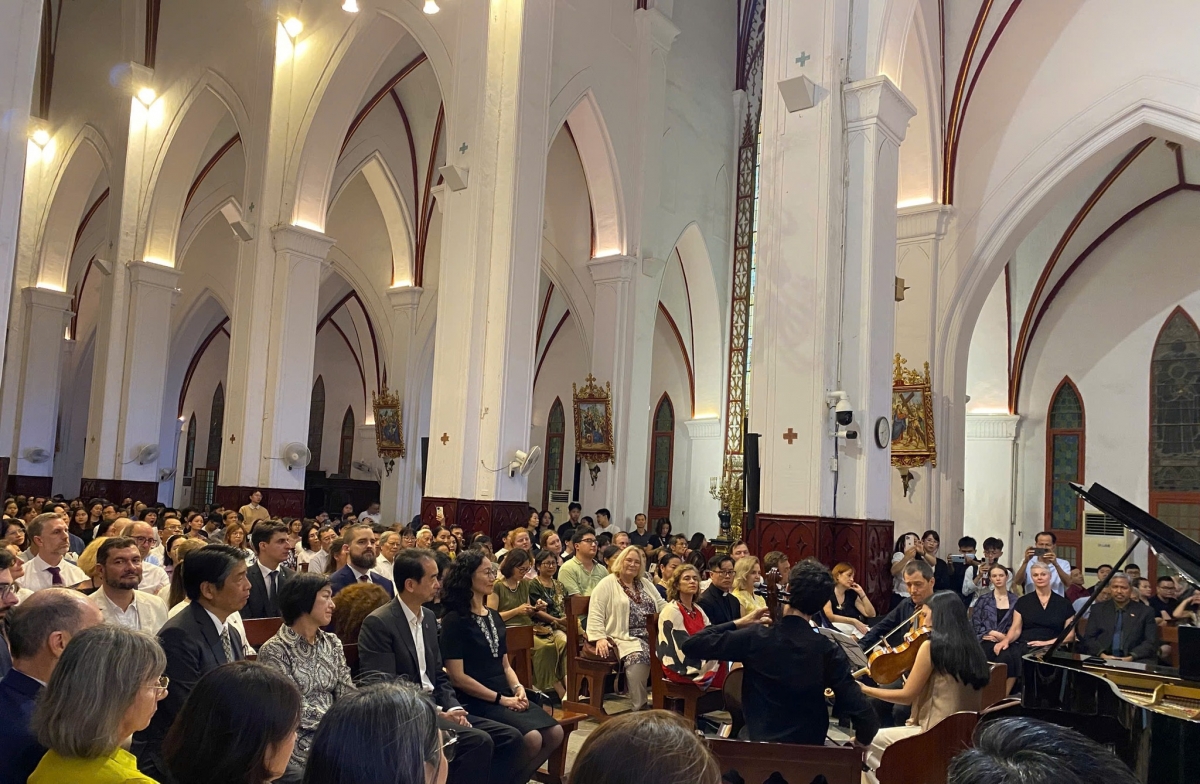
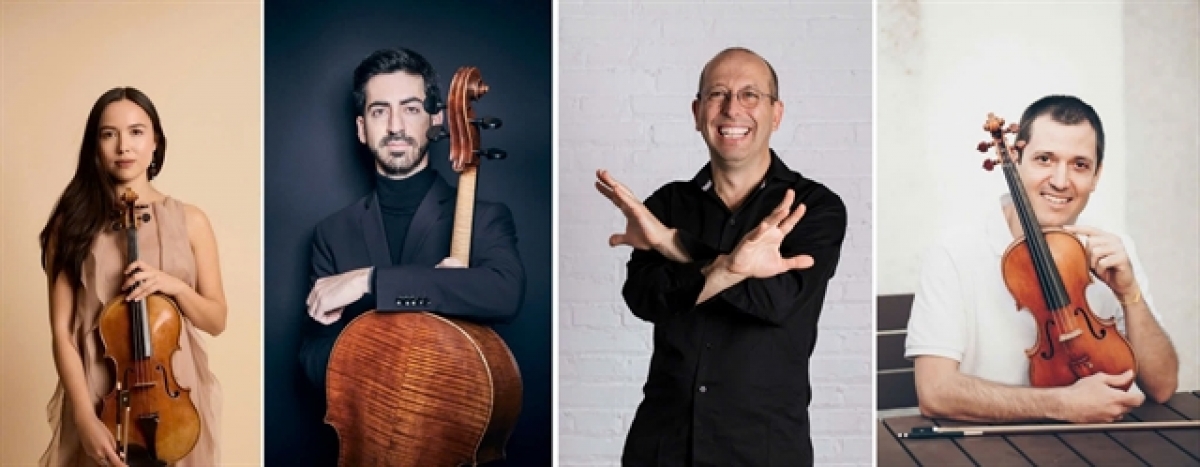
Lorenzo Meseguer: I think in this program we find two of the most important composers in all Spanish history: Manuel de Falla and Joaquín Turina. Both of them were recognized at their time as symbols of Spanish music, not just in Spain but also in European society. With these two pieces that we bring — the Cuarteto in A minor for piano and strings and El Amor Brujo (Pantomima and Danza Ritual del Fuego) — we try to combine the spirit of Spanish music and heritage with the canon of classical music. Also, with the ensemble that we are presenting — the string trio with piano — and the neoclassicism of Joaquín Turina, he combines this idea of tradition with a classical way of composition.
Bao Tram: Manuel de Falla created dozens of works throughout his career. Why did you choose these particular pieces to celebrate the 150th anniversary of his birth?
Lorenzo Meseguer: Well, it's very special for us to perform Manuel de Falla, especially for the 150th anniversary of his birth. I think with iconic pieces like El Amor Brujo, we can bring the most beautiful and recognizable melodies of Falla, but also the strength and force of his inner music. Those are the two aspects—the melody and the raw power—that we want to share.
Lorenzo Meseguer: You can hear this mixture everywhere. All over his pieces we can find this mixture between the Andalusian aspect and Andalusian tradition, because we can define Turina as an Andalusian composer — not only because of this piece but also many pieces he wrote for symphony orchestra, like La Oración del Torero or his Serenade for strings. I think all of his works combine his passion for Spanish heritage and the life that he lived in France, in Paris, and that definitely defines him as one of the symbols of Spanish music of all ages.
Bao Tram: Another featured composer is Antonín Dvořák, a pioneering Czech composer of the Romantic era, renowned for blending Bohemian folk melodies with traditional symphonic forms. Any "universal" elements that connect the music of the Czech composer to Spanish works?
Lorenzo Meseguer: Well, there is not one aspect that connects Dvořák and Turina. I think it is the whole atmosphere for both composers — that they work and study the traditional elements and how to combine them in another dimension of classical music. I think that's the main point that defines both composers and, in a way, connects them in a unique language.
(Photo: Spanish Embassy)
Bao Tram: How do you shift your musical language when moving from Dvořák’s lyrical style to the intense heat of Falla’s "El Amor Brujo"?
Lorenzo Meseguer: Well, as classical musicians, we cannot switch so much from our main goal, which is to connect and to share the principal idea that the composer brings us in the text with the audience. But of course, these composers — Dvořák, Turina, and Falla — create a unique atmosphere that they try to share along the same path or within the same energy. We can definitely share the strong influences that I mentioned before in a traditional way, with our strength as music lovers and classical musicians.
Bao Tram: In Spanish culture, there is the term "Duende", representing a mysterious power and heightened state of emotion where an artist truly connects with the soul of the work. How do you evoke that spirit during your performances?
Lorenzo Meseguer: The duende for us is quite a special word that links us to flamenco and, in a way, to Andalusian culture. But it also raises the question of how this inspires us. I strongly believe that what we shared with students and audiences in Hanoi was one of the most important experiences for us as musicians. We love to share music, we love to connect with people in different languages — not just spoken languages, but also the language of music, our common language. I think that is definitely one of the things that empowers us to connect with these emotions. It's not just about the program we are bringing — it's something that is inside our DNA as musicians.
Bao Tram: Through the strings of his cello and the stories of the masters, Lorenzo Meseguer has shown us that Spanish music is a heartbeat, a "duende" that speaks a universal language. Thank you, Lorenzo, for bringing the warmth and fire of Spain to our Culture Rendezvous today.
Lorenzo Meseguer: Thank you. It has been a pleasure to share our music with you.
Cellist Lorenzo Meseguer, born in 1990, is a Professor at Spain’s Conservatorio Superior de Música de Castilla y León. He has been honored in numerous national and international competitions, including "Liezen International Wettbewerb" in Austria and the International Music Festival in Italy.
Composer and pianist Manuel de Falla, born in 1876, is one of the most distinguished Spanish composers of the early 20th century and leader of the Spanish musical renaissance. His musical style includes Spanish Nationalism, Impressionism, Neoclassicism