







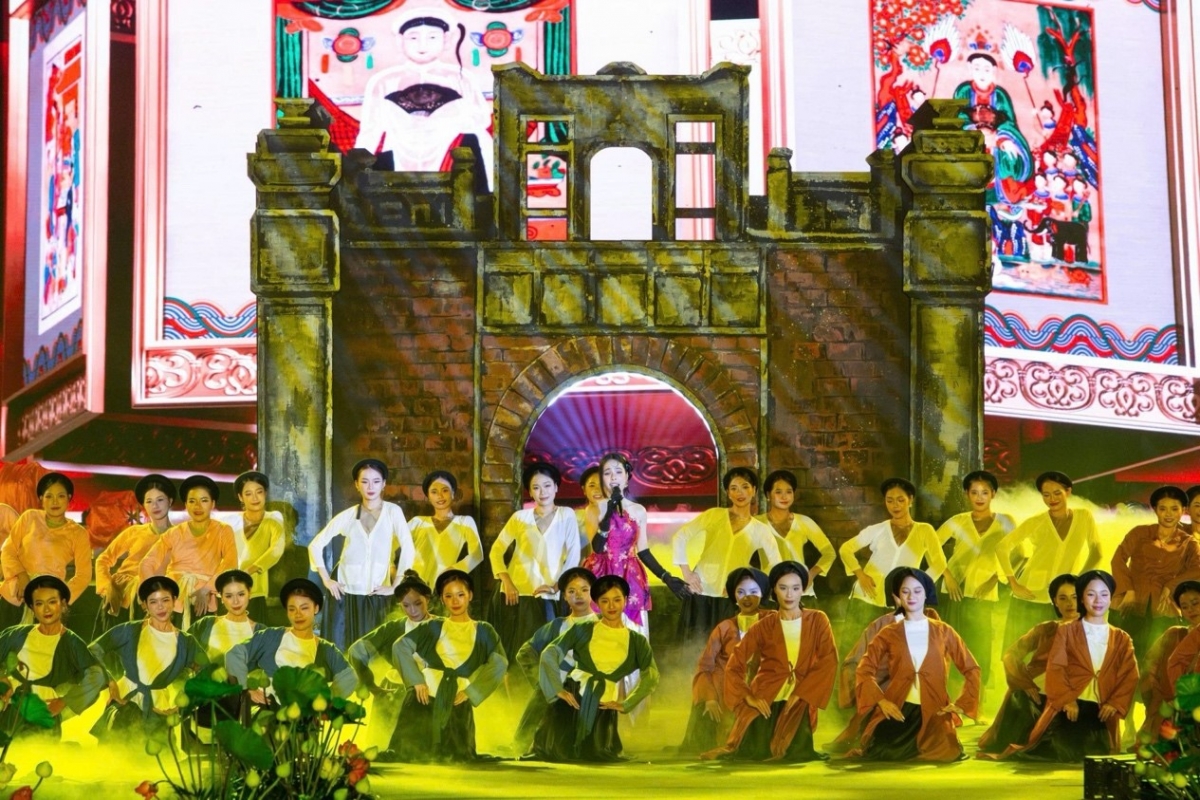
The second Thang Long – Hanoi Festival introduced innovations in both content and organization compared with the first edition last year.
“The festival continues to take heritage as its foundation, while placing greater emphasis on promoting heritage in contemporary life. It has expanded to a variety of cultural and heritage sites and public spaces across the capital, including the Thang Long Imperial Citadel, the Temple of Literature, the Hanoi Museum, Bat Trang Ceramic Village, and the area around Hoan Kiem Lake,” said Le Thi Anh Mai, Deputy Director of the Hanoi Department of Culture, Sports and Tourism.
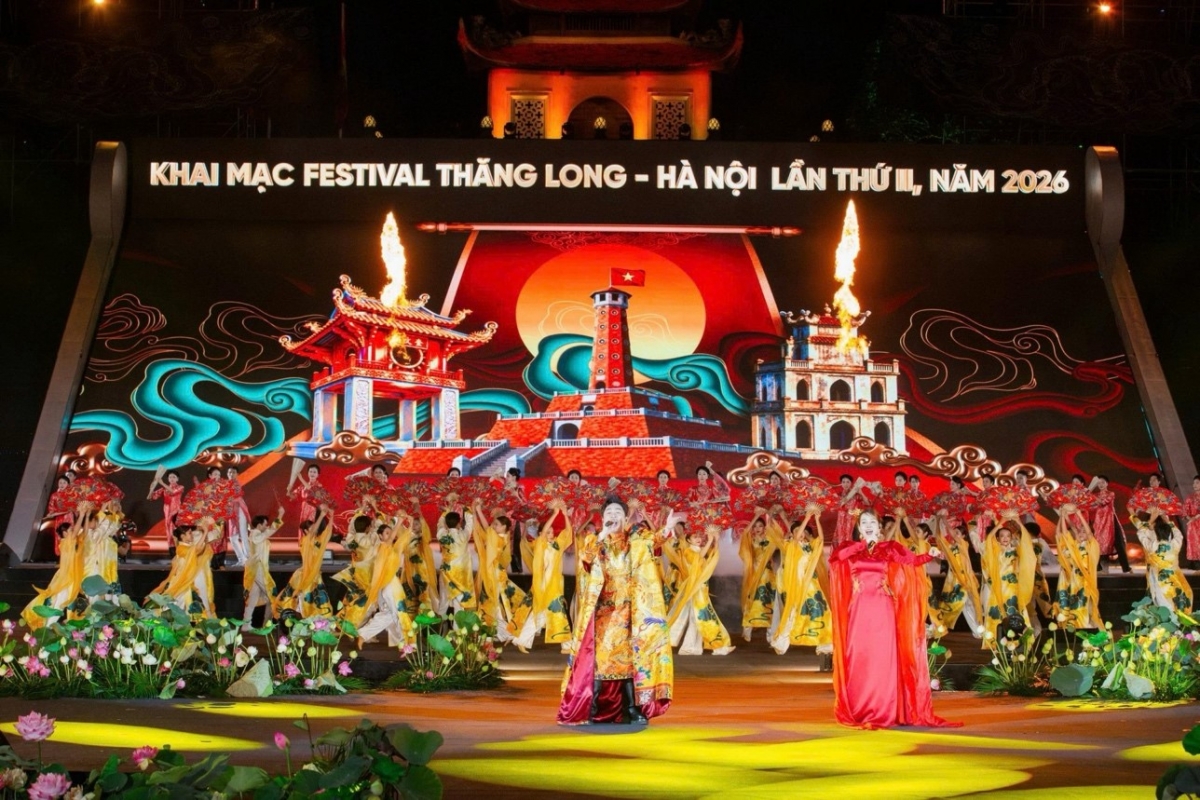
The flow of heritage was vividly expressed through music, lighting, technology, fashion, and installation art.
“The festival was built around three main pillars: pride in heritage and identity, technological creativity, and integration and outreach. It is emerging as an international cultural brand,” said Pham Hoang Giang, the festival’s General Director.
Singer Quach Mai Thy, who performed at the opening ceremony, said, “I performed a song called Lighting the Flame of Heritage, together with singer Tung Duong. As the performance was carefully staged, the audience could clearly feel the flow of heritage throughout the opening ceremony.”
Visitor Doan Lan Anh from Hanoi shared her impression, “The festival has awakened our younger generation’s love for culture and heritage. Its spaces were beautifully designed, with vibrant colors. The performances left a strong impression on me, especially the way they brought tradition and modernity together.”
In addition to domestic artists, the 2026 Thang Long – Hanoi Festival also featured art troupes from India, Japan, and South Korea. An international cultural exchange night at the Thang Long Imperial Citadel brought together a colorful mix of musical traditions.
Vietnamese folk melodies were presented alongside Korean Samulnori, a Japanese shamisen solo combined with beatboxing, and the Indian folk arts of Bhangra and Gidha.
“This is the first time we have come to Vietnam. I find the atmosphere at the Thang Long Imperial Citadel in Hanoi very lively. There are three members in our group. I perform beatboxing, together with a dancer and an instrumentalist. We combine traditional Japanese art with modern elements,” said Japanese artist Wada Tatsuya.
Another highlight was a series of artistic programs at the Temple of Literature, Vietnam’s first university. The activities, designed to connect history and culture with art and visitor experiences, included an Ao Dai (traditional long dress) exhibition, painting and sculpture displays, and calligraphy.
The festival also brought audiences to Bat Trang Ceramic Village for a program which explored sounds created from ceramic materials and instruments, offering a new approach to the heritage of the traditional craft village.
Cao My Khanh, a visitor from Hung Yen province, said, “As a GenZer, I was very impressed by the festival space and its design and decorations. I hope more festivals like this will be held in the future.”
Hanoi aims to develop the annual festival into a cultural brand, bringing traditional heritage into contemporary life.


