







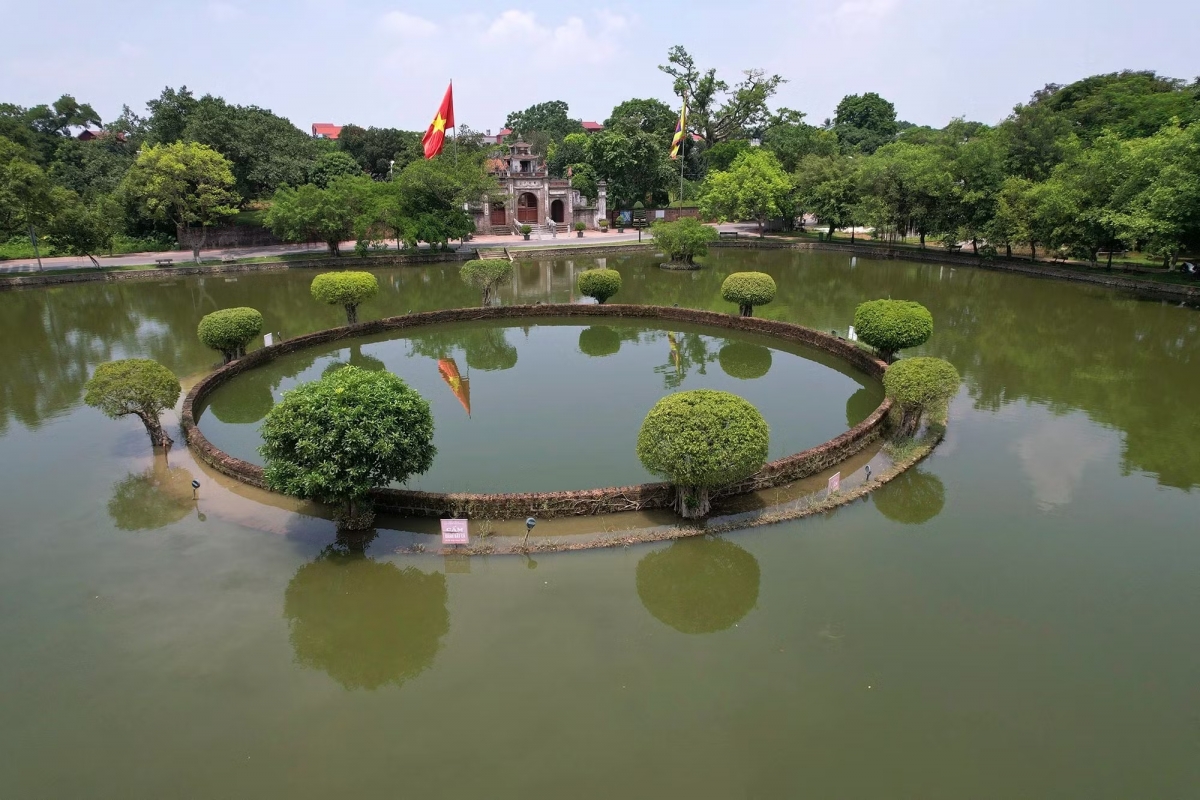
Co Loa served as the capital of the Au Lac State under King An Dương Vương around the 3rd century BC and under Ngo Quyen in the 10th century.
The Co Loa historical and cultural site meets two cultural heritage criteria set out in the UNESCO World Heritage Convention for determining outstanding universal value.
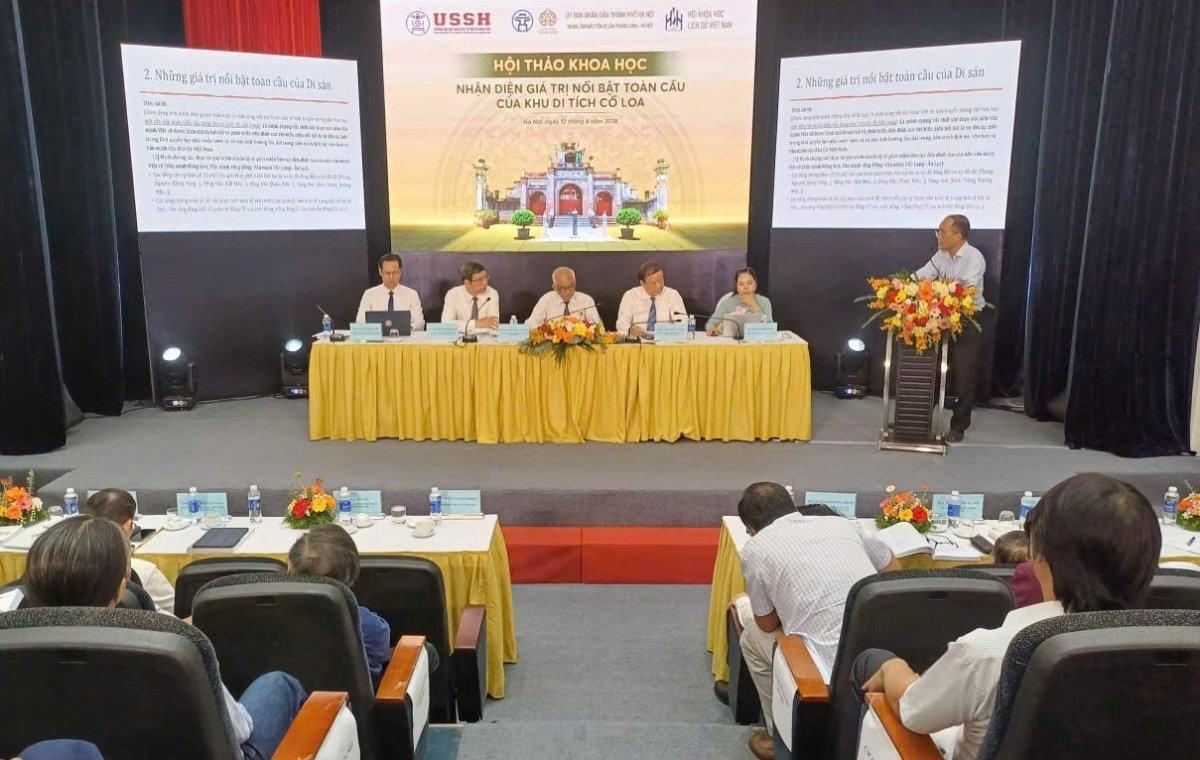
“The first criteria recognizes heritage that provides unique, or at least highly distinctive, testimony to a cultural tradition or a civilization, whether still living or now disappeared. The second covers a building, architectural ensemble, technological complex, or landscape that illustrates one or more significant stages in human history,” said Associate Professor and Doctor Vu Van Quan at Vietnam National University, Hanoi.
Five outstanding values define the Co Loa Citadel. First, it is one of the largest and earliest citadels in Southeast Asia. Second, it has a unique design. Third, its construction techniques demonstrate a high level of sophistication. Fourth, the citadel reflects a harmonious relationship between human construction and the natural environment. And fifth, it has had a lasting influence on the planning of Vietnam’s capitals. These values distinguish Co Loa from other World Heritage Sites already inscribed by UNESCO.
Professor, Doctor and People’s Teacher Nguyen Quang Ngoc, Vice Chairman of the Vietnam Association of Historical Sciences, said Co Loa was the earliest and most representative capital, and the pinnacle of the Red River civilization.
“Located in the densely populated Red River Delta, it was chosen as the capital and served both as a royal seat and a formidable military citadel. Its strong, multi-layered defenses reflected the advanced military capabilities of the Au Lac State, which surpassed those of other countries in the region. In this sense, Co Loa can be considered to meet the criteria for recognition as a World Cultural Heritage Site,” said Ngoc.
Co Loa Citadel is renowned for its distinctive spiral-shaped design. The name Loa Citadel also derives from this shape. According to records, the citadel had 9 spiral circles, resembling a snail, reflecting its multi-layered structure with concentric ramparts and moats. Today, there are only 3 circles remaining. The citadel is divided into 3 areas: the inner, middle, and outer ramparts, with many distinctive architectural features.
Co Loa’s outstanding universal value lies not only in its three-tiered system of ramparts, but also in the close connection between the citadel, its moats, the Hoang Giang River and the Red River network. Together, these features form a unique historical landscape shaped by the transition between the northern midlands and the Red River Delta.
Associate Professor and Doctor Tong Trung Tin, Chairman of the Vietnam Archaeological Association, said the construction techniques used to build Co Loa were truly remarkable.
“More than one million cubic meters of earth were used to build the ramparts. The builders dug moats around the citadel and used the excavated earth to create defensive embankments. Archaeological research at Co Loa has also revealed many important remains. Within the site, researchers have found settlements, metalworking workshops, burial sites and storage facilities, with more than 20 archaeological sites identified.”
Co Loa is also a historical landscape that was carefully designed and developed as an integrated whole. Professor and Doctor Nguyen Van Kim, Vice Chairman of the National Council for Cultural Heritage, said the Co Loa historical and cultural site is one of the most important archaeological sites in Vietnam and Southeast Asia.
“Its rich tangible and intangible heritage provides compelling evidence of the emergence and distinctive development of Dong Son culture and the Au Lac State thousands of years ago. These values provide a solid foundation for defining the criteria and building the case for Co Loa’s outstanding universal value,” he said.

Hanoi is currently implementing its master plan with a 100-year vision. Nguyen Van Phong, Deputy Secretary of the Hanoi Party Committee, said, “We need to accelerate the planning for Co Loa, consolidate existing research findings, and place the site within the broader historical development of Thang Long-Hanoi. At the same time, we need to move quickly on a digitalization project to support research, education, public outreach, and the promotion of Co Loa’s outstanding values.”
Co Loa stands as a remarkable testament to the Red River civilization. Hanoi’s plan to submit the site to UNESCO for World Heritage recognition seeks to highlight the outstanding universal value of this ancient capital and generate greater momentum for its long-term preservation amid rapid urbanization.


