







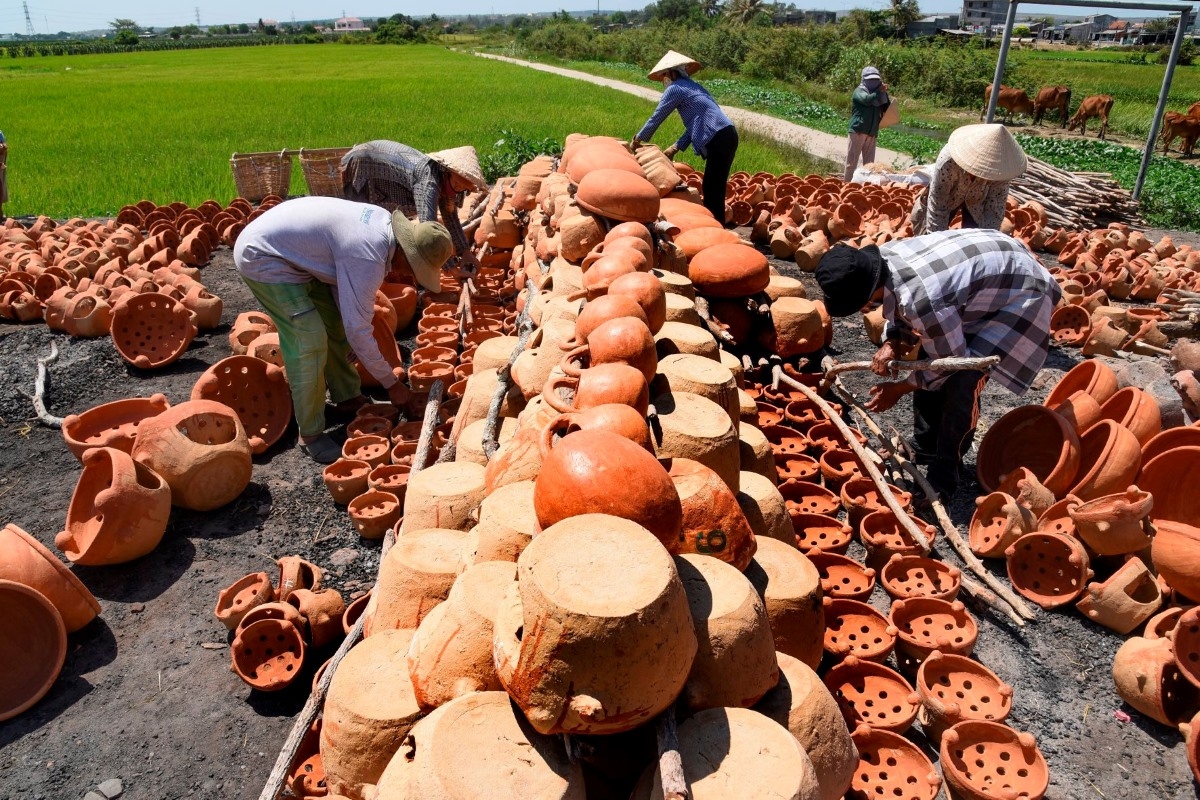
“I learned the craft from an artisan called Dang Thi Qua. I started learning the craft around 1978 or 1979.”
“There used to be more than 120 pottery-making households in the village, but now fewer than 20 remain. Raw materials are becoming increasingly scarce and difficult to find. In the past, pottery-making provided a decent livelihood, but today, we’re barely making enough to cover the cost of our labor.”
Luong Thi Hoa and Lam Hung Soi are two veteran artisans from Binh Duc pottery village. After decades devoted to the craft, they see Binh Duc pottery as more than a traditional handicraft. To them, it embodies the deep cultural and spiritual values of the Cham ethnic community, as well as the quiet perseverance of generations determined to keep the craft alive amid the pressures of modern life.
Cham pottery is made entirely by hand from highly cohesive clay collected from rice fields near the river, where layers of alluvial sediment have built up over the years. Unlike conventional pottery, it is made without a potter’s wheel or molds. Each piece is carefully shaped by hand, a tradition long passed down among Cham women.
In 2012, the Cham pottery-making craft in Binh Duc was officially recognized as a national intangible cultural heritage. In 2022, UNESCO inscribed the art of Cham pottery-making on the List of Intangible Cultural Heritage in Need of Urgent Safeguarding.
As Vietnam steps up its digital transformation, younger generations in Binh Duc are embracing technology to preserve their heritage and bring Cham pottery to a wider market.
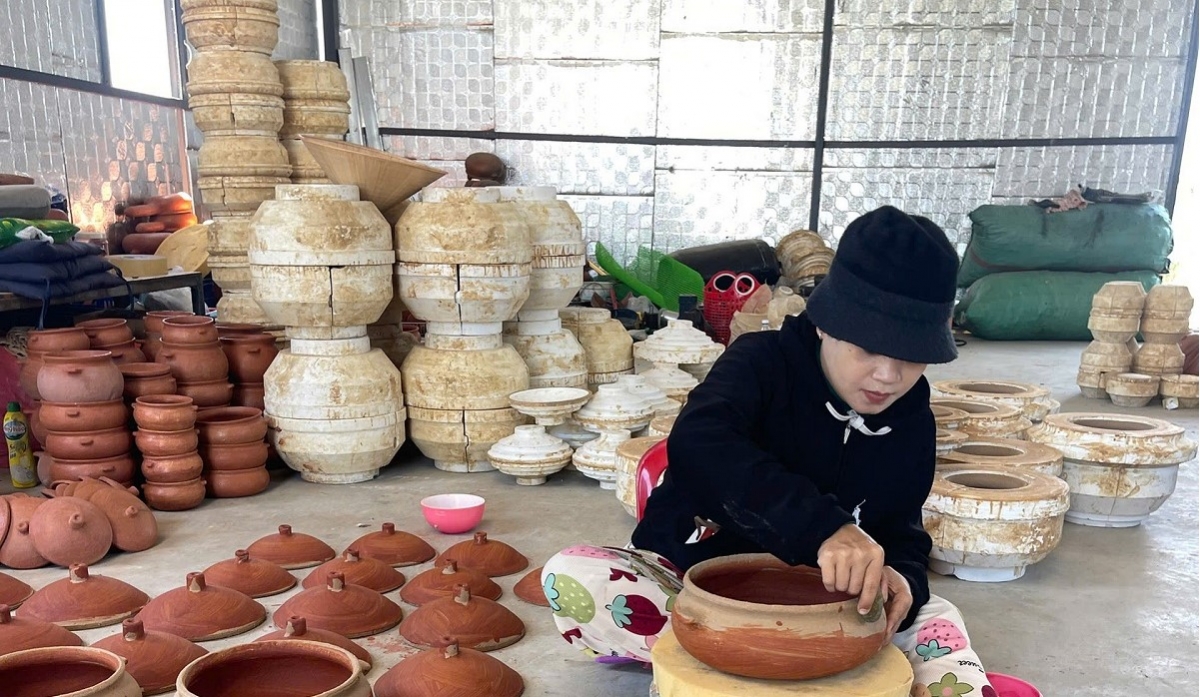
Xich Mai Chi was born into a family with a long tradition of pottery-making. But she has introduced new approaches to the craft, including researching and developing a coal-fired kiln to replace the traditional open wood-fired method. She has also moved beyond relying on traders, using platforms like YouTube, Facebook and Zalo to promote her products and attract customers.
Her videos, featuring everything from kneading clay and shaping pots to firing the finished products, do more than showcase the pottery-making process. They tell the story of Cham craftsmanship and help bring Binh Duc pottery to customers far beyond the village.
“My family has been making pottery for generations. Besides selling products such as pots, cooking vessels and kettles at our shop, I also make videos to promote them on social media. On average, I receive more than 200 orders from across the country each month,” said Chi.
Sharing the same vision, Dung Nguyen Thi Tuong Von believes that the cultural heritage and stories behind the products are what give Cham pottery greater value and make the craft more sustainable.
“In the past, pottery households in Binh Duc mainly sold their products through traditional channels such as local markets and traders. Now, we expand onto digital platforms and register our products on e-commerce sites such as Shopee and Lazada. That is the direction I am pursuing. We want Binh Duc pottery to generate greater economic value while also affirming the cultural value of the village,” Von said.
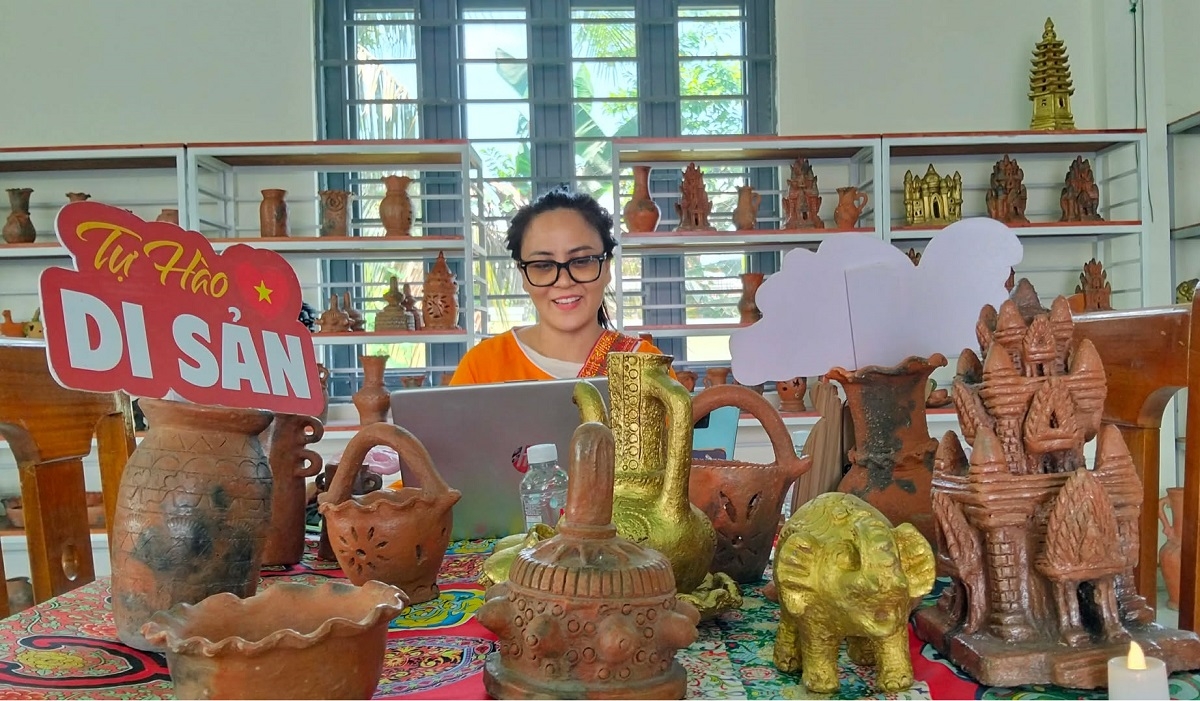
Local authorities are tapping available funding sources to support vocational training, upgrade infrastructure and accelerate digital transformation in the craft village. They are also helping local residents build digital skills, including how to livestream and promote their products on online platforms.
“Binh Duc Cham pottery village is now developing in a positive direction, with more diverse designs and wider markets. Most importantly, the traditional craft is being preserved and passed on to the younger generation, who are using social media to promote and sell the products,” said Tran Quoc Tuan, Vice Chairman of the Bac Binh Commune People’s Committee.


