



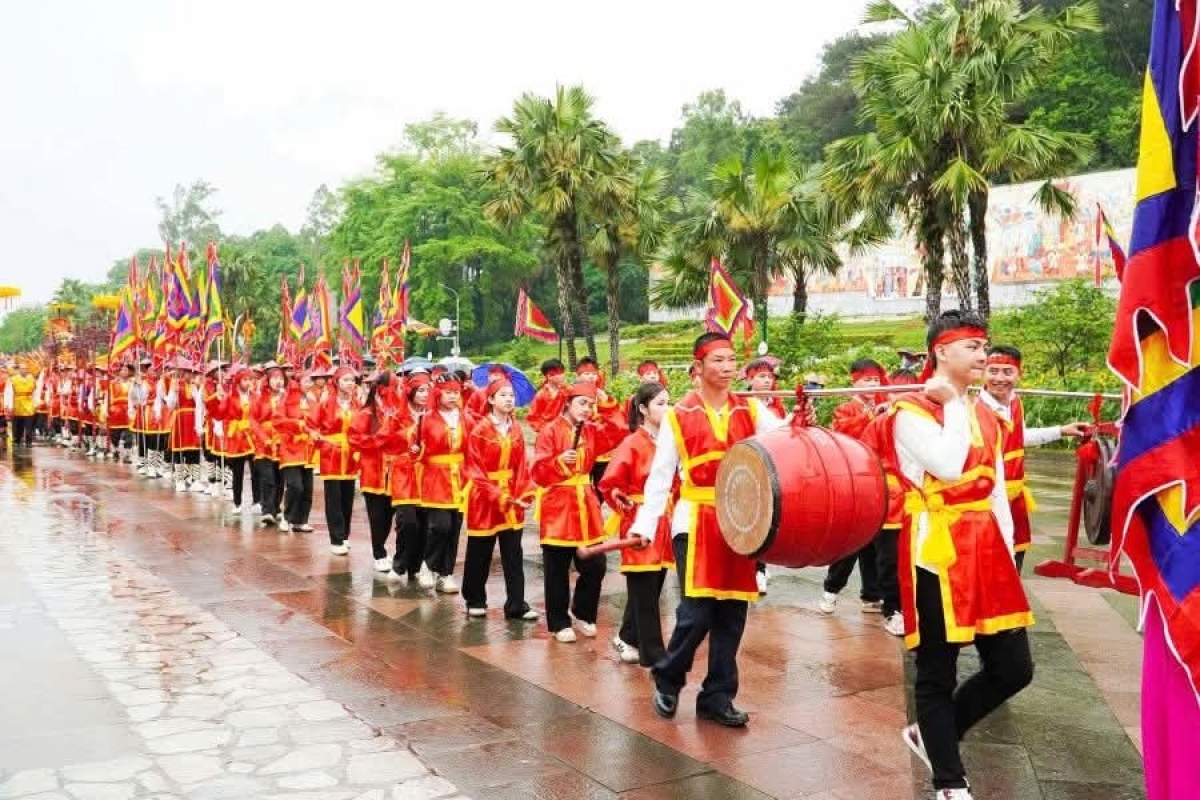
Today, following the provincial merger, Phu Tho is building on that heritage while embracing change, unlocking its potential, expanding cooperation, and strengthening international ties. Throughout Vietnam’s history, Phu Tho has held a special place as the cradle of the Vietnamese nation, where the cultural and historical legacy of the Hung Kings lives on.
The worship of the Hung Kings and Xoan singing, both inscribed on UNESCO’s Representative List of the Intangible Cultural Heritage of Humanity, are a testament to the enduring cultural traditions of Vietnam’s ancestral homeland. They are a source of pride for local people and showcase the richness and uniqueness of Vietnamese culture to the world.
For Phu Tho, preserving and promoting heritage is about more than safeguarding the values of the past. It is also a way to nurture cultural identity, reinforce great national solidarity, and generate resources for development today.
“The worship of the Hung Kings and Xoan singing carry immense spiritual value, encouraging communities to preserve their cultural heritage while strengthening national solidarity. Additionally, these traditions inspire public participation in cultural practices and support economic growth through tourism,” said Director of the Phu Tho Department of Foreign Affairs Nguyen Dac Thuy.
These traditions are perhaps most visible in everyday community life. From folk melodies, customs, and rituals to cultural activities at village communal houses and ancient temples, traditional values continue to be preserved and passed down from generation to generation.
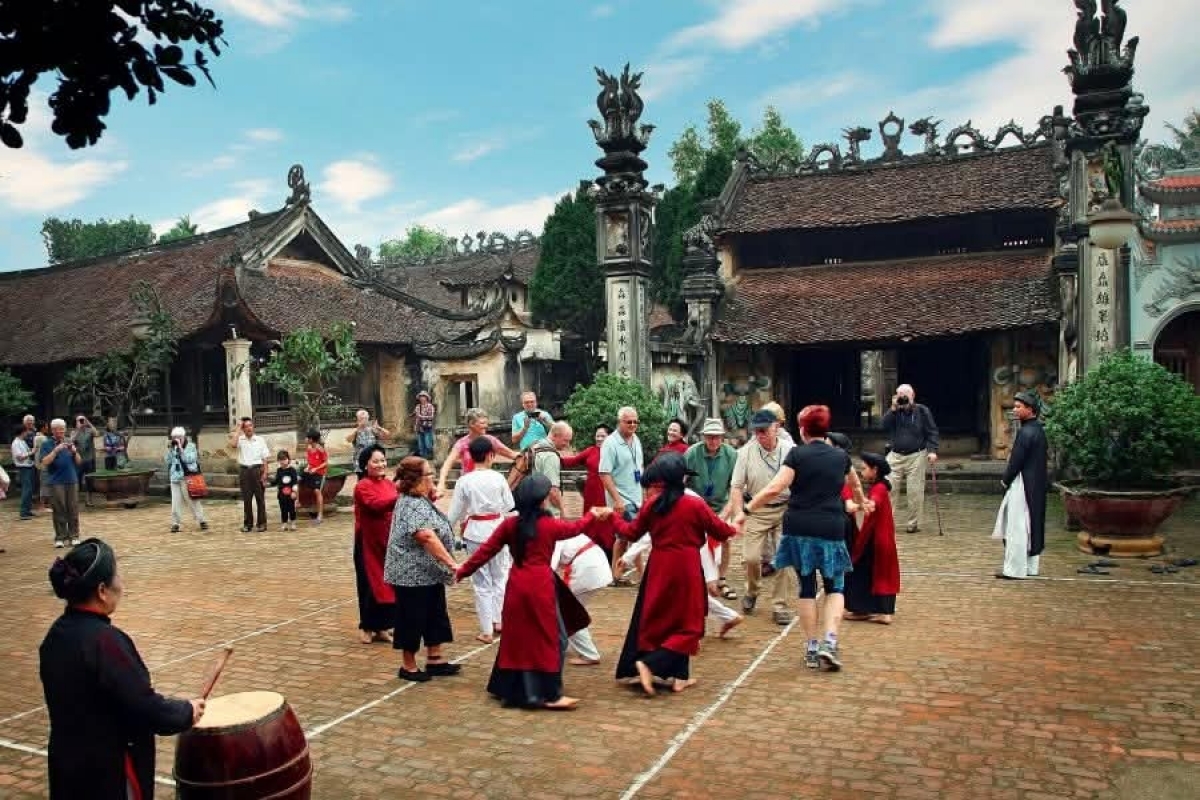
At Lai Len shrine, one of the sites associated with the origins of Xoan singing, artisans are keeping the tradition alive by teaching its melodies to younger generations.
“I started learning from the older generations when I was eight or nine. Today, I directly teach the younger generation to preserve Xoan singing. As we live in a rural area, we have to make use of the three-month summer break to teach the children Xoan singing, when they have more free time. During the school year, some children have classes twice a day, so they have less time to learn Xoan singing,” artisan Le Xuan Ngu said.
Beyond teaching and practicing Xoan singing, artisans and clubs actively take part in performances and cultural exchanges, sharing their traditions with Vietnamese and international visitors.
Alongside these community initiatives, local authorities provide venues, facilities, and support to keep the tradition alive in everyday life. Following its restoration, Lai Len shrine has become a cultural and spiritual destination where visitors can learn about the origins of Xoan singing and experience this unique form of folk art firsthand.
“Since it was restored and upgraded, Lai Len shrine has become a living museum and a cultural and spiritual tourism destination for domestic and international visitors. It embodies the characteristics of two heritage traditions. Every year, during the Hung Kings’ Commemoration Day and the Hung Kings Temple Festival, it becomes a destination for visitors from across the country travelling to the ancestral homeland,” said a local resident named Nguyen Thi Tam.
The shrine also hosts the ancient-village Xoan singing program, welcoming visitors to experience Xoan singing and offer incense in remembrance of the Hung Kings, who founded the nation, she added.
The cultural heritage of Vietnam’s ancestral homeland also connects overseas Vietnamese with their roots. Every year, on Hung Kings’ Commemoration Day, Vietnamese people wherever they live turn their thoughts to the Hung Kings Temple and pay tribute to the nation’s founders. In doing so, they honor the tradition of “remembering the source when drinking water” and foster their pride in their national roots.

As Phu Tho strengthens its international ties, its cultural traditions help foster exchanges and introduce the province and Vietnam to the world. Through festivals, artistic performances, and hands-on tourism experiences, local communities bring their heritage to wider audiences.
The merger of Phu Tho, Vinh Phuc, and Hoa Binh provinces on July 1, 2025, opened new development opportunities by combining their strengths in infrastructure, industry, services, and tourism. Bringing together the traditions of the ancestral homeland, Muong culture, and Vinh Phuc’s distinctive heritage makes tourism products more diverse.
From the Hung Kings Temple and Xoan singing to Hoa Binh Lake, Xuan Son, Tam Dao, and Tay Thien, each destination adds to the appeal of the new Phu Tho. Alongside economic development, the province is prioritizing heritage preservation, cultural identity, green tourism, and the use of heritage to support sustainable development.
From its origins as a cradle of history to its current status as a dynamic hub for development, Phu Tho continues to uphold its traditional values, fueled by an aspiration for innovation and progress. The ancestral homeland remains a place to return to and a source of inspiration for Vietnamese people as they look to the future.
In a land where cultural and historical values converge with new potential for development, the heritage of the Ancestral Land continues to be preserved and spread, introducing to international friends the image of a Vietnam that is rich in identity, dynamic, and globally integrated.