







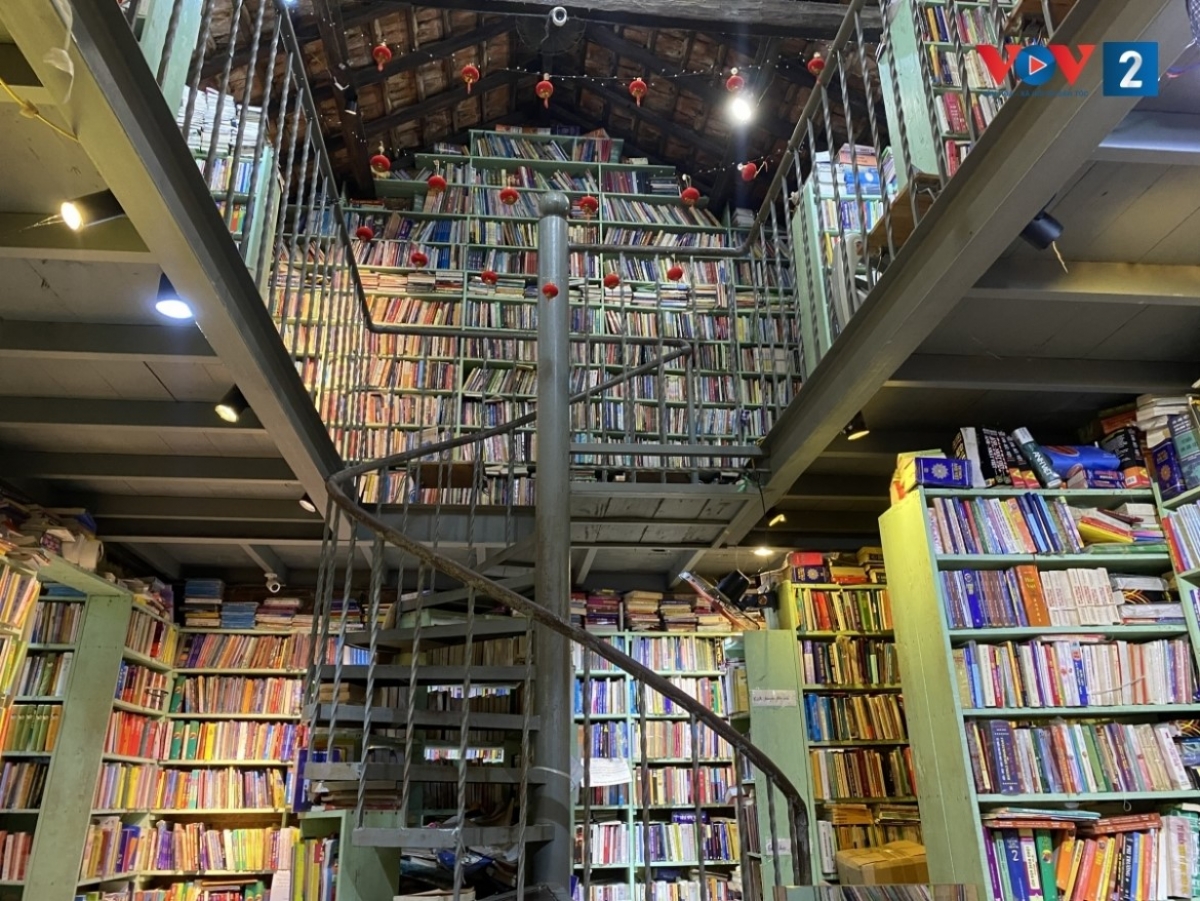
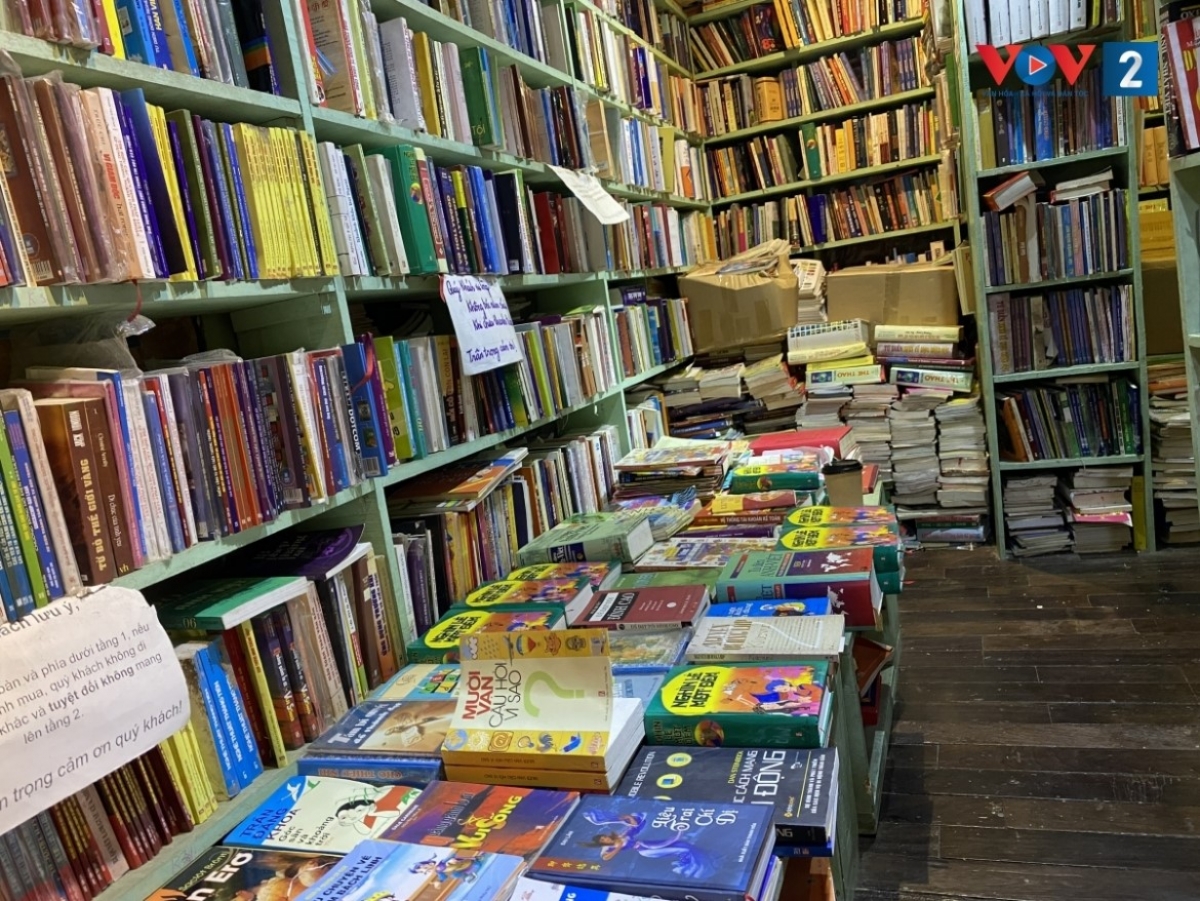
Tucked away in a narrow alley bathed in warm yellow light on Dinh Le Street is Mao Bookstore, one of Hanoi’s oldest second-hand bookstores. With more than 30 years of history, the bookstore has become a familiar destination for readers from both Vietnam and abroad. Its wooden floors, bookshelves and ceiling create a warm, nostalgic atmosphere, while the books are neatly arranged in different sections, making it easy for visitors to browse and find what they are looking for.
“Old books have a value that is different from that of new books, audiobooks, or e-books. The language in old books has a special character, and the same work can have very different translations from those published today. And then there’s the smell of old paper, which is simply captivating,” said Ngoc Anh, the daughter of the bookstore’s owner.
Handwritten notes in the margins, marks left by previous owners, faded stamps and yellowing pages give old books a unique character that new books can hardly replicate. Beyond their literary value, old books also offer a glimpse into the social and cultural life of different historical periods. For researchers and collectors, second-hand bookstores are invaluable treasure troves of rare and forgotten materials.
"Old books bring back memories of my youth. In the 1960s and 1970s, books were very scarce. There are books I read back then that I still remember to this day. Whenever I come across one, I buy it again. Old books are of great value, both in literature and science. When writing research papers, I often refer to and quote from old books," said 80-year-old linguistics researcher Quan Vi Mien.
Behind these bookstores are owners who have devoted much of their lives to the trade, spending countless hours collecting, sorting, preserving and searching for valuable titles. Their work may not bring in large profits, but they persevere out of a deep love for books and a desire to preserve values that are gradually fading away.
The rise of digital technology has not diminished the appeal of second-hand bookstores among young people. Many visit these spaces not only for affordable books but also for a more personal experience. Instead of scrolling through their phones, they can spend hours browsing shelves, turning pages and patiently searching for titles that spark their interest. The feel of aged paper and the faint scent of old ink offer a sense of authenticity that digital reading cannot quite replicate. For many, finding a rare or long-lost book is like reconnecting with an old friend.
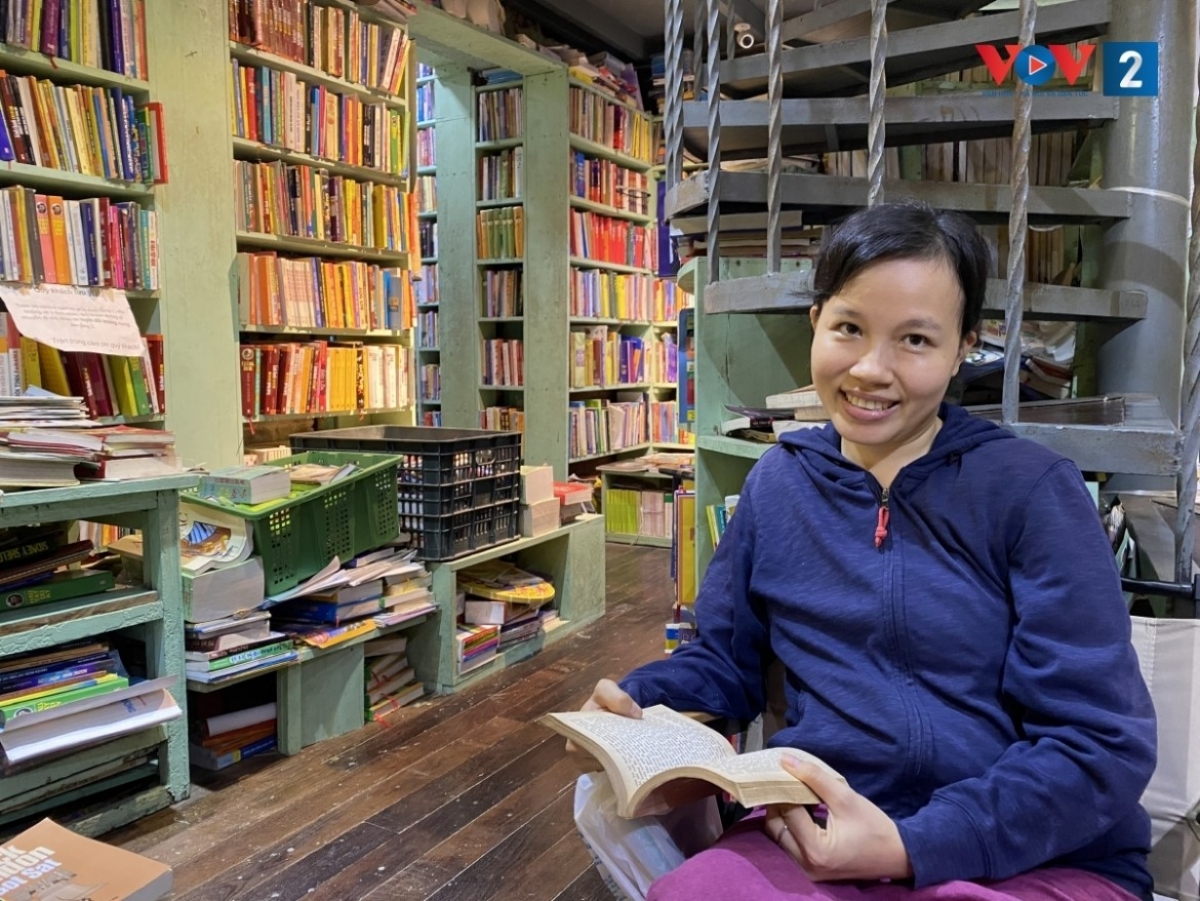
"My parents instilled a love of reading in me from a young age. There are books they bought for me, or books I read at the library, that I can no longer find in modern bookstores. When I look for old books, I feel like I'm returning to my childhood, remembering the days when my whole family would sit together and read. When I find a book I used to read as a child, I feel like bursting into tears because it's as if I've found something I had lost. Looking for old books also helps me slow down and appreciate the moment," said a visitor to Mao Bookstore.
Another visitor said, "I look for old books because they have something different. Some editions have beautiful covers or interesting transliterations that are no longer available today."
Second-hand bookstores also provide spaces for people to exchange ideas about literature, history and art. In these quiet corners, knowledge and stories are shared casually and intimately, helping keep the reading culture alive in a rapidly changing society.


