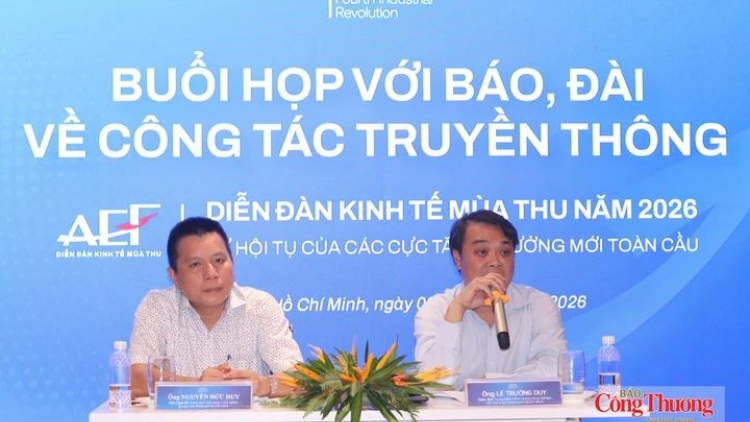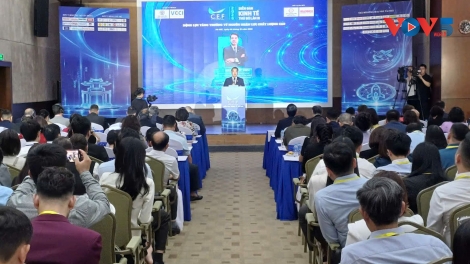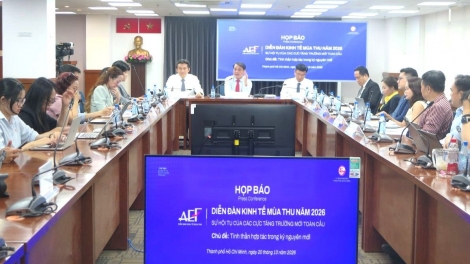



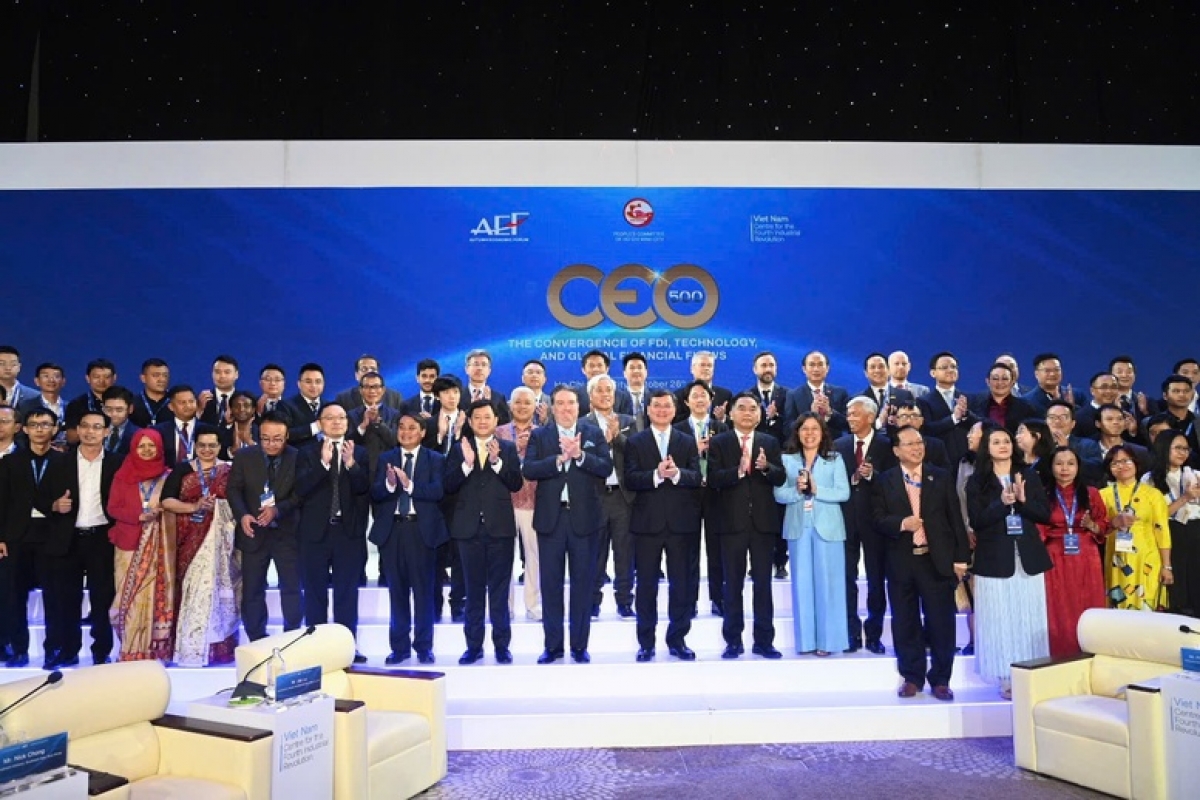
The Autumn Economic Forum (AEF 2026) taking place in Ho Chi Minh City this week is hosting dialogues between leaders of governments, international organizations, and the business community, and try to turn these discussions into new investment projects, greater production capacity, and long-term growth drivers.
This year’s forum brings together over 1,500 Vietnamese and international delegates, including hundreds of CEOs and executives from multinational corporations. It shows Vietnam’s market potential and ability to connect technology, institutions, and global partners.
From an investment destination to a connecting hub for growth resources
Vietnam has the potential to expand its role in global economic networks thanks to its strategic location, large workforce, and links to international markets. Attracting investment is now focused less on increasing capital inflows than on acquiring new technology, knowledge, and management practices to strengthen domestic production capacity and increase local value added.
Peter James Opdahl, chairman of Ito Group Holding, said the company chose Vietnam 15 years ago because of its location and people. “One of my favorite things about Vietnam is that I can go to my engineers and my factory, I can go to my general staff and say, "Please do this." Nobody ever says, "that's too hard." Nobody ever says, "I cannot." Everyone says, "Okay," and then they work so hard to get it done. You don't find that everywhere in the world, but you find it here."
While its labor resources already give Vietnam an advantage in manufacturing, new areas for cooperation are opening up in digital technology and artificial intelligence.
Sang Eng, chairman of Singapore-based Work Optional.ai, sees Vietnam’s potential in other areas. “Vietnam has adeptly deployed bamboo diplomacy. Vietnam is also extending that to bamboo AI technology, the tech stack East and West. Vietnam, unlike other Southeast Asian countries, has better control of data sovereignty and the brain. So that's the brain part. The third is the amount of education and the entrepreneurship of the Vietnamese, which positions this country to really capitalize on the burgeoning Asian economy."
To turn advantages into long-term growth drivers, stronger links are needed between domestic businesses and foreign-invested companies, which will enable Vietnamese enterprises to access new technology and participate more deeply in supply chains.
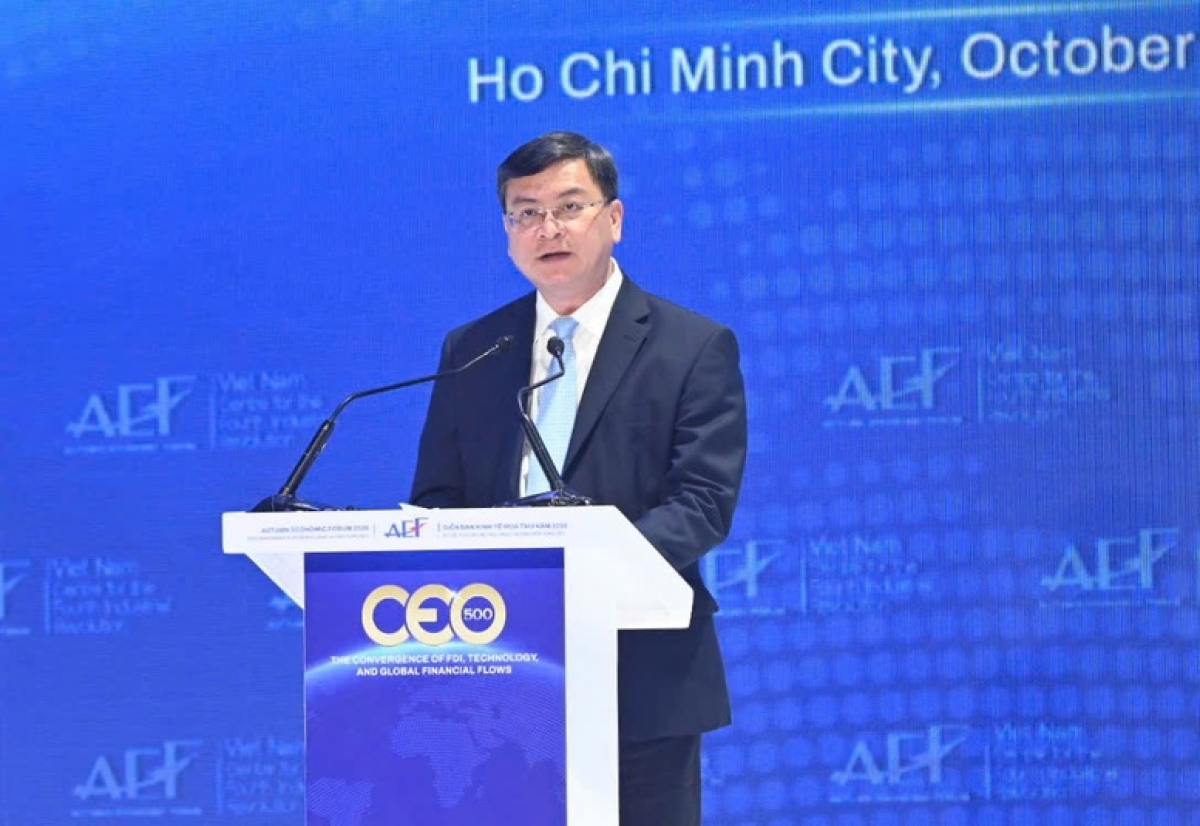
Nguyen Cong Vinh, Vice Chairman of the Ho Chi Minh City People’s Committee, said foreign direct investment, technology, and finance should be integrated into a unified development framework that connects local needs with national capabilities and global resources.
“Local authorities facilitate growth. The central authorities improve mechanisms and financial capacity. External relations connect with and mobilize global resources. When these roles are coordinated, FDI, technology, and finance will no longer be separate functions but an integrated framework supporting development. This approach is relevant not just to Ho Chi Minh City. It could provide an effective model for coordination between central and local governments in developing new growth centers and linking large cities to the regional and global economy,” said Mr. Vinh.
AEF 2026 provides cooperation opportunities
Vietnam is entering a new era of development with two major goals: annual GDP growth of 10% or more and a digital economy contributing 30% of GDP by 2030. Achieving these goals will require international capital, technology, and strategic partnerships. Science, technology, innovation, and digital transformation have been identified as the strategic drivers of growth.
With its extensive international relations network and established frameworks of international economic cooperation, Vietnam is well-positioned to strengthen its connections with international capital, technology, and management expertise.
Ho Chi Minh City’s expanded development space creates new opportunities to strengthen links between economic sectors, attract FDI, develop logistics, and maintain financial flows, supported by innovation and advances in science and technology. It also expands access to international capital, knowledge, and cooperation.
Nguyen Cong Vinh, Vice Chairman of the Ho Chi Minh City People’s Committee, said: “We’re trying to attract investment capital, technology, knowledge, modern management practices, high-quality jobs, and new production capabilities. Ho Chi Minh City warmly invites businesses to help us build a new development space that’s greener, cleaner, more technologically advanced, and more sustainable. My message to the business community is that we should aim to participate in global supply chains while strengthening our capabilities and moving into higher-value positions within those chains.”
Aspiring to become a trusted investment destination and a pioneering, globally-connected city, Ho Chi Minh City is using AEF 2026 to pool development resources, promote connectivity, strengthen ties with the world’s economic and innovation centers, and realize its vision of becoming “a convergence point for new global growth centers”.