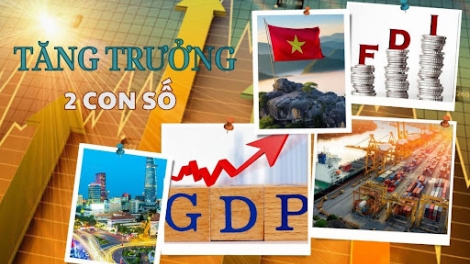




Vietnam’s economy grew 8.18% in the first half of the year, but there is limited room for further expansion in the second half. It will require effective action to translate the target into tangible results.
Decisive leadership and implementation
The first priority will be to improve the effectiveness of governance and strengthen the responsibility of ministries, sectors, and localities. As the fiscal and monetary policy space becomes increasingly constrained, the quality of governance and the speed of policy implementation will determine whether the growth target will be achieved.
The Government sees public investment as a key engine of growth. The growth target, once considered the responsibility of the central government, has been broken into targets for each locality.
At a mid-year review conference of the State Steering Committee for National Key Projects held in Hanoi last Saturday, Prime Minister Le Minh Hung called on localities to implement these tasks resolutely during the remaining six months of the year.
“I urge ministries and local leaders to make this one of their top priorities to boost local economic growth.”
The Government's consistent message is to shift the focus from setting policiesto implementing policies with determination, accountability, and clear results.
In addition to public investment, Vietnam relies on traditional growth drivers, particularly exports and domestic consumption. At a time of drastic changes in global trade, it’s essential that Vietnam diversify its export markets and enhance the competitiveness of its businesses.
At a conference of the Ministry of Industry and Trade in late June, Deputy Prime Minister Pham Gia Tuc stressed the need to continue reviewing and fine tuning taxes, tax refunds, and customs policies in line with regional and global integration commitments in order to boost exports and domestic production, modernize customs procedures, promote digital transformation, and further improve administrative procedures.
“Customs authorities should closely coordinate with relevant agencies to strengthen quality control during customs clearance, prevent intellectual property rights violations, and combat origin fraud,” he said.
Domestic consumption is a key driver of growth. Programs to stimulate consumer demand, expand e-commerce, promote tourism, and develop the domestic market will help businesses sustain production and create more jobs.
High growth target and challenges
For Vietnam to reach its economic development goals in the second half of the year, it will need to speed up reforms, unlock resources, and effectively harness both traditional and new growth drivers.
Economists say Vietnam has the potential to sustain high growth over the medium and long term.
“About the 10% GDP growth target for 2026, there’s a 40% increase in infrastructure spending by the government. Actually, if you look at construction activity in Vietnam, another factor that will help boost the economy, GDP growth this year, is that all the money that was dispersed will actually be constructed this year, go into acquiring the land, building the projects,” said Michael Kokalari, Chief Economist at VinaCapital.
“One of the great things going on in Vietnam is we are one of the only countries in the world that has very positive demographic. We're still in the middle of a very positive demographic. About 40% of the people live in the major cities. These two factors will be driving the structural growth of the country for about another 10 years," he added.
Trying to achieve 11.9% GDP growth in the second half of the year will testVietnam's governance capacity and the effectiveness of its reforms. Success will lay a solid foundation for sustainable development in the years ahead.