






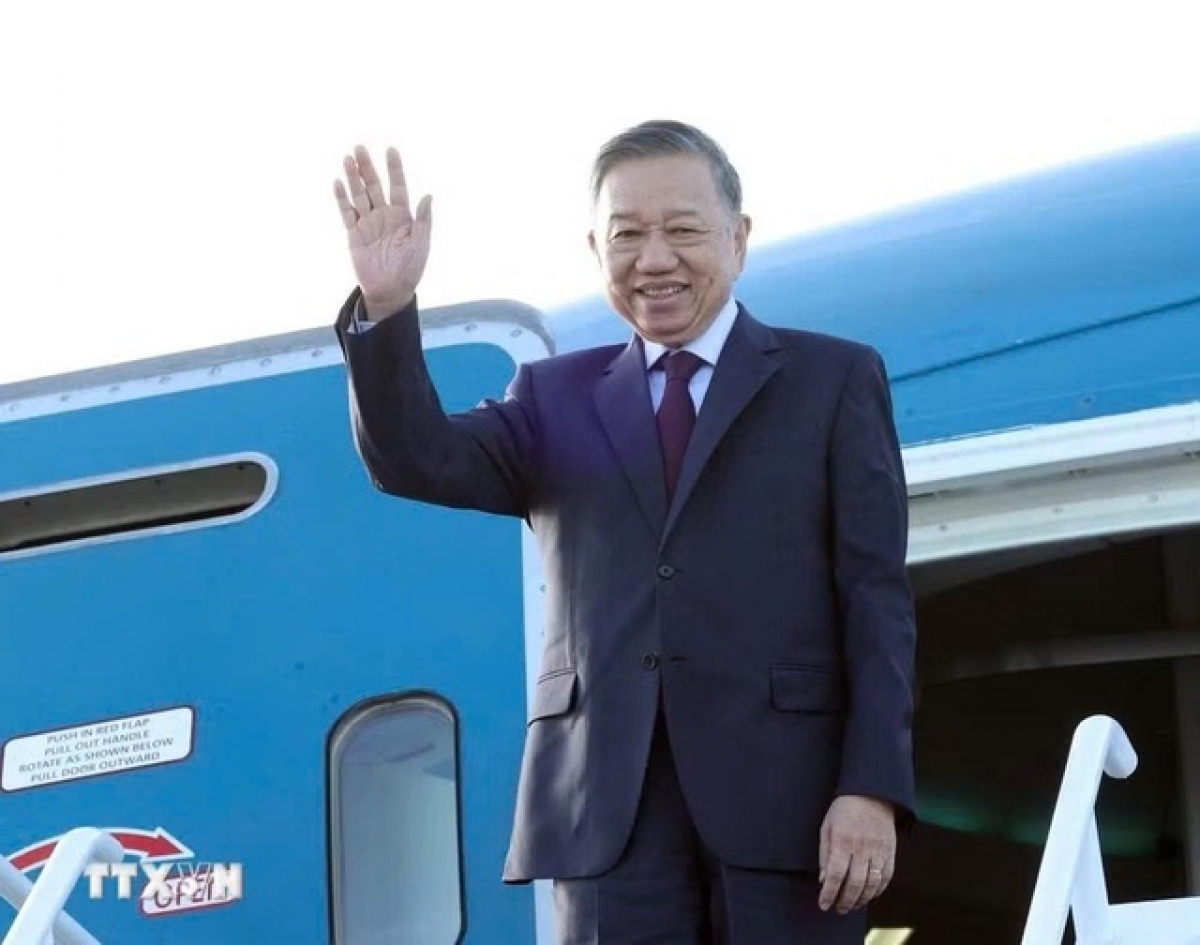
The outcomes of General Secretary and President To Lam’s visit demonstrated all three pillars of Vietnam's foreign policy: high-level multilateral engagement, substantive bilateral relations, and strategic breakthroughs.
Positioning Vietnam as an active, responsible UN member
At the world's largest multilateral forum—the UN General Assembly—the presence of Vietnam’s top leader conveyed a clear message: Vietnam is not merely a participant but an active, dedicated partner capable of shaping global affairs.
General Secretary and President To Lam’s policy address at the High-Level Debate underlined Vietnam’s capacity to shape the global agenda by proposing initiatives of contemporary significance.
Amid the governance challenges posed by digital transformation and artificial intelligence, Vietnam emphasized the need to establish governance principles and frameworks that are inclusive, safe, transparent, and responsible. These frameworks must ensure that technology serves humanity while respecting national sovereignty, digital sovereignty, and the right to autonomous development.
Developing nations must be meaningfully involved in rule-making processes and receive support regarding infrastructure and digital capacity, as well as equitable access to the fruits of scientific and technological progress.
Vietnam’s role as a responsible member of the international community was seen during the meeting with UN Secretary-General António Guterres. The Vietnamese leader pledged to further its participation in peacekeeping operations and provide rent-free office space for UN agencies in Hanoi for the next 10 years, a contribution valued at 3 million USD.
Additionally, Vietnam pledged nearly 1.3 million USD to the international peacekeeping budget and expressed readiness to host major conferences. From a diplomatic perspective, this reflects a pivotal shift in Vietnam’s standing and influence regarding global governance: evolving from an aid recipient into an active member that makes responsible contributions to the UN.
Furthermore, the presentation of Country Programme Documents (CPDs) for the 2027-2031 period—covering cooperation between Vietnam and the UNDP, UNICEF, and UNFPA—in New York signals that the partnership between Vietnam and UN agencies has entered a phase of equal development cooperation.
"The high-level diplomatic activities spell out Vietnam’s concrete realization of its foreign policy—one that is open, independent, autonomous, self-reliant, and grounded in peace, friendship, diversification, and multilateralization. It’s a policy that positions Vietnam as a trusted friend and partner, as well as a responsible member of the international community," said Foreign Ministry Spokesperson Pham Thu Hang.
"The 14th National Party Congress has defined and elevated the pioneering role and the vital, ongoing mission of foreign affairs, ensuring they effectively and practically serve national development and defense goals. Foreign affairs and international cooperation must generate the resources and momentum for national development and help build national strength," Hang added.
Substantive bilateral ties and strategic breakthroughs
On the bilateral front, the series of activities undertaken by General Secretary and President To Lam—including his working visit to the United States and state visit to Canada—represents a highly successful diplomatic outcome.
In the US, a rapid succession of engagements with trade policymakers, Congress, development agencies, and leading business leaders conveyed a powerful message: Vietnam is proactively shaping its Comprehensive Strategic Partnership with a spirit of substance and balance.
Addressing Washington’s trade balance concerns, Vietnam has adopted a direct approach, promoting reciprocal and fair trade agreements to foster a stable, long-term business environment. Regarding relations with leading technology and industrial firms, Vietnam proactively proposed cooperation aimed at becoming a high-value-added link in the global supply chain, while attracting long-term capital for digital infrastructure, data centers, artificial intelligence, and the green transition.
The pillar of political trust with the US has been strengthened through cooperation on addressing the legacies of war and legislative exchanges. The policy address delivered by General Secretary and President To Lam at the Foreign Policy Association—coupled with his receipt of an award honoring a spirit of responsible internationalism—clearly illustrates Vietnam’s foreign policy philosophy: upholding strategic autonomy, respecting each other's political systems, and standing ready to contribute to global peace and cooperation.
While activities in the United States focused on removing bottlenecks and attracting high-tech resources, the state visit to Canada—marked by a grand welcoming ceremony in Ottawa and the historic decision to elevate ties to a Strategic Partnership—highlights the political trust shared by the two countries after more than half a century of partnership. It was underscored by Canadian Prime Minister Mark Carney as he greeted General Secretary and President To Lam.
“This is a historic visit. We will strike agreements in a number of areas today in energy, clean energy, conventional energy, agriculture, defense cooperation, people-to-people ties crucially. There is good news for those who travel directly from Canada to Vietnam and vice versa, of course deeper cultural ties come as well,” PM Carney said.
Overall, General Secretary and President To Lam’s just-concluded trip yielded comprehensive results. Vietnam has continued to deliver its flexible foreign policy, projected the image of a confident and steadfast nation entering an era of development as a trusted partner and a responsible member of the international community.


