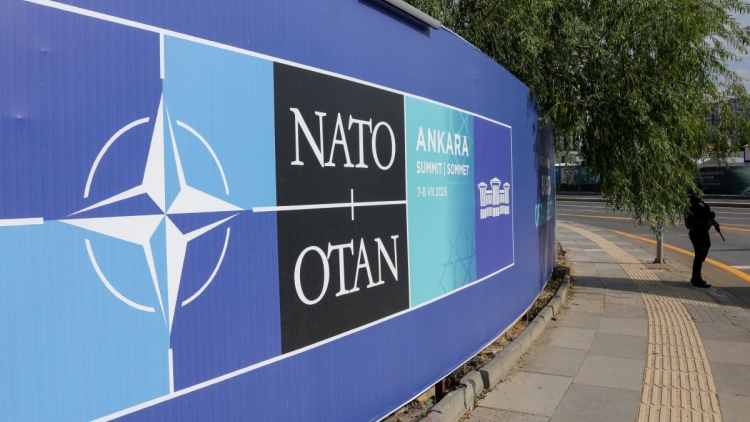




The summit on Tuesday and Wednesday marks the first meeting of NATO leaders since the outbreak of the Middle East conflict in February, an event that exposed deep divisions between the US and its NATO allies.
Appeasing Washington
The first thing NATO must address is internal unity. Ahead of this year's summit, senior US officials have repeatedly criticized NATO allies for refusing to support the US in its conflict with Iran, for their slow pace in increasing their defense spending, and for focusing on gender equality while failing to meet defense spending targets.
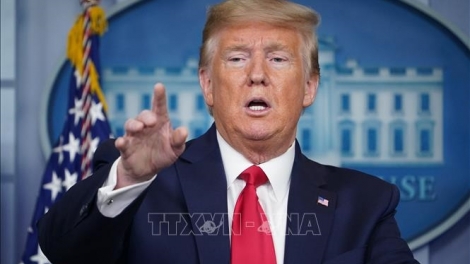
US Secretary of Defense Pete Hegseth described NATO as a "paper tiger". President Donald Trump said it's "ridiculous" for the United States to continue its "one sided" relationship with NATO, meaning the US has spent enormous sums defending NATO members while receiving little in return.
US Secretary of State Marco Rubio has repeatedly said that Washington might reconsider its relationship with NATO. The US administration has stepped up pressure by announcing plans to reduce its troops stationed in Germany, reallocate forces stationed in other countries, and scale back its security commitments in Europe, and has even threatened to withdraw from NATO.
“Were Donald Trump to withdraw from NATO, it would be a geopolitical earthquake. It would dismantle the alliance that has, in many respects, anchored the Western world since NATO was created in the dark years after World War II. And it's not just a military alliance, it is in many respects a political alliance, an institution that reflects common interests and common values and a common commitment," said Charles Kupchan, Senior Fellow at the Council on Foreign Relations and Professor of International Relations at Georgetown University of the US.
NATO members are seeking to placate Washington and provide an acceptable explanation for not joining US-Israeli military operations against Iran. In an effort to ease tensions with Washington, NATO members are increasing their defense spending to share the financial burden with the US. German Chancellor Friedrich Merz said Germany, NATO's largest economy in Europe, will spend 3.5% of its GDP on defence by 2029 and ramp up defense spending to 5% in the following years, in line with the NATO target set last year.
NATO Secretary General Mark Rutte says alliance members are actively scaling up their military investments, and deepening large-scale industrial cooperation. He has insisted that the US continues to play a "decisive role" in underpinning transatlantic security and global stability.
Shaping NATO 3.0
A major challenge will be to define the future strategy of NATO, commonly referred to as NATO 3.0 (NATO 1.0 operated during the Cold War and NATO 2.0 operated from the Cold War until 2022). NATO 3.0 strategy must rethink military doctrine, organizational structure, and forces and weapons standards.
Observers say NATO's strength can no longer be measured solely by the number of troops or military assets. NATO must adapt to new forms of warfare, including artificial intelligence and low-cost unmanned aerial vehicles, while protecting critical infrastructure, responding to non-traditional security threats like large-scale cyberattacks, and strengthening supply chain against sanctions or economic blockades.
“Secretary Hegseth was very clear about the need for a NATO 3.0, an alliance rebooted for the modern age. On that, we all agree. We need to speak the truth to each other. This alliance is going through a massive transformation, probably the biggest transformation in its history to build this NATO 3.0,” Rutte said.
Military and political analysts say European NATO members should take greater frontline responsibility by strengthening their self-reliance and leading efforts to address European security issues, while the United States assumes a supporting role.
According to the German Chancellor, "NATO must become more European in order to remain transatlantic. I believe that is the right way to put it. In recent years, we have done too little for our own security. Now we are working to make up for lost time."
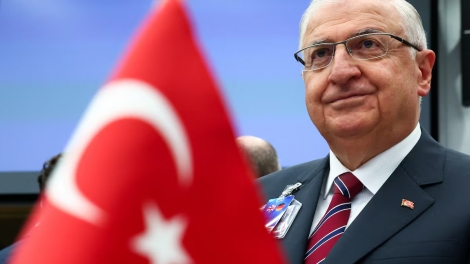
Strengthening defense industrial cooperation has become a major priority. Europe's fragmented defense industry has struggled to implement large-scale projects and integrate different weapons systems. But, before focusing on NATO 3.0, the alliance's most pressing challenges will be to maintain internal unity, support Ukraine, and clarify Turkey’s role in the organization.