






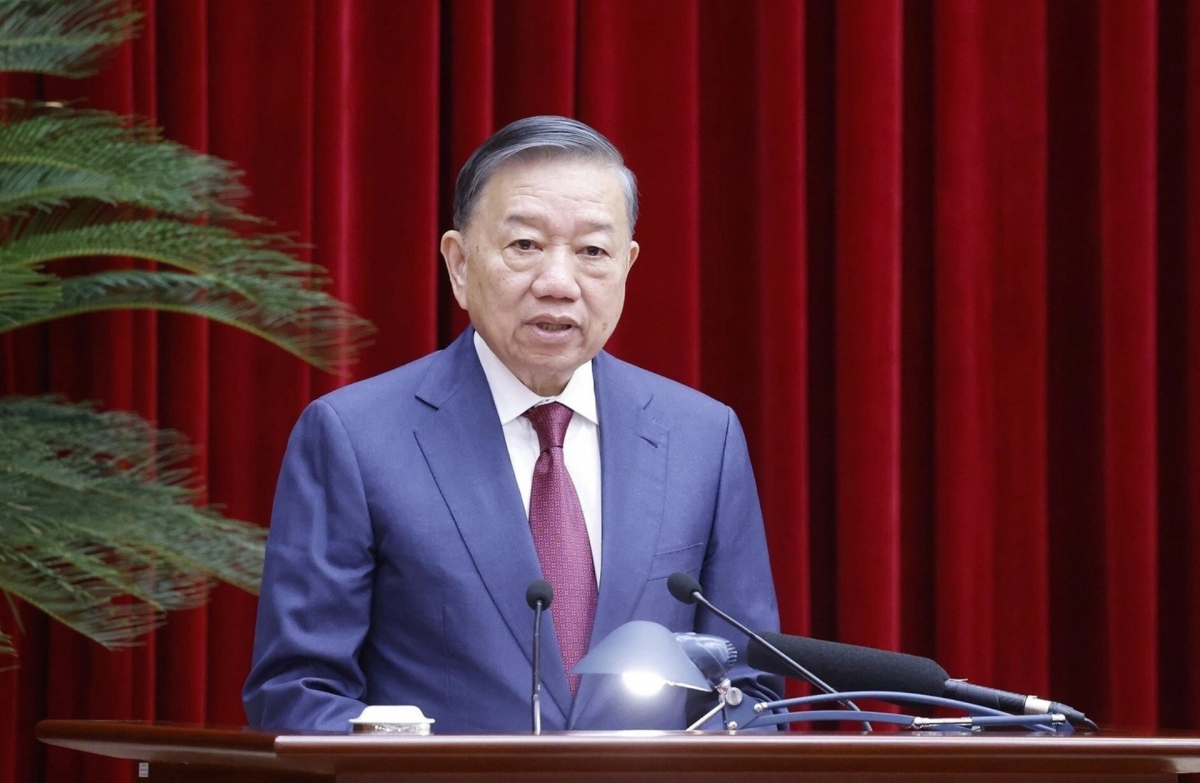
The four strategic transformations include strengthening the Party's leadership and governing capacity and improving the effectiveness and efficiency of the Party and State apparatus; establishing a unified approach to governing the nation's development space and optimizing the use of national resources; building a new development model driven by productivity, knowledge, technology, and human capital; and adopting a proactive approach to risk prevention, enhancing national resilience and adaptability, and firmly safeguarding the nation.
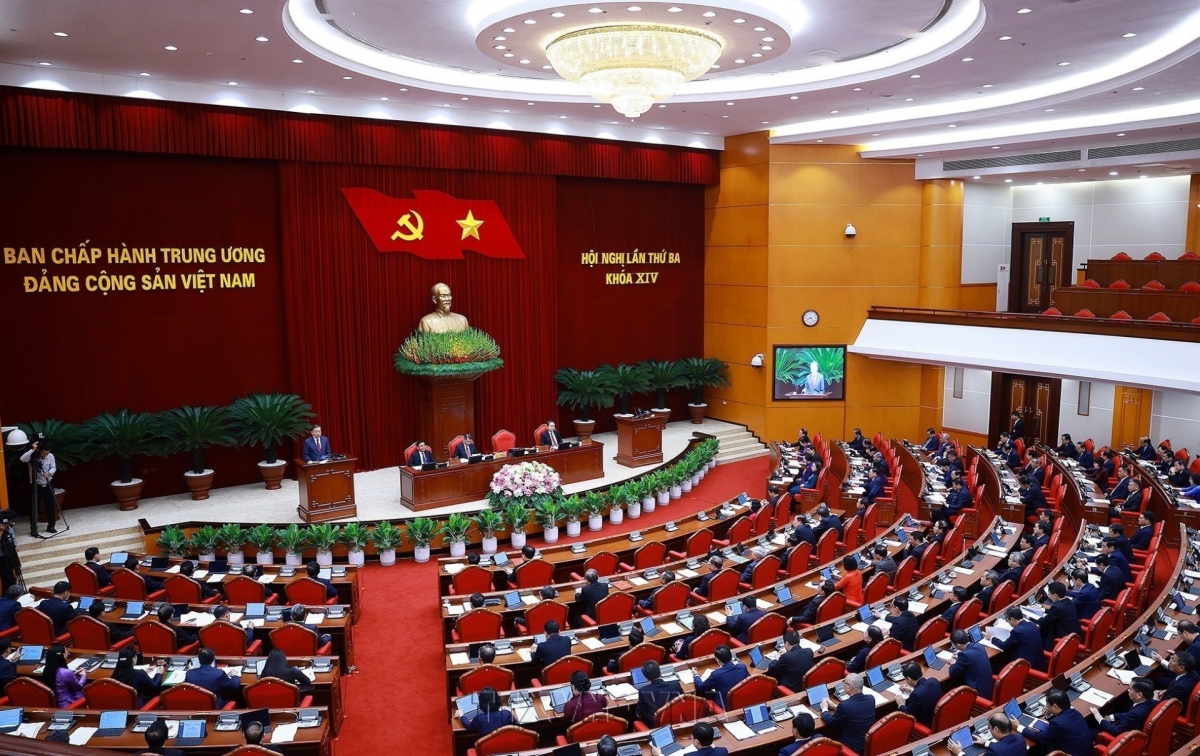
The 13 agenda items at the third plenum of the Party Central Committee span a wide range of issues, but all share one overarching goal of strengthening the Party's leadership and governing capacity, enhancing national governance and execution, and improving Vietnam's capacity for development and national defense in the new era. Every policy choice and decision, Mr. Lam stressed, must place the interests of the nation, the legitimate rights and interests of the people, and the nation’s long-term sustainable development above all else.
Strengthening leadership and governance
The Party leader and President said the restructuring of the political system has created a leaner organizational framework, but streamlining is only the starting point.
"Our goal is to enable the Party to lead more effectively, the State to govern more efficiently, the administrative system to operate more swiftly, the people to receive better public services, and living standards to continue improving. This transformation must ensure strict discipline, a clear organizational structure, and effective checks on power and accountability, with the quality of policymaking, implementation, and public trust serving as the key benchmarks," said Mr. Lam.
Mr. Lam said reports reviewing the first year of the restructured political system and the two-tier local government model, together with the Party-building report for the first half of 2026, should provide an objective assessment of whether the new system is functioning efficiently, with clearly defined responsibilities, faster decision-making, and better services for citizens and businesses.
He said decentralization must go hand in hand with adequate authority, financial resources, personnel, data, implementation tools and mechanisms to oversee the exercise of power. Provincial governments, he said, should focus on planning and regional coordination, while commune-level administrations should be empowered to effectively resolve issues closest to the people. Officials should be evaluated based on integrity, competence, performance, work progress, and public credibility, with agency heads assuming primary responsibility.
Mr. Lam said administrative boundaries should not constrain development thinking: "Land, seas, urban areas, infrastructure, natural resources, and data must be viewed as parts of an integrated system and managed under a unified national strategy that maximizes regional advantages and overall efficiency. This transformation must create new development space, channel resources to where they can be used most effectively, and harmonize the interests of the State, businesses, and the people and connect local strengths into national competitiveness."
"It’s important to create a shift in land governance from parcel-by-parcel administration to integrated spatial planning, from procedure-oriented management to resource mobilization, and from simple compensation to ensuring displaced residents enjoy equivalent or better housing, livelihoods,and living conditions. The sea is a strategic space for national development, security, and sovereignty, requiring integrated management linked with ports, logistics, economic corridors, and international cooperation,” added the Vietnamese top leader.
Building a development model driven by innovation and people
Addressing socio-economic performance in the first half of 2026 and the proposed new national development model, Party leader and President Lam said the key question is how Vietnam can generate sustainable wealth and long-term competitiveness.
Mr. Lam said: "In the long term, Vietnam must move away from growth driven by capital, natural resources, processing industries, and low-cost labor toward a model based on productivity, knowledge, data, technology, innovation, high-quality human resources, and modern governance. We must build an independent and self-reliant economy while integrating effectively into the global economy."
"We need to strengthen the State's role in creating an enabling environment while allowing market mechanisms to allocate resources efficiently. The state sector should maintain its leading role, while the private sector should become one of the country's most important growth engines. Foreign investment should be closely linked with technology transfer and stronger domestic capabilities, and science, technology, innovation, digital transformation, and artificial intelligence must translate into higher productivity, greater added value, and stronger competitiveness,” stressed the top leader.
Mr. Lam said development should expand the economy, improve society, and foster comprehensive human development. Economic growth, he said, must not come at the expense of culture, ethics, or social cohesion, nor should it widen inequality or leave vulnerable groups behind. Ultimately, the success of development should be measured by people's quality of life, opportunities, and happiness.
In an increasingly complex global environment, Mr. Lam said, national security cannot be addressed in isolation, nor can environmental issues be dealt with only after damage has occurred. He said the National Security Strategy, along with the review of key Party documents, must adopt an integrated approach that links national protection with sustainable development, shifting from responding and overcoming crises to proactively identifying, forecasting, and preventing risks at an early stage and from afar, strengthening the nation’s resilience against traditional and non-traditional security threats and chain impacts. National defense and security should be closely coordinated with diplomacy and international integration to expand development space and further enhance Vietnam's standing and reputation in the region and the world.
Mr. Lam said the success of the third plenum should be reflected in a shared strategic vision, sound policy decisions, and tangible results.


