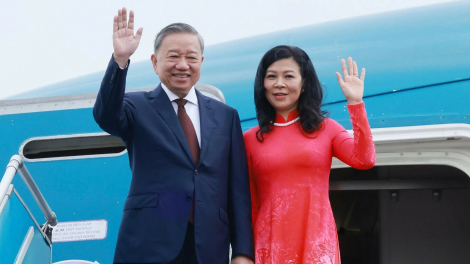



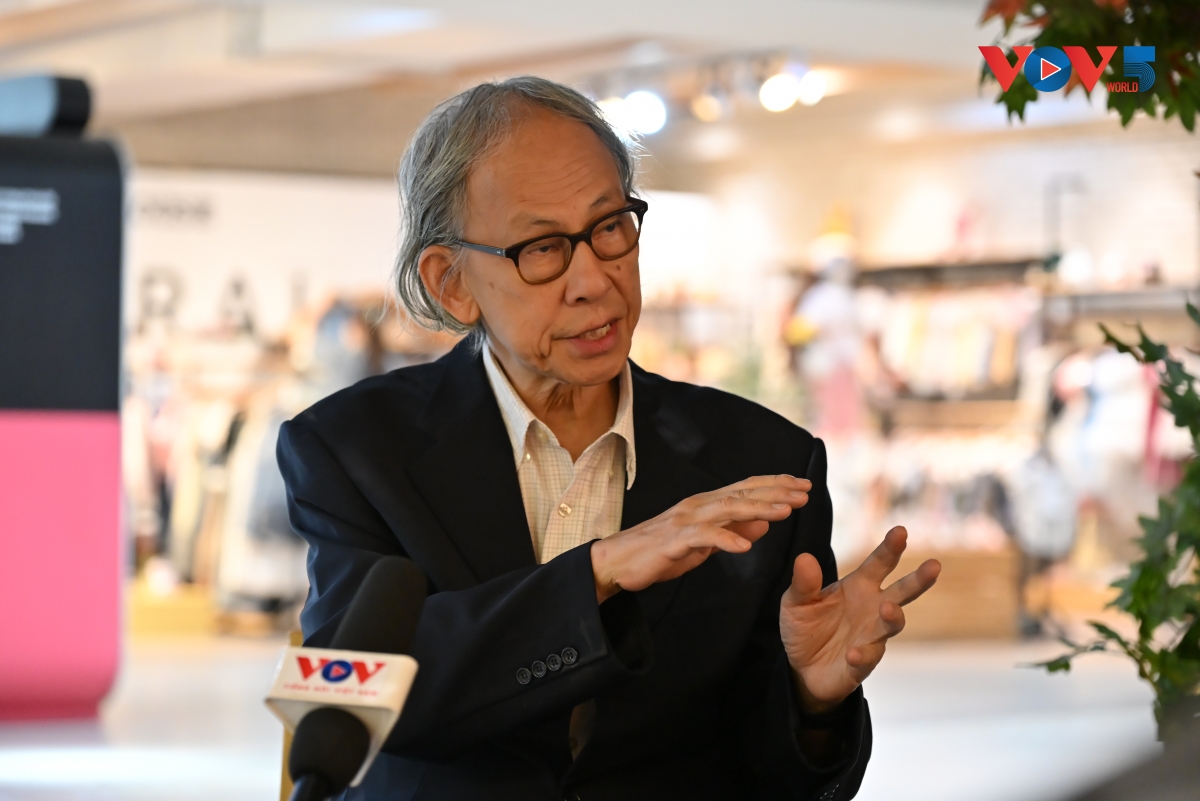
VOV correspondent: How do you assess the broader significance of General Secretary and President To Lam’s upcoming visit to Thailand, in regard to bilateral relations and ASEAN’s regional dynamics?
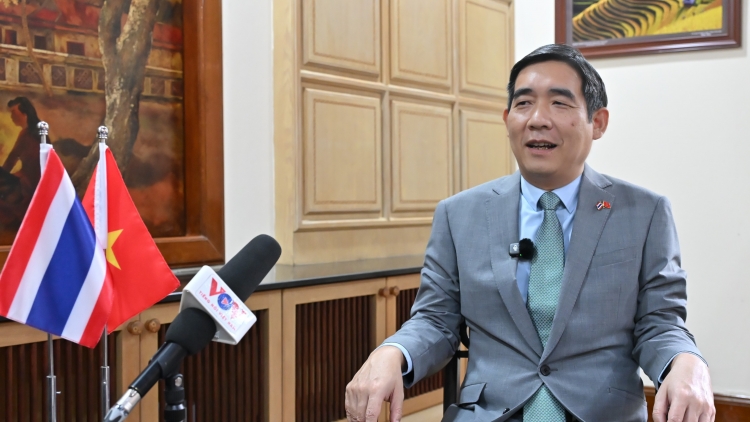
Kavi Chongkittavorn: Well, I must say that the visit of Mr. To Lam is much long-awaited. It is very significant because he's coming here as President and also as General Secretary of the Communist Party. So, for Thailand, this is the first time really. It will help boost bilateral relations tremendously, for three reasons. First, Thailand and Vietnam relations now have become comprehensive strategic partners, that is very significant. Second, Vietnam now has reached a new plateau that it would like to share its experience with. It has treated Thailand as a trustful partner. So this will be a very important step. Third, I think To Lam has a big plan for the region, particularly he would like to have Thailand’s help within the ASEAN framework. Vietnam has been a member of ASEAN for 30 years. And I think Vietnam has gained confidence and now would like to contribute to ASEAN.
VOV correspondent: With the Vietnam-Thailand relations upgraded to a Comprehensive Strategic Partnership, what specific areas do you see as the driving forces for groundbreaking cooperation? How can Thailand and Vietnam best align their policy priorities in moving forward?
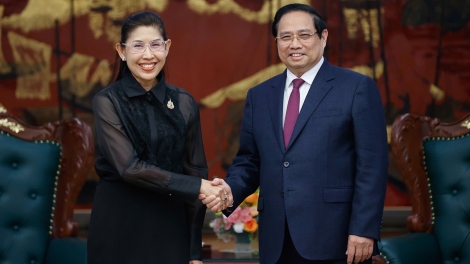
Kavi Chongkittavorn: What are these relations as the upgrade relations entitled comprehensive strategic partner. What does it mean? I think it means that from now on, Thai-Vietnam relations after 50 years have already transpired into a more strategic level. Of course, trade and investment and people-to-people relations are still very important to bilateral relations. But what is really important now amid the global uncertainty is how Thailand and Vietnam can cooperate to promote their strategic position in the region and in the world. Now Thailand and Vietnam are moving into a very important step. They're very interested in promoting innovation, especially the digital economy, clean economy and also cooperate more on the research on semi-conductor. These are new things it's never seen before. Before we focused on trade and investment and tried to improve sister city cooperation. Now it is a little bit more advanced high-level cooperation. So, I think To Lam now has a very clear mandate and also has a very clear policy and a strong economic position to really forge that sort of cooperation. I think the most important for both sides is to align each other with their own policy. Thailand has its own priority, Vietnam is very clear with their own priority so if you can match from now on we can move on together there are many areas.
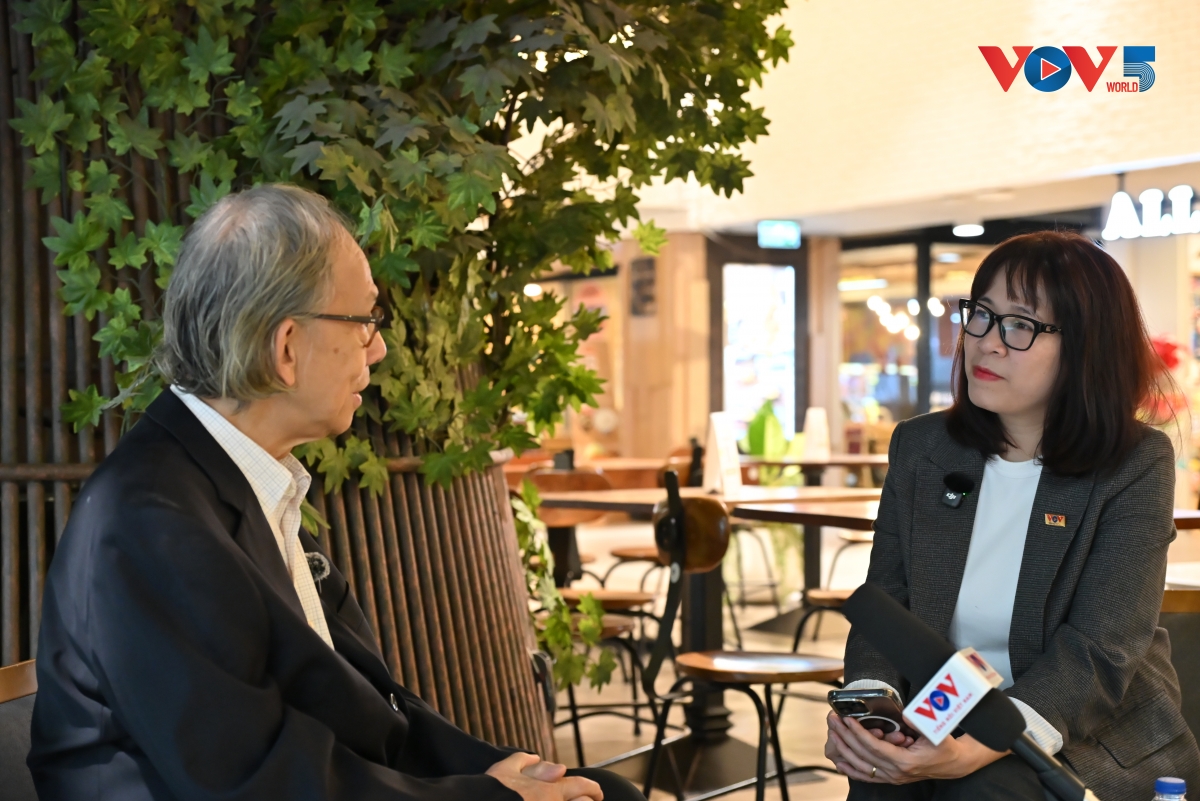
VOV correspondent: Amid supply chain restructuring, energy transition, and intensifying major-power competition, where do you see the biggest opportunities in Vietnam–Thailand relations?
Kavi Chongkittavorn: This is also what I would like to emphasize. I said that earlier there are many new areas. One area is to make sure that Thailand, Vietnam and the cooperation with the rest of the sub-Mekong region is becoming the main focus. Because in mainland Southeast Asia, the Mekong-sub regions cooperation is very important, particularly the leading role of Thailand and Vietnam. As you are well aware we have the framework of ACMECS, Ayeyarwady-Chao Phraya-Mekong Economic Cooperation Strategy. I think this is a framework that both countries have a very high stake in in setting up a model for other consortiums to follow. Another area is maritime cooperation under the ASEAN Outlook on the Indo-Pacific (AOIP). Both Thailand and Vietnam should reinforce the AOIP, the so-called early deliverable cooperation and maritime cooperation within AOIP is the top priority.
And I think there are a lot of things that both countries can learn with one another and also can share. I think these are important steps in looking at the next chapter of 50 years of Thai-Vietnamese relations.
VOV correspondent: Approaching the 50th anniversary of diplomatic relations (6/8/1976 – 6/8/2026), what could define the “next chapter” of Vietnam–Thailand ties beyond traditional areas like trade and tourism?
Kavi Chongkittavorn: Well, one of the issues that people don't discuss is the supply chain between Thailand and Vietnam. We already have Three Connections. Three-Connections is a very comprehensive supply chain between Thailand and Vietnam. It will not change. It will be strengthened. So, this kind of connectivity is the pillar for the broader regional supply chain.
This will be strengthened and it would be good because now Vietnam will have one of the most connected high-speed train networks with mainland China and sooner or later it will expand to the mainland Southeast Asia, and of course with the existing plan of connectivity within the ASEAN, a connectivity master framework, it will reach Singapore. But this Thai-Vietnam connectivity will form the basis.
VOV correspondent: Thank you very much for sharing your valuable insights.