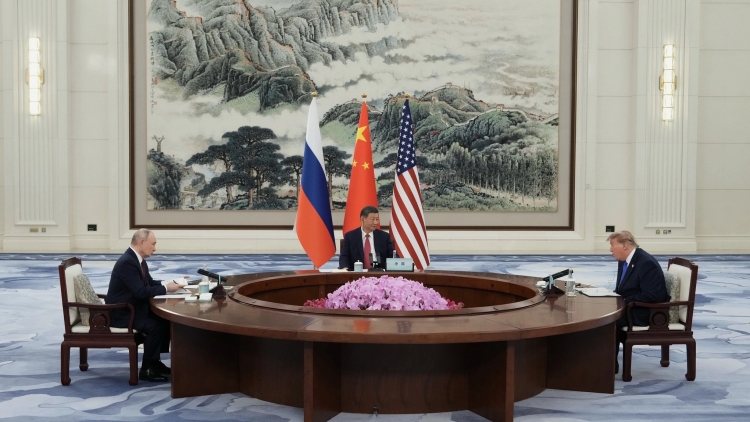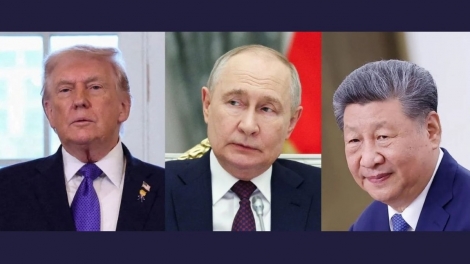




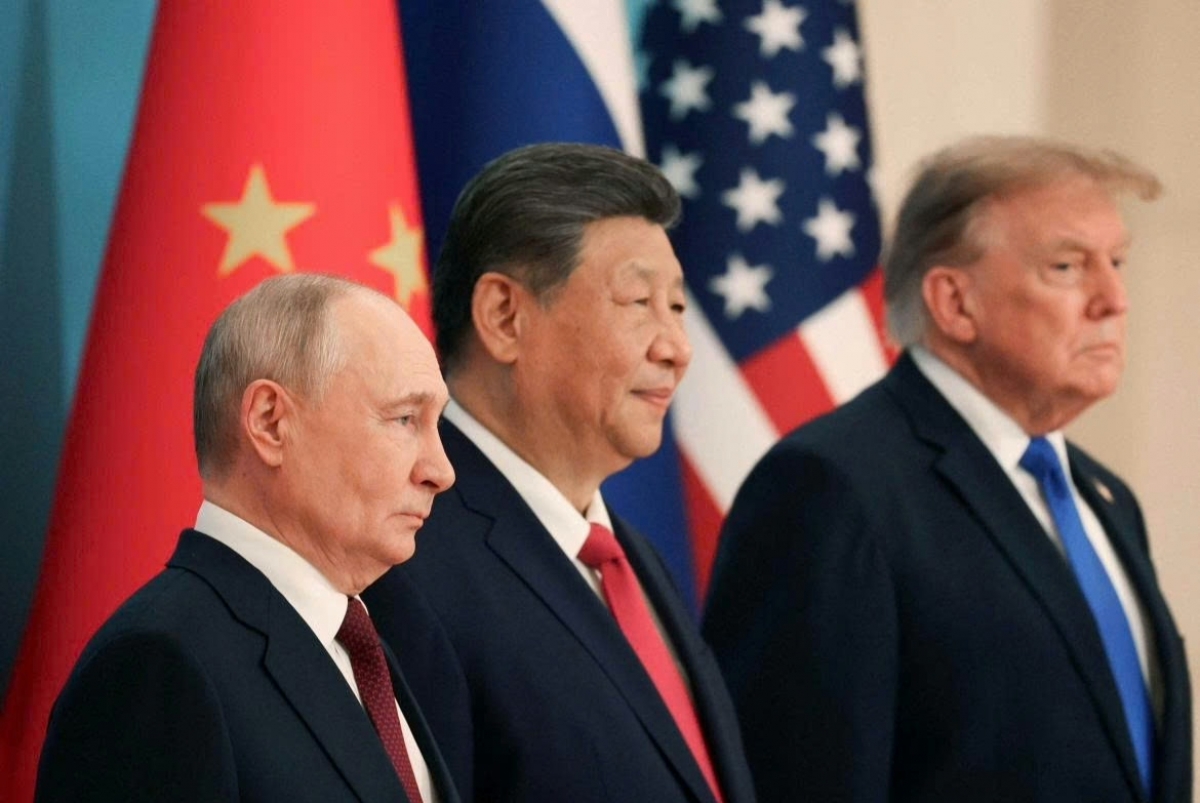
Chinese President Xi Jinping, US President Donald Trump, and Russian President Vladimir Putin talked for about 90 minutes on a range of issues, including nuclear arms control and resolving current conflicts.
A 4-point statement
Following the summit, the leaders issued a 4-point statement. First, as permanent members of the UN Security Council, the 3 countries pledged to reform the UN so that it can respond more effectively to global challenges and fulfill its mission of maintaining international peace and security.
“The world is undergoing rapid changes unseen in a century. It is not peaceful. And challenges reveal true leadership. As major world powers and permanent members of the United Nations Security Council, our 3 nations should lead by example, collaborate to address global challenges, jointly safeguard world peace and stability, and make more significant contributions to the progress of humanity,” said President Xi.
Second, the 3 countries plan to increase the production and supply of refined petroleum products for the benefit of all nations. They reaffirmed the importance of stable energy flows.
Third, they agreed that the principle of State consent and respect for the legal immunity of State officials is of paramount importance, and concurred that the International Criminal Court and other similar bodies must not abuse their jurisdiction.
And fourth, they reaffirmed that a nuclear war cannot be won and must never be fought. The 3 countries said they will conduct a dialogue on reducing nuclear risks and preventing the proliferation of nuclear weapons.
“The United States, Russia, and China are uniquely positioned to discuss how to reduce the number of nuclear weapons on Earth, and also to lessen the risk that those weapons will ever be used. The power is unbelievable, unthinkable,” said President Trump.
President Putin called the meeting "open","candid", and "very useful", framing it as a new chapter in diplomacy.
“I would really want this to have a continuation. At least in terms of comparing notes, in a number of key areas we’ve reached, if not an agreement, then a mutual understanding. This primarily concerns its historical significance and the like. There has never been such a meeting before. We’ve held the first meeting, which has opened a new page in the history of diplomacy,” he said.
Symbolic significance
A major question for the world is how this historic meeting will affect geopolitical developments in the coming period.
At the same time as the trilateral meeting in Shenzhen, the Coalition of the Willing, made up mainly of European countries and NATO members, convened in Berlin to discuss increasing military and financial support for Ukraine.
NATO Secretary General Mark Rutte said he is not worried about the trilateral meeting in Shenzhen resolving the Russia-Ukraine conflict without the involvement of Ukraine and Europe.
Observers say major geopolitical conflicts involve the overlapping interests of numerous countries and organizations, so a meeting between the leaders of major powers is unlikely to reach a sudden solution that accommodates all parties.
Alejandro Reyes, an adjunct professor in the Department of Politics and Public Administration at the University of Hong Kong, said the trilateral meeting might reflect the view in the three capitals – Washington, Moscow, and Beijing – that the three of them can somehow set the course of the world and “somehow resolve or deal with, particularly the two big conflicts going on in Ukraine and Iran, and somehow bring stability to the world.”
“But I think that despite the fact that they're the main nuclear powers in the world, that resolving those conflicts will be much more difficult than they may make it out to be,” said Reyes.
Overall, the historic meeting between the leaders of the United States, Russia, and China in Shenzhen has been viewed positively, as it secured an agreement by the 3 powers on the need to maintain global peace and stability, and opened the prospect of trilateral talks on strategic arms control. It remains to be seen whether the 3 countries, facing significant domestic challenges and with differing foreign policy priorities, can sustain their high-level dialogue.