




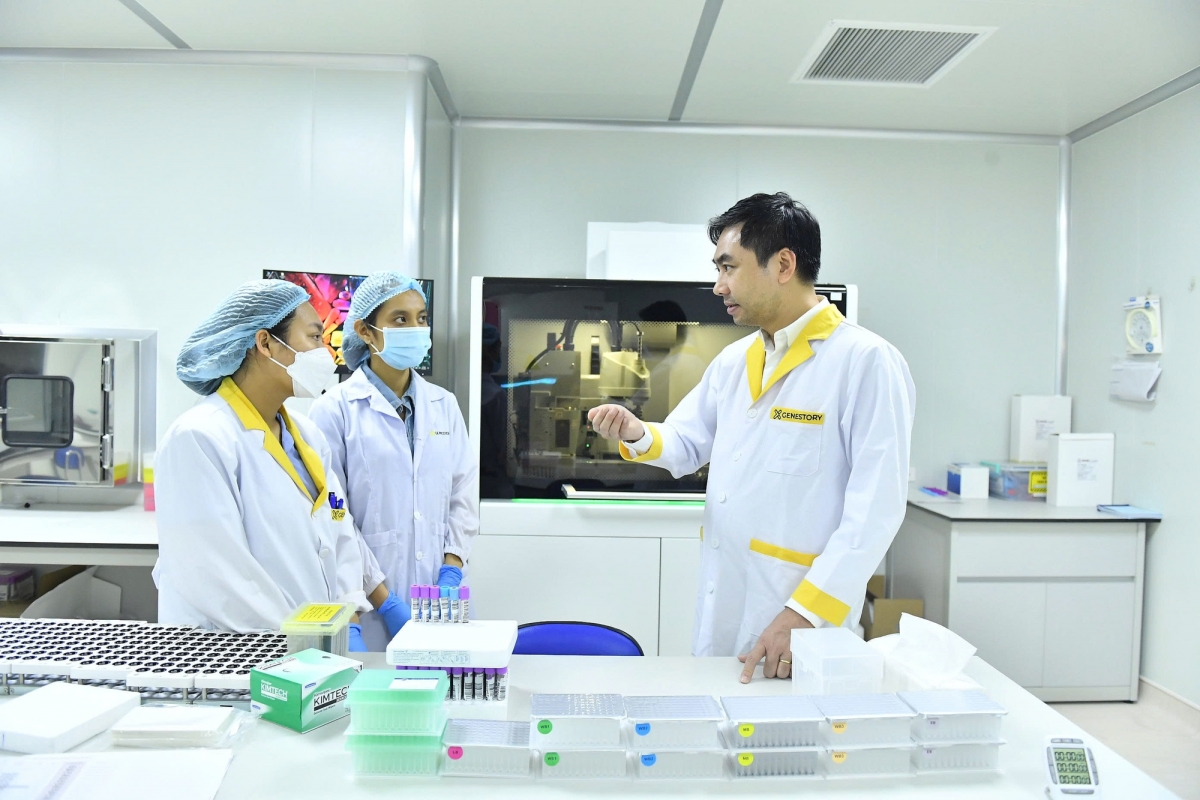
40 Vietnamese scientists from the Big Data Institute of VinUniversity and other universities and research institutes in Vietnam and abroad participated in the project.
After nearly eight years of research, they successfully developed the VN1K dataset by sequencing the genomes of more than 1,000 Vietnamese individuals from provinces and cities across the country, identifying more than 42 million genetic variants, including approximately 8.5 million that had never been recorded in international databases.
A major achievement of the study is the development of the Vietnamese PanGenome Reference (VPR), the first population-specific reference genome designed exclusively for the Vietnamese population.
This reference significantly improves the accuracy of analysing and interpreting genetic variants compared with existing reference genomes, which are largely based on European genetic data.
According to Professor Vu Ha Van, Scientific Director of the Big Data Institute at VinUniversity, the research was carried out entirely in Vietnam by Vietnamese scientists. It lays the foundation for comprehensive studies of the Vietnamese genome and is expected to pave the way for scientific breakthroughs the future.
"Once we have large-scale genome sequencing, we can make significant contributions to the national healthcare program. For example, we can better understand which diseases are most common among Vietnamese people, when they are most likely to occur, and which medicines are most effective for treating those diseases. This will also have implications for our pharmaceutical imports," said Mr Van.
Using the VN1K dataset, researchers can identify genetic variants associated with responses to certain medications and can then develop models to support the selection of treatments tailored to each patient's genetic profile.
Dr Vo Sy Nam, Chief Executive Officer of the Big Data Institute at VinUniversity, said: "Developing a gene bank project enables us to master the core technology specifically for Vietnam and the genetic characteristics of Vietnamese people. In the long term, the gene bank will support the development of advanced technologies, including genomics, biomedicine and biotechnology. Its applications extend beyond identity identification to healthcare, public health and many other fields."
The successful development of the VN1K dataset fills a major gap in Vietnam's representation on the global genome map and provides an important large-scale genetic resource for Southeast Asia, one of the regions that remains most underrepresented in global genetic databases.