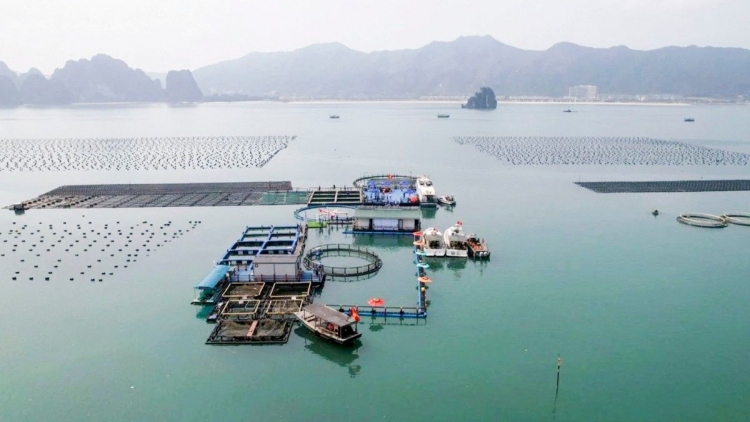



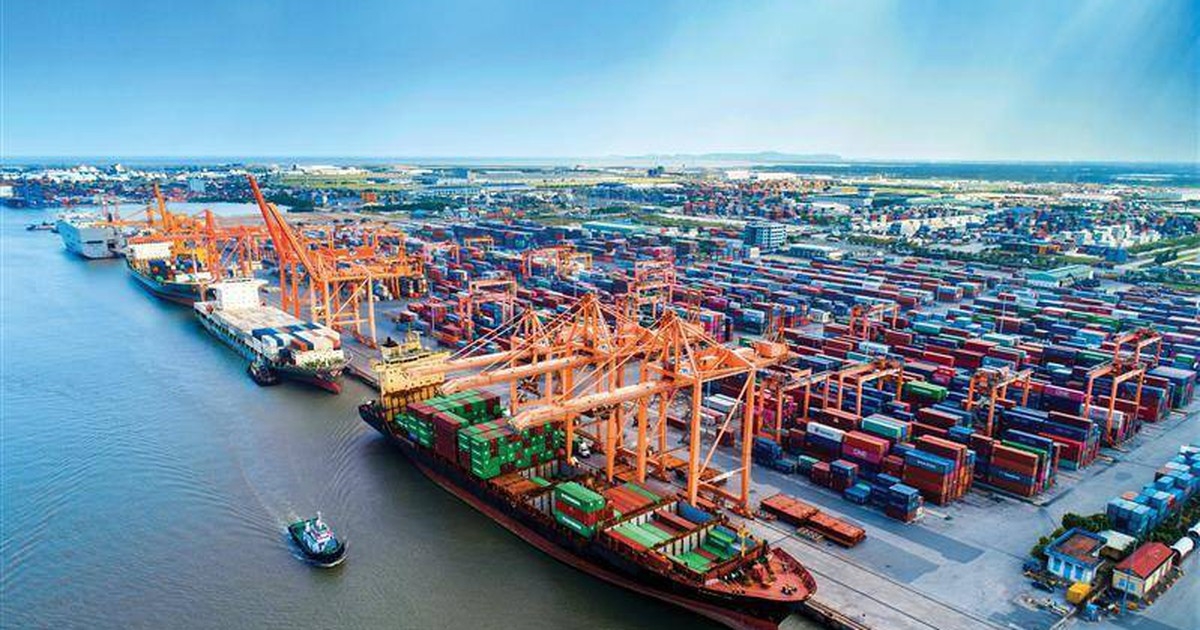
Vietnam has been steadily expanding international cooperation in key areas of the marine economy and ocean governance. Bilateral and multilateral cooperation programs in marine spatial planning, offshore renewable energy development, environmental protection, and marine biodiversity conservation have given Vietnam access to additional resources, technology, and expertise to advance its goal of becoming a strong maritime nation.
International cooperation diversifies resources for marine economic development
The need for international cooperation stems from the fact that seas and oceans transcend national borders. Pauline Tamesis, UN Resident Coordinator in Vietnam, said: “Vietnam's vision for a comprehensive, maritime policy is comprehensive. It cuts across many of the issues from international law to climate, to livelihoods, and for the green transition. The needs are also interlinked, and the priorities can only be achieved if they're tackled together. I think Vietnam is approaching this very clear-sightedly, that it can't do it alone as the ocean is one. The currents flow through many of the borders and so the issues need to be addressed as a global challenge.”
Viewing the ocean as one interconnected whole also provides a basis for Vietnam to promote comprehensive international cooperation, linking marine spatial planning, the development of a green economy and ecosystem protection. The United Nations and the Norwegian Government are among the partners supporting Vietnam in this process.
Under the 2022–2026 cooperation program between Vietnam, the UN Development Program (UNDP), and Norway, the two partners have supported Vietnam in developing its National Marine Spatial Plan, studying offshore wind power potential and the blue economy, and piloting coral reef restoration in Bai Tu Long Bay. In the 2026–2029 period, cooperation will focus on strengthening Vietnam’s capacity to mobilize green finance and develop marine areas with strong investment potential.
Vietnam is also expanding international cooperation in developing offshore wind power. In June 2026, Vietnam and the UK launched the Offshore Wind Partnership Program, bringing together specialized organizations to conduct research, give technical advice, and develop markets.
Dr. Du Van Toan of the Institute of Meteorology, Hydrology, Environment and Marine Sciences under the Ministry of Agriculture and Environment, said: “Offshore wind power offers opportunities to develop large-scale manufacturing and service supply chains and significant investment potential for coastal localities. Vietnam currently has 21 coastal provinces and cities, most of which have favorable conditions for offshore wind development. These projects can drive growth in the localities and make important contributions to the national target of double-digit economic growth.”
From international integration to strengthening Vietnam’s maritime nation status
Vietnam has actively participated in global ocean governance mechanisms, including the 1982 United Nations Convention on the Law of the Sea (UNCLOS) and the Agreement on Biological Diversity of Areas beyond National Jurisdiction (BBNJ Agreement). Participation in these frameworks gives Vietnam opportunities to engage in scientific research, access information and technology, and contribute to global marine activities.
Australian Ambassador to Vietnam Gillian Bird said: “Vietnam was one of the first countries to ratify the BBNJ, and that shows Vietnam's engagement and commitment not just to protecting the oceans, but also Vietnam's role in multilateral organizations and multilateral cooperation. A big congratulations.”
International cooperation is translating into practical initiatives that support the sustainable development of Vietnam’s marine economy. Guided by Resolution No. 20 of the Party Central Committee, Vietnam aims to make more effective use of its marine potential, actively contribute to global ocean governance, and demonstrate the responsibility of a strong, sustainably developing maritime nation.