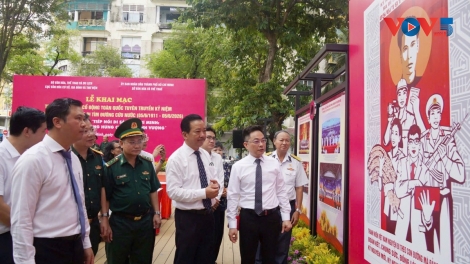





For Le Thu Thuy, a resident of An Phu Dong Ward, visiting museums during national holidays has long been a meaningful tradition. Walking through displays about President Ho Chi Minh and Vietnam’s revolutionary journey, she says she feels more grateful for the sacrifices made by previous generations and for the peace people enjoy today.

But like many visitors, Thuy sometimes finds it difficult to fully understand the stories behind historical materials when exploring a museum alone without a tour guide. That experience, she says, is why digital museums can make history easier to access and more engaging for modern audiences.
“I think 3D images would make viewers feel like they are truly stepping into that historical space. When clicking on an exhibit, explanations and historical stories could appear instantly. Each room could represent a different historical period, making the experience more interesting. If possible, there should also be an AI tour guide to introduce and explain things to visitors. Listening to narration while looking at images would feel much more vivid than just reading text on a phone screen,” said Thuy.
Her expectations reflect a broader trend in digital museums today, moving beyond simply displaying information to creating immersive experiences.

In Gia Dinh Ward, an online museum about President Ho Chi Minh has been operating since August last year. The project was developed by local officials as part of efforts to bring Ho Chi Minh cultural spaces closer to the public. Kieu Dang Hoang Anh, who helped implement the project, says the idea came from a practical need. Not everyone has time to visit traditional museums, she says, but almost everyone carries a smartphone.
Built on the Artstep platform, the online museum recreates exhibition rooms covering different stages of President Ho Chi Minh’s life. The design focuses on visuals rather than lengthy text, making the content easier for younger audiences to follow.
Users can move through virtual rooms, zoom in on images, and interact with displays much like in a simulation game, Hoang Anh said. “To attract young people, an online museum needs to feel more interesting than a normal museum. On the Artstep platform, visitors move around using virtual footsteps, almost like in a game. You have to open doors to enter each room, just like in a real museum. Users can rotate the view, zoom in and out, and explore every corner. That interactive feeling makes the experience more engaging.”
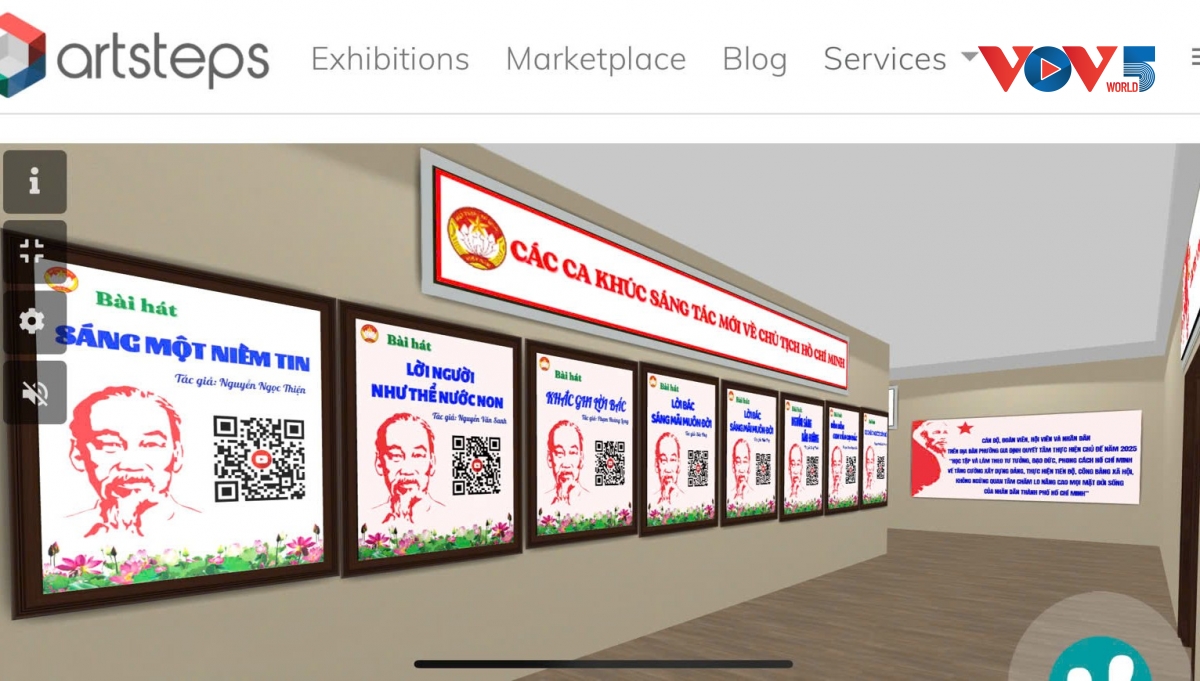
The project also includes online quizzes and image-search games designed to encourage visitors to explore the entire museum while naturally learning about President Ho Chi Minh. Hoang Anh explained: “When participants find five hidden images, they receive a prize, but by then, they have already explored the whole museum. They become curious and motivated to look carefully at every corner, and at the same time, they are learning about President Ho Chi Minh through the exhibits.”
According to Tran Thi Thu Trang, Chairwoman of the Vietnam Fatherland Front Committee of Gia Dinh Ward, combining physical Ho Chi Minh cultural spaces with digital museums has significantly improved public outreach efforts. After nearly ten months of operation, the project has received positive feedback from local residents and attracted a growing number of participants.
The ward is also expanding the initiative through activities such as mobile exhibitions. Specially equipped vehicles carrying books, QR codes, digital devices, and audio systems are brought directly into residential neighborhoods, allowing more and more people to access online museum content and listen to literary and artistic works by President Ho Chi Minh.
“We plan to organize these mobile exhibitions once a month so residents can learn and explore together. The vehicle itself is quite large and requires specialized transportation, so the project depends on cooperation from local organizations and community groups,” Trang said.
The online museum about President Ho Chi Minh is gradually becoming an effective model for historical education in the digital age. More importantly, it shows how technology can help history feel less distant and more connected to everyday life.