




The UK and Australia have introduced while many other countries are considering measures to restrict minors' access to social media. While intended to protect children from cyberbullying and mental health risks, experts say bans are unlikely to solve the problem.
At a recent panel discussion in Hanoi on online safety for teenagers, Malina Enlund, Meta's Head of Policy and Safety for Asia-Pacific, told VOV that she believes "it's really difficult to see a social media ban as the answer we're looking for, because most of the children will find ways to bypass the ban."
“We want children to be able to have an online presence, to be able to connect with friends, to explore interests, especially minority children who have no other access to information, or children who are living in places where they're more isolated. These are very important things for teens, and they need to be able to explore them freely, but with the right protections,” said Enlund.
Tech-savvy teenagers can find ways around restrictions by using virtual private networks (VPNs) or misrepresenting their age online. For that reason, experts say digital literacy and open communication are more sustainable solutions.
Nguyen Nhu Quynh, Operations Director of the Anti-Scam Social Enterprise, who has worked with schools and families for five years, emphasized the importance of trust between parents and children.
"Especially at this age, children are beginning to develop beyond the family circle and have their own private lives, building friendships at school, in society, and even with new friends they meet in cyberspace,” according to Quynh.
She added, therefore, to have frank conversations with your child about the fact that you know they have opened a Facebook account, or even further, wanting them to agree to let you join that circle, it must come from the daily actions of parents.
“It comes from the daily interactions of parents with their children to build trust, learn about their lives, talk to their friends, and even spend more time interacting with them physically,” Quynh added.
Experts compare online safety education to teaching children how to navigate the real world. Instead of shielding them from every risk, parents should gradually equip them with the skills to manage challenges independently.
Enlund, who is both a safety expert and a mother of a 12-year-old boy, said: “When you ride a bicycle, you don't just start, you have training wheels. The parent needs to guide and support the child like they're learning how to ride a bike….. It's really important to have trust and to have conversations."
Ngo Minh Trang, Director of Vietnet-ICT, said many children create social media accounts without informing their parents because they don’t feel comfortable bringing parents into their online social circles.
"Organizing digital life within the family is an important thing. We need a commitment between parents and children in implementing these practices. The important thing in starting a conversation is that there must be a spirit of openness, listening, and equality in all discussions. I think to kickstart a relationship and to be able to share is the most important thing for me as a parent," said Trang.
While trust and communication are essential, parents can’t monitor every online interaction. It’s time for tech firms to step in and provide an additional layer of protection.
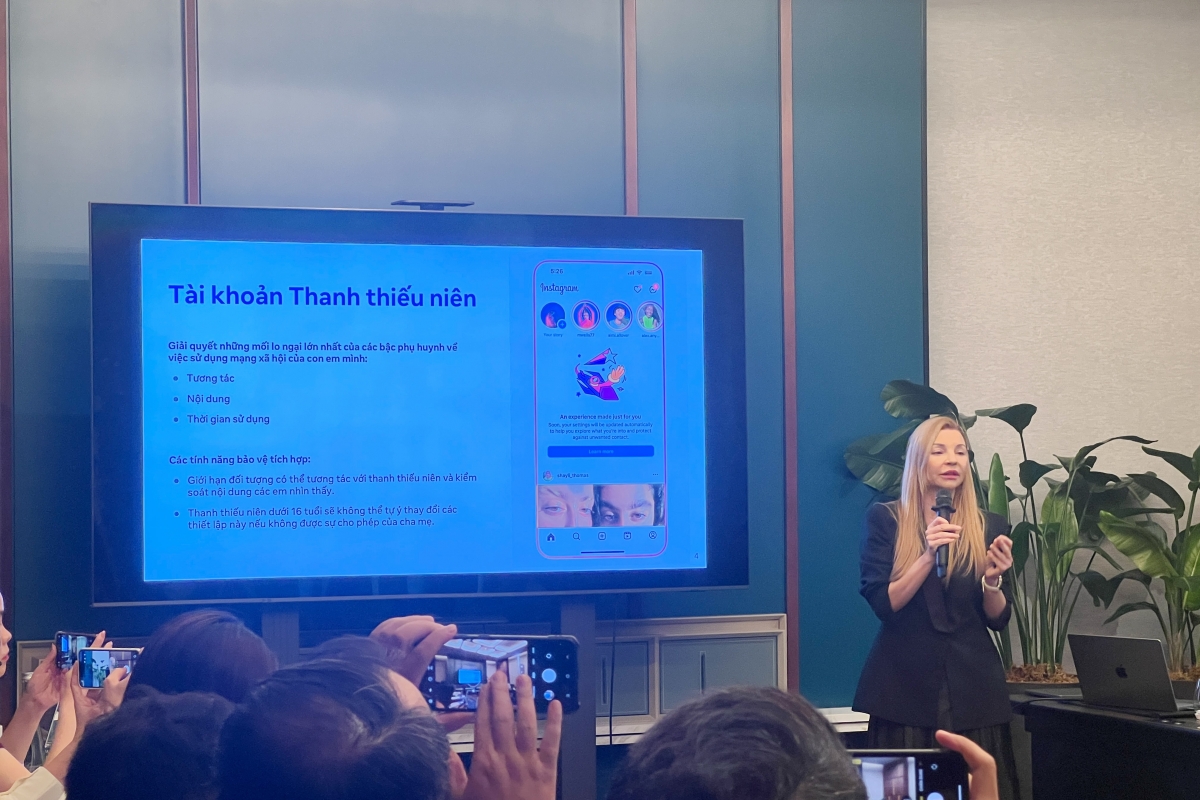
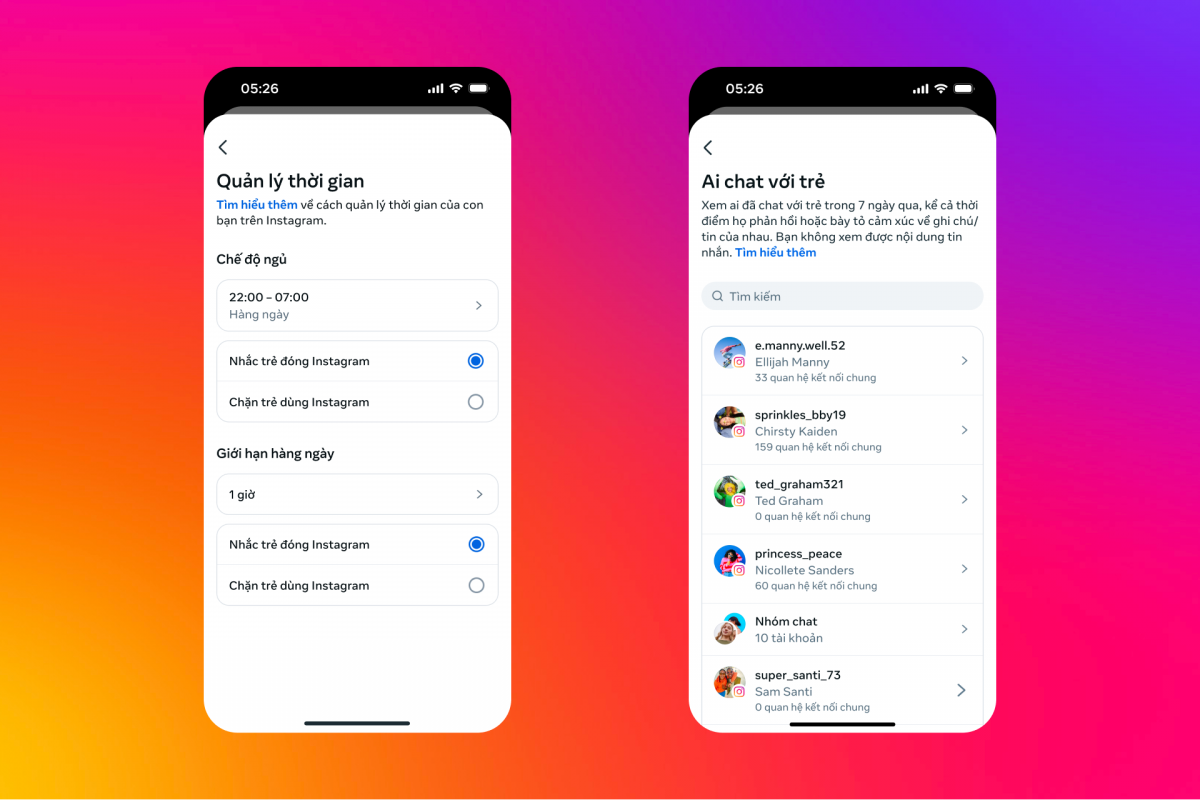
Last month, Meta, for example, introduced its 2025 version of ‘Teen Accounts’ on Facebook, Instagram, and Messenger in Vietnam. It automatically applies stronger protections for users aged 13 to 17, limiting who can contact them, what content they can view, and how long they spend online.
Enlund said the system is designed to provide age-appropriate safeguards similar to movie ratings.
“If your teen is using Facebook or using Instagram, all the content that they see from now on will be equivalent to PG-13 content in a movie. This rating, equivalent to PG-13, we call 13+. The 13+ rating applies equally across Instagram and Facebook,” said Enlund, adding, “If the teen tries to search for categories that are violent or involve alcohol, they won't be able to do so because the safeguard applies across feeds, across messages, across profiles, and across searches. We made it very easy for parents to use.”
The system filters or blocks sensitive content, including sexual material, graphic violence, and promotions related to alcohol and tobacco.
To address concerns that minors may lie about their age, Meta uses several layers of verification.
"In our multi-layered approach, first you declare your age. Then second, there's an AI classifier that looks at text and also visual cues. All accounts are then sent to a checkpoint where the teen has to verify their age through an ID or facial recognition. All platforms need to have robust ways and classifiers to make sure teens aren’t lying," the Meta representative explained.
Experts agree that online safety isn’t about keeping teenagers away from the digital world, it’s about creating an environment where they can explore, learn, and connect safely. Combining open family conversations with apps such as Teen Accounts can help young users enjoy the benefits of the internet while reducing its risks.
Core protections of Meta's Teen Accounts
Teen Accounts provides safeguards for users aged 13 to 17 that address parents' top three concerns: content, contact, and time spent online.
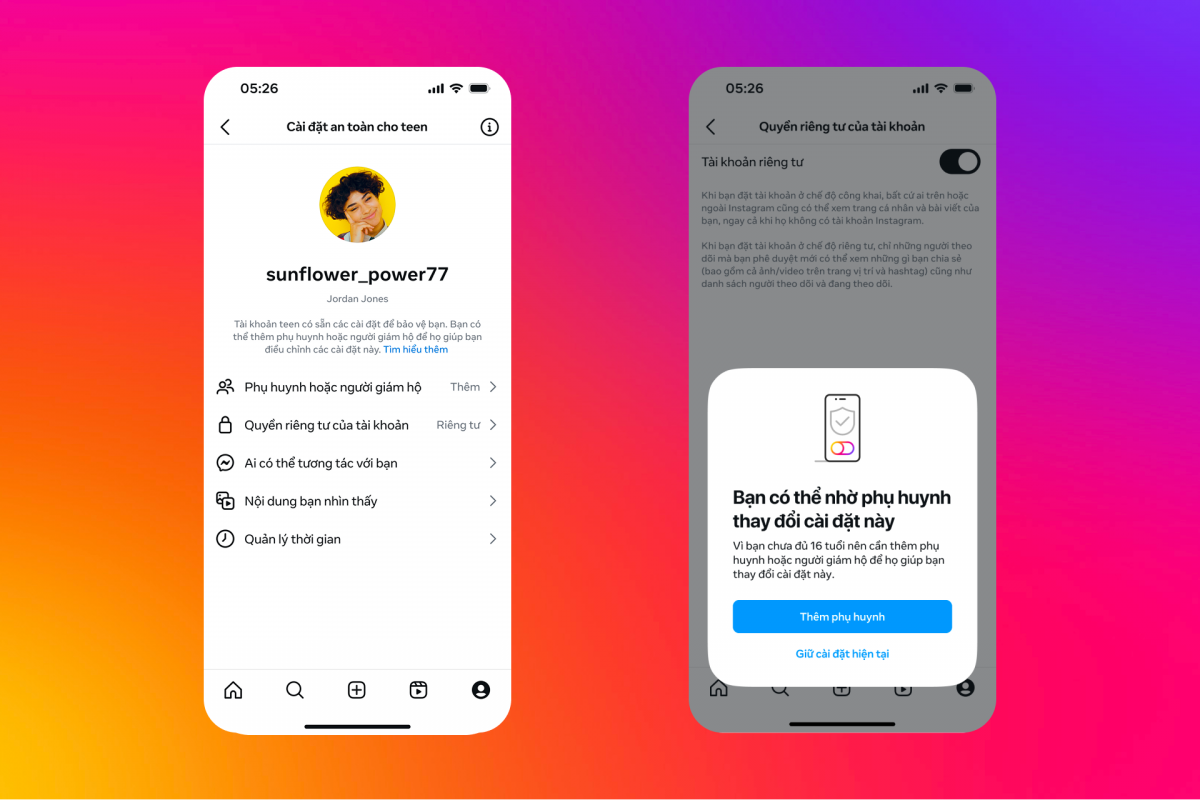
· Private Profiles: Accounts are private by default. Teens can’t be searched by adults, nor can they receive messages from adults or anyone else they’re not already connected to.
· PG-13 Content Rating (13+): All content across feeds, messages, profiles, and searches is restricted to the equivalent of a PG-13 movie rating. Blocked searches include alcohol and age-inappropriate accounts.
· Default Sleep Mode: Turned on automatically overnight. The system sends reminders to prevent teens from scrolling or using social media during bedtime hours.
· Sensitive Search Alerts: If a teen searches for high-risk topics, parents receive an immediate alert through the Family Center.
· Strict Settings Lock: Younger teens aged 13 to 15 are completely locked into these default protections and cannot change any settings without explicit parental permission.