



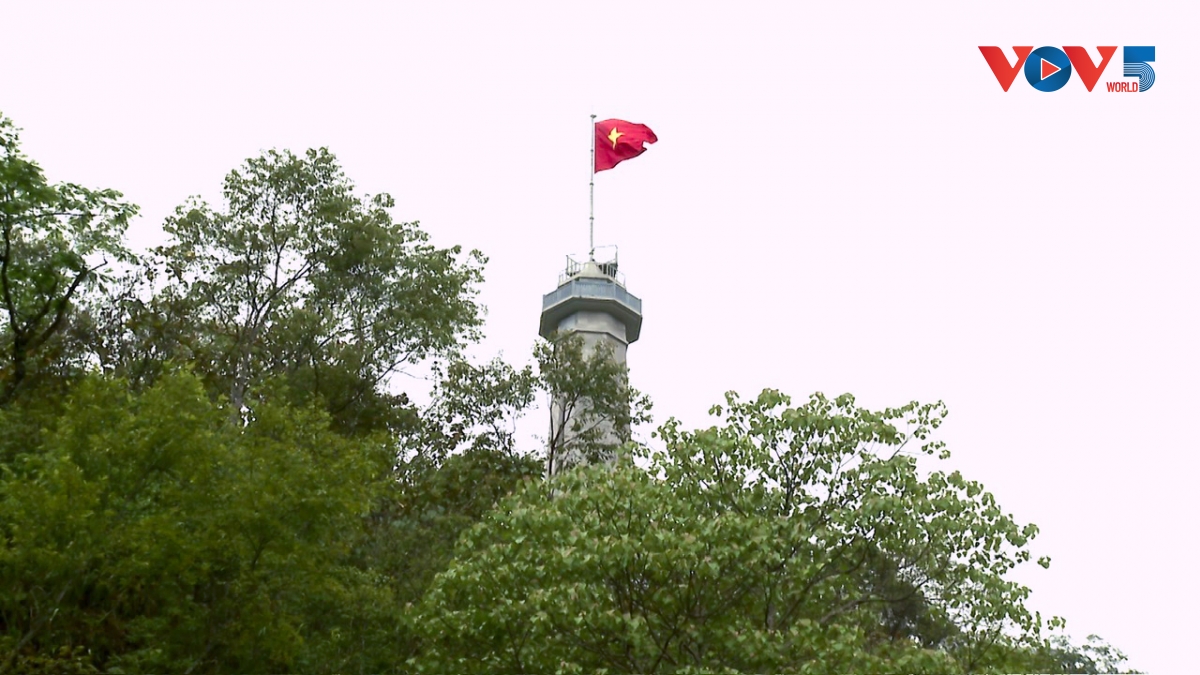
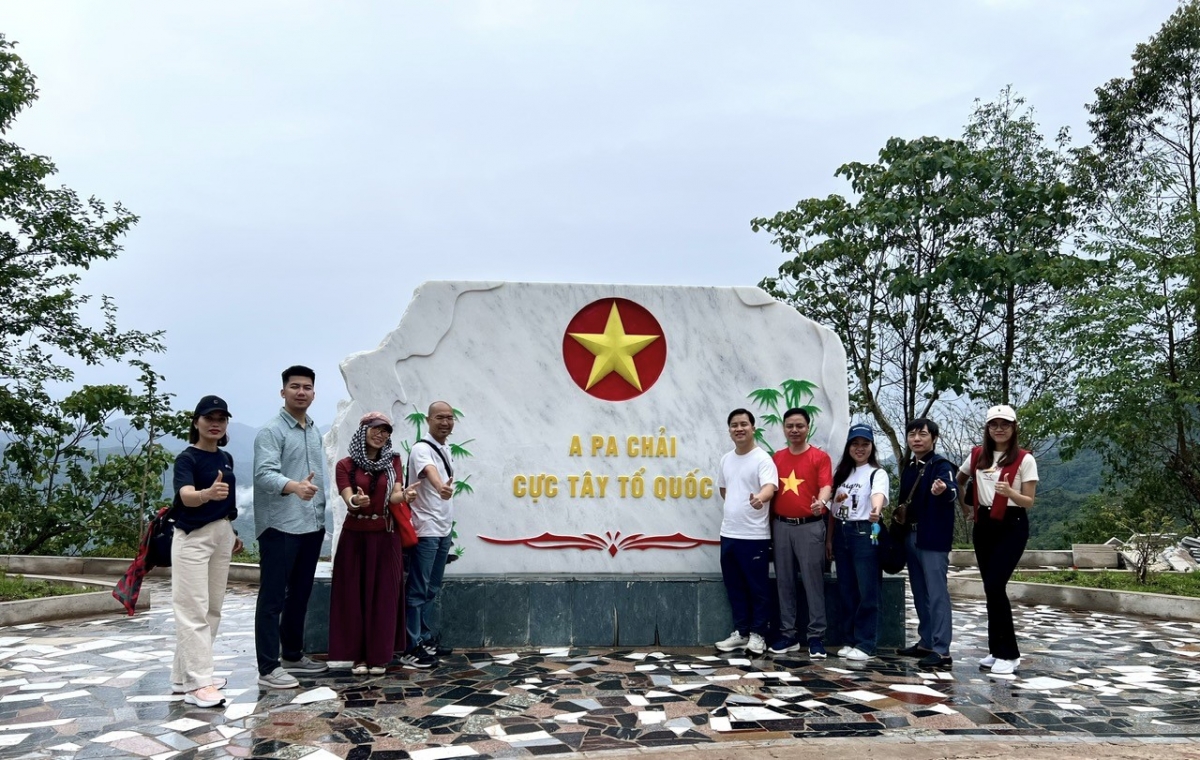
After a long, winding, uphill journey, the A Pa Chai flagpole appears amidst the drizzling rain and the crisp, cool air of the mountains. Getting off the coach bus, we climb 519 stone steps to the base of the flagpole. (The number 19 symbolizes the 19 ethnic groups living in Dien Bien province.) Standing by the flagpole, watching the red flag of Vietnam flutter in the wind, we feel a deep sense of national pride.
Tran Minh Truc, a tourist from Ho Chi Minh City, said: “This is my first visit to A Pa Chai, and it’s hard to describe the pride I feel standing on the westernmost point of the Fatherland. A Pa Chai’s majestic mountains are incredibly beautiful. Standing beside this sacred flagpole reminds us to love our country and be ready to contribute our best to the nation.”
Construction of the A Pa Chai flagpole began in November 2023 in Sin Thau commune. The flagpole stands at an altitude of 1,459 meters above sea level, 1.3 kilometers from the border marker marking the meeting point of Vietnam, Laos, and China.
Viewed from above, the 407-square-meter complex resembles a blooming bauhinia flower, the iconic flower of the Northwest region. The 37.5-square-meter national flag flies proudly in the wind. (The number 7.5 symbolizes the date of the Dien Bien Phu Victory on the 7th of May.
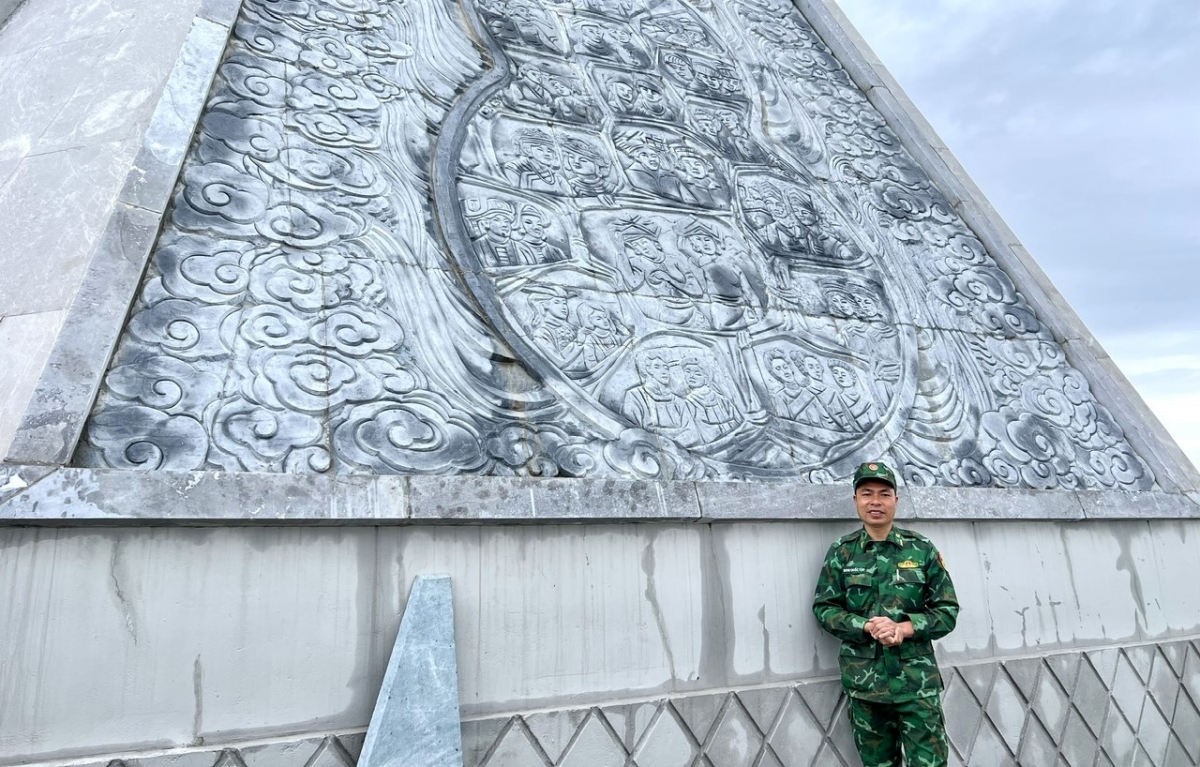
At the foot of the flagpole are 5 relief sculptures depicting the origin and life of the indigenous people – their production, beliefs, dances, flutes, and panpipes. A smaller relief portraying President Ho Chi Minh meeting with people of the Northwest symbolizes enduring solidarity.
Major Dinh Quoc Tap is Deputy Political Commissar of A Pa Chai Border Guard Station at Dien Bien provincial Border Guard Command. “The A Pa Chai flagpole was built, first, to affirm the nation’s sacred territorial sovereignty; second, to teach Vietnamese people about patriotism; and third, to preserve and promote the traditional cultural values of the northwest region and Dien Bien province. It is stimulating tourism and improving the lives of people in the border area of Sin Thau commune.”
In an earthen house about 10 kilometers from the A Pa Chai flagpole, Chu Khai Phu took a moment to remind his wife about household chores before going to work. Four years ago, tourist accommodations in A Pa Chai were scarce. Phu and his wife decided to get a bank loan to transform their home into a homestay for tourists. Now tourists come to get to know the Ha Nhi people.
Phu said: “After studying the situation, we decided to open a homestay to serve tourists visiting the flagpole and the border marker at the westernmost point of the country. We serve local specialty dishes such as smoked pork with pickled mustard greens, free-range pork, and several ethnic dishes.”
The Ha Nhi people have long cherished and preserved their cultural identity, including the art of making traditional costumes, which has been recognized as a national intangible cultural heritage. In Sin Thau commune, cultural and artistic activities are strongly promoted. Almost every village has its own performance team.
Lo So Pu, a local resident, said: “During the day, we work, and in the evening we practice dancing together. Village teams will perform together during the traditional Ha Nhi New Year festival. We also perform for tourists when they come. The dances imitate work activities and daily life.”
A trip to the nation’s farthest western point at A Pa Chai is a chance to encounter the spirit, pride, and cultural richness of Vietnam’s borderland communities.