Today, we'll explore some of the most common thinking traps and learn how psychological flexibility can help us respond to life's challenges with greater awareness and resilience. Joining us is psychotherapist Vu Anh Quan.
Reporter: Welcome to the show, psychotherapist Vu Anh Quan. The term "thinking traps" is becoming more common in discussions about mental health. For those who may not be familiar with it, what exactly are thinking traps, and why do they develop in the first place?
Mr. Anh Quan: Thinking traps are automatic patterns of thought that develop over time as we try to make sense of our experience. At some points in our life, these thoughts were helpful. They help us survive, cope, or succeed. The issue is that many of them continue running long after the situation has changed. Take someone who grew up in poverty or instability. They may have learned early on: “I have to do everything myself”. That belief might fuel independence and success, but later in life, the same thought can quietly damage relationships or teamwork by making it hard for them to ask for help or rely on others.
In that sense, thinking traps are like old scripts we wrote earlier in life. They shape how we feel, how we act, and how we relate to people around us. But when we move into a new chapter, some of those scripts stop serving us. Growth doesn't mean erasing history, it means learning when to revise it. Thinking traps are not wrong thinking or personality flaws. They are learned cognitive shortcuts, what Cognitive Behavioral Therapy, CBT, calls automatic thoughts, reinforced through repetition and emotional learning.
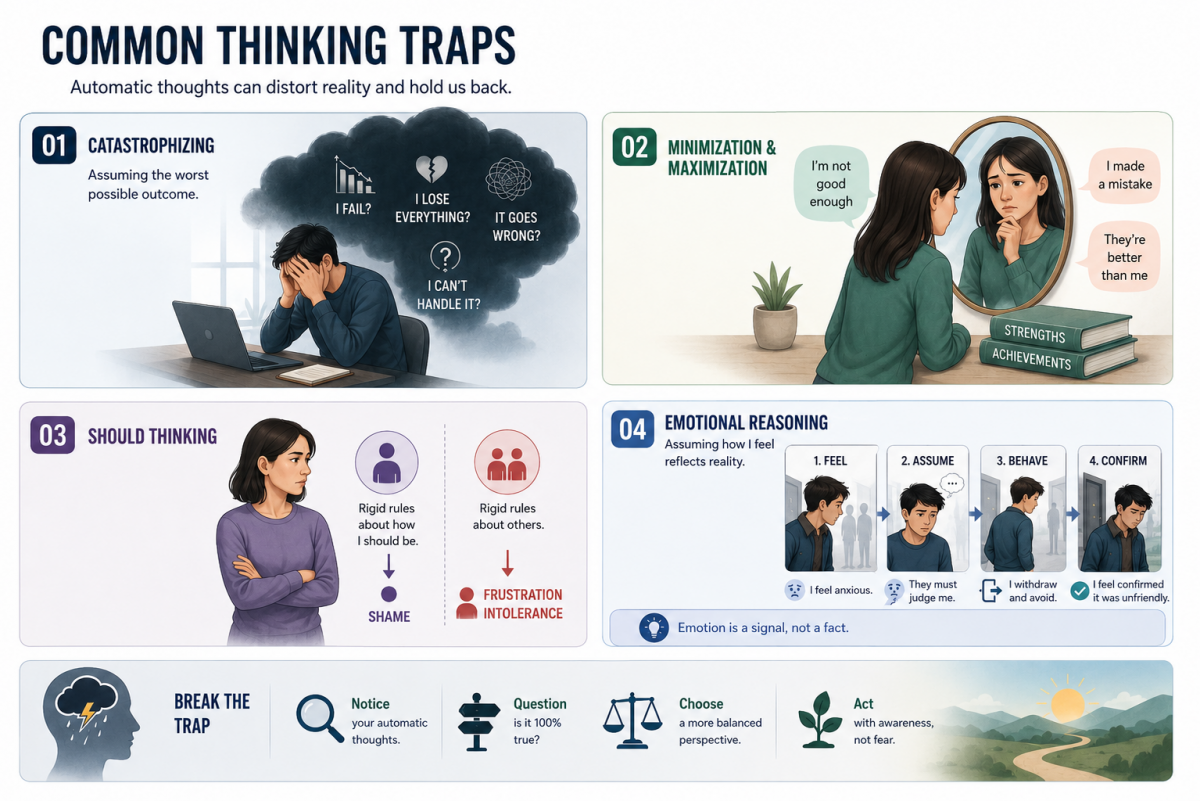
Reporter: What are some of the most common thinking traps people fall into and how can these distorted thoughts quietly influence our mood, confidence, and decision making?
Anh Quan: Most automatic thoughts are actually a combination of several thinking traps. One common pattern is catastrophizing, assuming the worst possible outcome. While this can feel like being prepared, it's usually preparation driven by fear. People lose sleep, stay tense, and react emotionally, which often makes them less effective rather than more. Another is minimization and maximization, downplaying strength while magnifying flaws. This slowly erodes confidence and motivation, especially in people who grew up without recognition or who were constantly told to push harder. A very common trap in Vietnamese and other collectivist cultures is “should thinking”, rigid rules about how one should feel, live, or behave. Turned inward, this creates shame. Turned outward, it leads to frustration, resentment, and intolerance of differences.
Then there is emotional reasoning, assuming that how you feel reflects reality. For example, someone enters a room feeling anxious and concludes people must judge me. They withdraw, avoid conversation, and leave early, later feeling confirmed that the situation was unfriendly. In reality, their behavior shaped the outcome. Emotional reasoning is not intuition. True intuition integrates emotion with context and evidence. Emotional reasoning treats emotion alone as fact.
Reporter: Many people may not realize when they're stuck in a thinking trap. What early signs should they watch for?
Anh Quan: Thinking traps are difficult to spot because they're automatic. They feel true. Much like walking, we rarely notice how we do it unless something goes wrong. A key early sign is repetition. If you notice the same emotional reaction showing up again and again in similar situations, for example, anxiety in meetings, frustration at home, hopelessness around goals, that's a signal to pause. A helpful question isn't just “Why do I feel this way”, but what am I telling myself about this situation, and is that thought helping me respond well? Strong emotions usually have a familiar story underneath them.
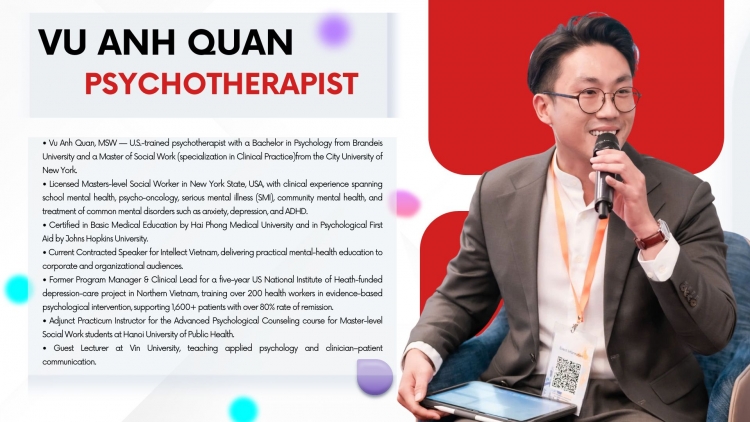
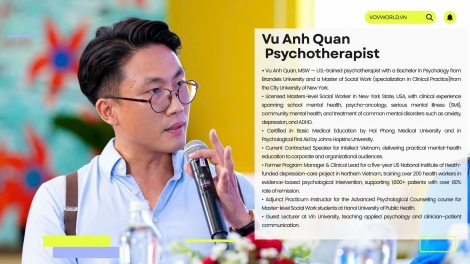
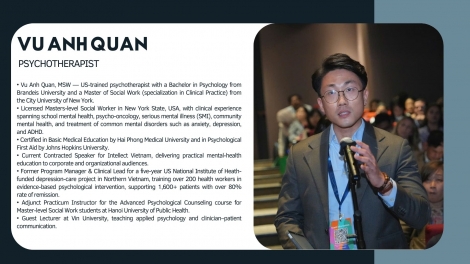
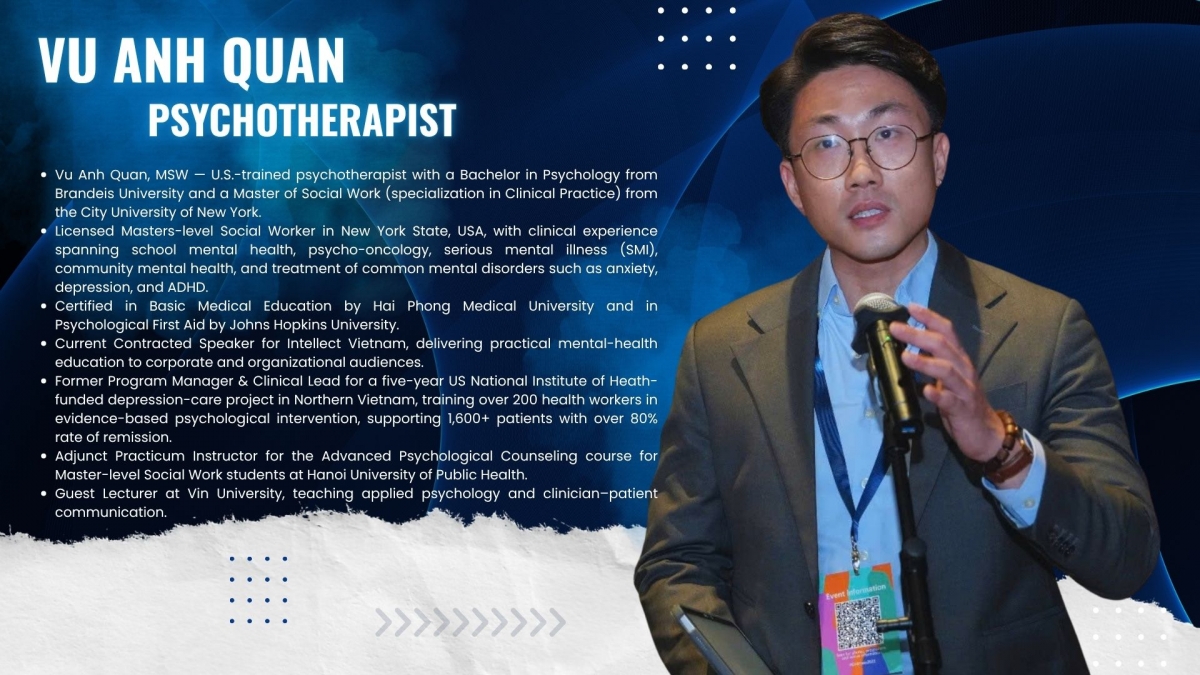
Vu Anh Quan is a US-trained psychotherapist and Licensed Master Social Worker in New York State, USA. He holds a Bachelor’s degree in Psychology from Brandeis University and a Master of Social Work (Clinical Practice) from the City University of New York. He has clinical experience across school mental health, psycho-oncology, serious mental illness, and common conditions such as anxiety, depression, and ADHD, with professional work spanning both the US and Vietnam in clinical practice, training, and mental health education. He previously served as Clinical Lead of a five-year NIH-funded depression care project in Northern Vietnam, and is currently involved in mental health education and professional training for organizations and institutions.
Reporter: What does psychological flexibility mean, and how does practicing psychological flexibility help people respond more calmly and wisely to a difficult situation?
Anh Quan: Thinking traps are rigid. They lock us into one way of thinking, feeling, and behaving regardless of what the situation calls for. Psychological flexibility is the ability to step back, notice a thought without automatically believing it, and choose a response that fits the present moment. It doesn't mean ignoring problems or forcing positive thinking. It means giving yourself options. As we grow, life asks us to respond differently than we did before. Psychological flexibility allows us to do just that, to respect where we came from without being trapped there. When flexibility increases, emotional intensity often decreases, and people respond with more clarity and effectiveness.
Psychological flexibility is a core mechanism of change in Acceptance and Commitment Therapy, ACT, and has strong empirical support across anxiety, depression, and stress-related disorders.
Reporter: Could you share a few practical techniques that help people catch unhelpful thoughts before they spiral?
Anh Quan: The first step is pattern recognition. One effective way to build this is through short structured journaling. Set aside about 15 minutes to reflect on one difficult situation that you have experienced in the past week. First, describe what happened in factual terms, answering the key question of who, what, when, where, in what ways. Second, write down the thoughts that came up, what you told yourself, what it meant to you. Third, name the emotion and rate the intensity from 0 to 100.
After one or two weeks of constant practice, maybe every day or every other day, you'll see patterns starting to appear. You'll see which situations trigger strong emotions and what themes show up in your thinking. From there, you can ask more helpful questions. Is this thought fair? Is it useful? Is there another way to look at this? That moment of curiosity is where flexibility and change begin.
In summary, thinking traps are not signs of weakness. They're signs of a mind that learned to survive. But survival strategies don't always support growth. Awareness creates choice and choice creates freedom. Our minds are powerful storytellers and the stories we tell ourselves shape how we live, love, and show up for others. When we learn to recognize thinking traps and practice psychological flexibility, we're not trying to become different people. We're simply giving ourselves more choices. And often, those small moments of awareness are enough to shift an entire day, a relationship, or a pattern we've been stuck in for years. Thank you for listening. I'm Quan. Take a breath, take a pause, and take good care, everyone.
Reporter: Thinking traps are not signs of weakness—they are patterns our minds develop as we learn to navigate life. By becoming more aware of these patterns and cultivating psychological flexibility, we can respond to challenges with greater clarity, resilience, and self-compassion. If you have questions about mental health or would like to suggest a topic for a future episode of Doctor At Home, please send them to VOV or contact psychotherapist Vu Anh Quan directly at quan.dennis.vu@gmail.com. Thank you for listening, and we look forward to having you with us again in the next episode.